Says Ronald Reagan “repeatedly talked about how irresponsible it would be to allow the full faith and credit of the United States to be impaired…


Ronald Reagan talks about the debt ceiling
With much glee, Democrats have seized on old audio recordings of President Ronald Reagan talking about the debt limit. House Democrats have even posted a snippet on YouTube.
Here’s what the Gipper had to say on the matter back in 1986:
“Unfortunately, Congress consistently brings the government to the edge of default before facing its responsibility. This brinkmanship threatens the holders of government bonds and those who rely on Social Security and veterans benefits. Interest rates would skyrocket, instability would occur in financial markets, and the federal deficit would soar. The United States has a special responsibility to itself and the world to meet its obligations. It means we have a well-earned reputation for reliability and credibility — two things that set us apart from much of the world.”
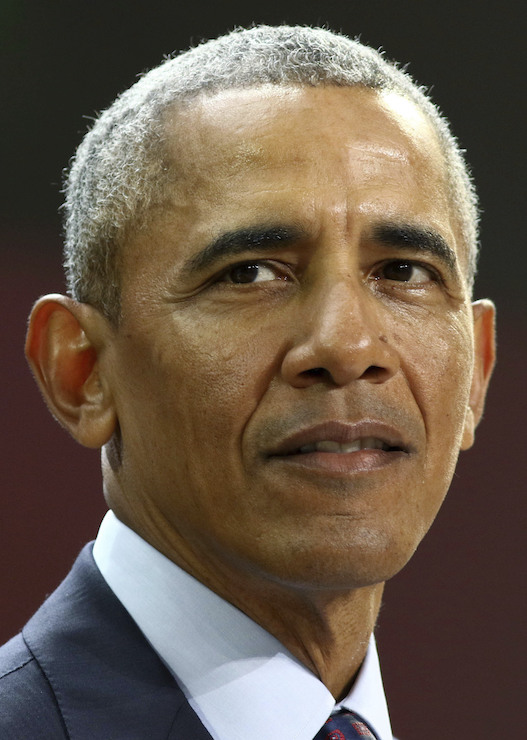
President Barack Obama, meanwhile, invoked Reagan when he answered a question from NPR on why negotiations to increase the debt ceiling have taken so long.
Obama said it was more than just one thing.
“You’ve got some members of the Republican Party who’ve been downplaying the consequences of default. The irony is, you know, Ronald Reagan, I think, when he was president, repeatedly talked about how irresponsible it would be to allow the full faith and credit of the United States to be impaired in any kind of way. I think that there is some politics. And compromising with me, among some Republican leaders, is bad politics for them,” he said on July 21, 2011.
Intrigued by the audio files going around the Internet, we decided to fact-check Obama’s statement that Reagan repeatedly talked about avoiding debt limit showdowns.
Reagan made the comments quoted above in a radio address to the nation on Sept. 26, 1987. But Reagan also laid out other principles for Congress in that address: cut spending, leave the defense budget alone, don’t raise taxes. (Read the entire address via the Ronald Reagan Presidential Library.)
“For those who say further responsible spending reductions are not possible, they are wrong. For those who say the only choice is undermining our national security at a time when the United States is close to an agreement with the Soviet Union on reducing nuclear weapons, they are wrong. For those who say more taxes will solve our deficit problem, they are wrong. Every time Congress increases taxes, the deficit does not decrease, spending increases. It’s time for a clear and consistent policy to reduce the federal budget deficit,” he said.
Looking for more examples of Reagan “repeatedly” warning about the debt ceiling,we also ran across a letter Reagan wrote in 1983 to then-Senate Majority Leader Howard Baker, R-Tenn., asking for help. (The Washington Post posted the letter to its website.)
“This country now possesses the strongest credit in the world,” Reagan wrote. “The full consequences of a default – or even the serious prospect of default – by the United States are impossible to predict and awesome to contemplate. Denigration of the full faith and credit of the United States would have substantial effects on the domestic financial markets and the value of the dollar in exchange markets. The Nation can ill afford to allow such a result. The risks, the costs, the disruptions, and the incalculable damage lead me to but one conclusion: the Senate must pass this legislation before the Congress adjourns.”
Interestingly, we also found statements from Reagan supporting changes to the tax code that increased revenues. That’s a major sticking point in today’s negotiations between Obama and Republicans. In a lengthy 1982 speech, he noted that some people called the bill he favored “the largest tax increase in history.” But Reagan said it was tax reform, not a tax increase.
“Of the entire $99 billion (in new tax revenue), $32 billion is collection of tax presently owed under the present laws and which is not being paid,” Reagan said. “Now, to all of you who are paying your tax, simple fairness says we should collect from those who are freeloading. Roughly $48 billion of the $99 billion represents closing off special-interest loopholes which have resulted in unintended tax advantages for some — not all — taxpayers, some who are financially well able to pay their share. Now, this is also a matter of simple fairness. So, more than 80 percent of the tax bill is not new tax at all, but is better collecting and correcting of flaws in the system.”
We reached Reagan biographer Lou Cannon and asked him about Reagan’s comments on raising the debt ceiling and avoiding default. He noted the historical trend that, regardless of party, presidents have traditionally raised the debt ceiling, while members of Congress — like Sen. Barack Obama back in 2006 — balked at raising it.
But Reagan also had a strong sense that the country’s creditworthiness was important, Cannon said.
“On matters like extending the full faith and credit of the government, on paying its bills, Reagan was a real conservative, in the old sense. Most of the true conservatives in those days wouldn’t have considered defaulting on their debts.”
He also noted that Reagan wasn’t opposed to legislative compromises, getting spending cuts when he could. “He was a practical person,” Cannon said. “He would say, let’s take some this year and come back next year and take some more.”
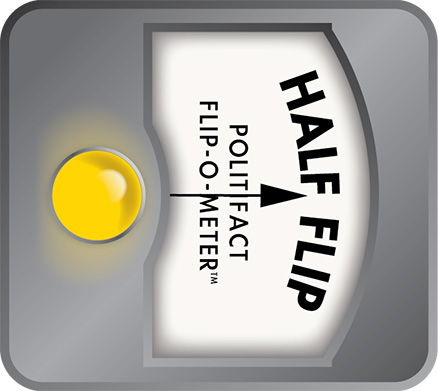
Obama said that Reagan “repeatedly talked about how irresponsible it would be to allow the full faith and credit of the United States to be impaired in any kind of way.” We found two examples and a Reagan expert said they typified his approach to the federal debt. Reagan talked about other things more, like keeping taxes low and funding defense. But his remarks on the debt ceiling are real and apparently heartfelt. We rate Obama’s statement Mostly True.
Our Sources
National Public Radio, Interview with President Barack Obama, July 21, 2011
The Washington Post, Dire warnings on debt limit hark back to Reagan, May 15, 2011
Letter from President Ronald Reagan to Sen. Howard Baker, via The Washington Post, Nov. 16, 1983
The Ronald Reagan Presidential Library, Radio Address to the Nation on the Federal Debt Ceiling Increase and Deficit Reduction, Sept. 26, 1987
The Ronald Reagan Presidential Library, Address to the Nation on Federal Tax and Budget Reconciliation Legislation, August 16, 1982
The Ronald Reagan Presidential Library, Remarks to Reporters on Federal Tax and Budget Reconciliation Legislation, August 10, 1982
The Ronald Reagan Presidential Library, Remarks on Signing the Tax Reform Act of 1986, October 22, 1986
Interview with Lou Cannon, July 22, 2011
Bloomberg, Reagan's Tax Increases Have Democrats Recalling Republican Hero, July 22, 2011
House Democrats, YouTube video of Reagan comments, accessed July 22, 2011