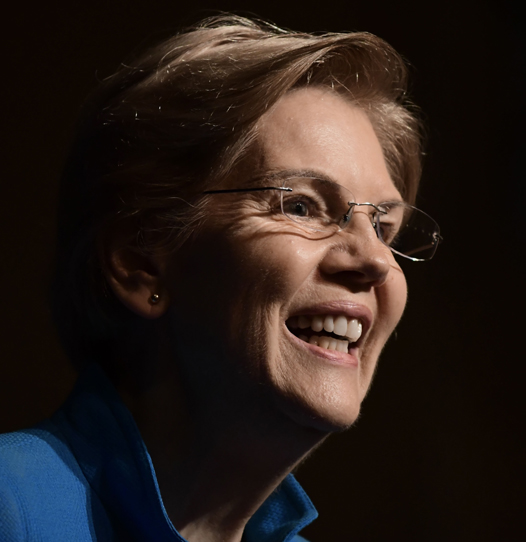
“Creeping defense commitments in (the Middle East) and globally now consume over half the U.S. discretionary budget annually.”

Rep. Marcy Kaptur says defense spending consumes more than half of the discretionary budget
Members of Congress peeved with the decision to involve the United States in Libya took to the House of Representatives floor on June 24 to voice their objections.
Toledo Democratic Rep. Marcy Kaptur was among them. Irked by the cost of U.S. involvement in the Middle East, she opined that the U.S. bears a disproportionate burden during joint actions with other countries, and tied the nation’s debt to “expenditures of over $1 trillion in the past decade on wars that have not been paid for.”
“Creeping defense commitments in that region and globally now consume over half of the U.S. discretionary budget annually,” Kaptur said. “It is an astounding predicament 20 years after the end of the Cold War, as jobless Americans question whether our federal government even sees their plight.”
Is it true, as Kaptur says, that the United States’ global defense commitments “now consume over half the U.S. discretionary budget annually?” PolitiFact Ohio decided to take a look.
Kaptur, a member of the House of Representatives Defense Appropriations Subcommittee, referred us to reports produced by the National Priorities Project, the Congressional Budget Office, and the Congressional Research Servicewhen we contacted her office.
They explain that the federal budget is divided into two types of spending: discretionary and mandatory.
Mandatory spending makes up most of the federal budget. It’s called “mandatory” because it’s required by law. Disbursements on popular entitlement programs like Social Security, Medicare, veterans benefits and food stamps fall under this category. Spending levels for mandatory programs are generally controlled by eligibility criteria for the entitlements, and the size of the recipient pool. According to the Congressional Budget Office, the mandatory share of the federal budget was $1.969 trillion in 2010.
The rest of the federal budget is considered “discretionary.” Congress decides how this money is spent through the appropriations process. Defense programs as well as education, health, transportation and housing assistance programs are considered discretionary.
According to the Congressional Budget Office, discretionary defense spending was $689 billion in 2010, compared with $677 billion in non-defense expenditures. That’s more than half.
The Congressional Research Service says discretionary defense spending dropped to historically low levels after the fall of the Berlin Wall, but escalated again when the United States went to war in Afghanistan and Iraq after the Sept. 11, 2001, attacks. Between 2000 and 2010, CRS says discretionary defense spending increased 6.8 percent per year, on average, in real terms.
Others can debate the merits or faults of ballooning defense spending.
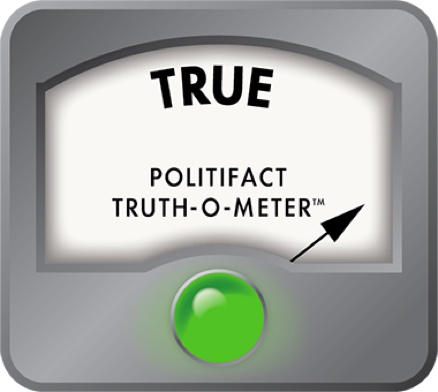
Kaptur’s statement is accurate and there’s nothing signifcant missing. On the Truth-O-Meter it rates as True.
Our Sources
Rep. Marcy Kaptur, statement on the House floor, June 24, 2011
Congressional Budget Office, "Discretionary Defense Spending," May 5, 2010
Congressional Research Service, "Trends in Discretionary Spending," September 10, 2010
National Priorities Project, Federal Discretionary and Mandatory Spending
Emails with Marcy Kaptur spokesman Steve Fought, June 24, 2011
Politifact, Rep. Dennis Kucinich says defense spending consumes more than half the discretionary budget,February 18, 2011