The deal to raise the federal debt limit created the “largest debt ceiling increase in America’s history.”
Chambliss: Debt ceiling deal creates largest increase in U.S. history
The compromise to raise the debt ceiling unleashed bipartisan laments from Capitol Hill lawmakers. One Democrat called it a “Satan sandwich.” Another grumbled, “It’s evil, or more evil.”
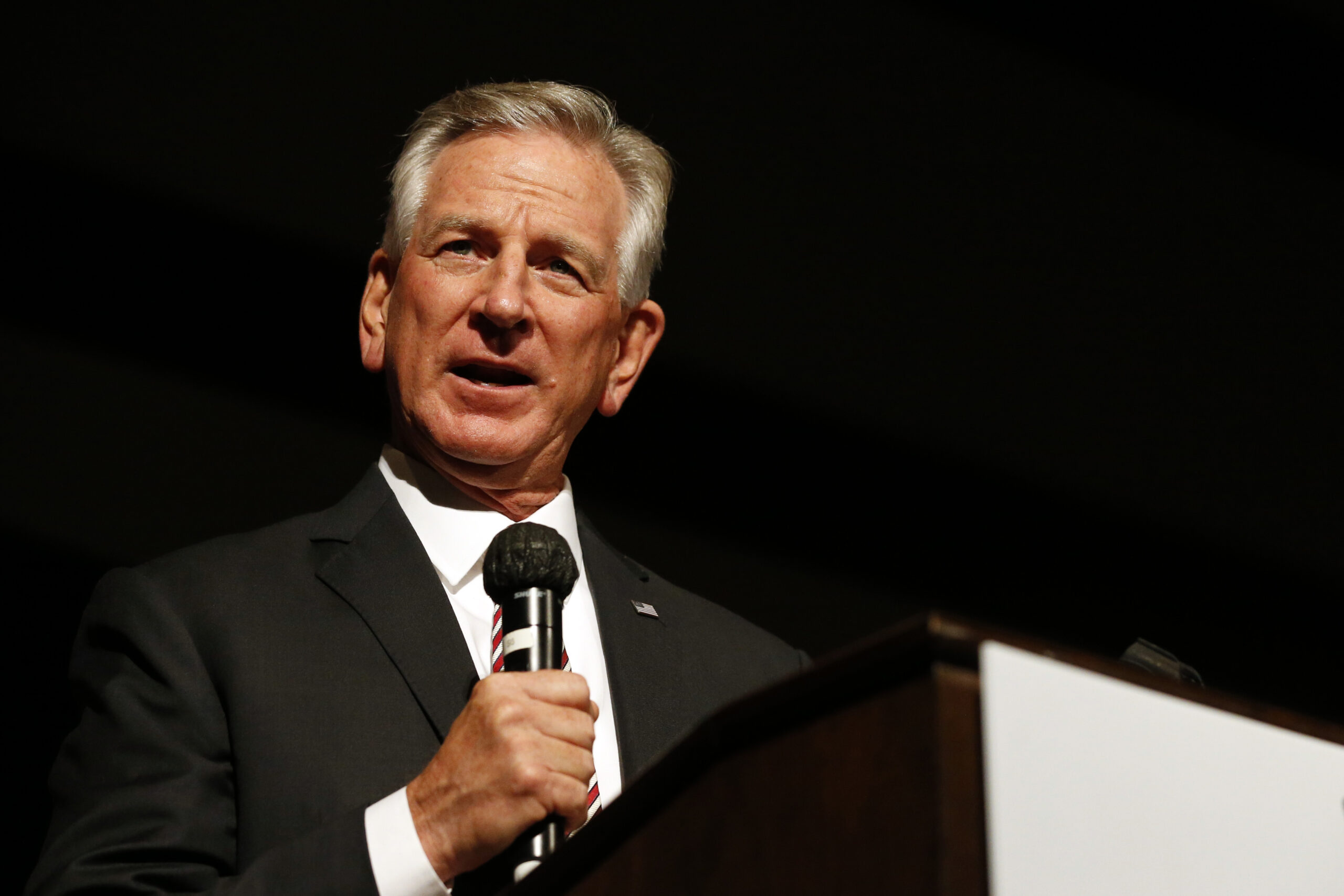
Republican U.S. Sen. Saxby Chambliss expressed his disappointment with more sober rhetoric. He said he voted against Tuesday’s debt deal because it didn’t do enough to fix the problem.
“I cannot vote for the largest debt-ceiling increase in America’s history without significant assurances that the bill’s proposed spending reductions will actually be realized, and without reforms to the way our government budgets its spending of taxpayer dollars,” Chambliss said in a press release the day the Senate passed the deal and President Barack Obama signed it.
Is this the “largest debt ceiling increase in America’s history”? Sounds like a job for the Truth-O-Meter.
Chambliss is a member of the so-called “Gang of Six,” which has fought for months for a bipartisan solution to cut the nation’s burgeoning federal debt. They floated a plan last month to end the stalemate on the debt ceiling, but it didn’t go far.
The plan that did pass Tuesday calls for a debt limit increase of up to $2.4 trillion,accompanied by at least $2.1 trillion in spending cuts over 10 years, according to the Congressional Budget Office.
PolitiFact Georgia contacted Chambliss’ press office to get evidence backing his claim. A spokeswoman sent us a July 26, 2011, report from the Congressional Research Service, the research arm of the U.S. Congress, and a list of debt ceiling increases from the White House’s Office of Management and Budget.
Federal laws have limited specific types of debt since 1917, according to the Congressional Research Service. But they did not exist as they do now, as a single limit that covers nearly all debt held by the public, until 1939. The list of debt ceiling increases from the Office of Management and Budget covers 1940 to the present.
If you compare debt ceiling increases by their dollar amount, Chambliss is right. The only increase that rival’s Tuesday’s debt deal is a $1.9 trillion hike in Feb. 2010. A 2003 increase at $984 billion takes third place.
We decided to nose around a little more. From our past research, PolitiFact Georgia knows that when economists talk about the size of the national debt, they often express it as a percent of the nation’s economy, or gross domestic product. This comparison gives a clearer sense of the debt’s scale.
Tuesday’s deal increases the debt limit by up to $2.4 trillion, which amounts to about 16 percent of the nation’s gross domestic product.
We found two other occasions where the increase was greater: World War II and the mid-to-late 1970s.
During the 1940s, the cost of the massive war effort pushed debt limit increases to higher than 47 percent of GDP.
The 1970s increases were blips. During these years, the debt limit spiked repeatedly, peaking at more than 17.9 percent of GDP. In these instances, debt limits expired and returned to prior, much lower amounts. After a few days, Congress restored them to levels only slightly higher than the expired limits.
How do we rule?
Chambliss is correct by one measure — the dollar amount of debt limit increase. He wasn’t that far off by another — debt limit increases by percentage of GDP.
In the case of this second measure, the only times the debt limit rose by an amount that exceeded this year’s increase were the result of highly unusual situations: a world war and legislative blips.
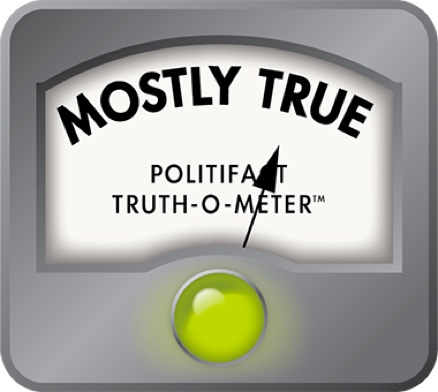
We won’t count the ‘70s data against Chambliss as they resulted in small overall increases. But since Chambliss missed out on World War II, we’ll give him a Mostly True.
Our Sources
U.S. Sen. Saxby Chambliss’ website, "Sen. Chambliss' Statement on Debt Ceiling Vote," Aug. 2, 2011
Congressional Budget Office, estimated impact for the Budget Control Act of 2011, Aug. 1, 2011
Congressional Research Service, "The Debt Limit: History and Recent Increases," April 5, 2011
Congressional Research Service, "The Debt Limit: History and Recent Increases," July 26, 2011
The White House Office of Management and Budget, historical tables, Tables 7.1 and 10.3, accessed Aug. 2, 2011
CBS News, "Gang of Six plan gets boost in House, still faces uphill battle," July 20, 2011
Politico.com, "Emanuel Cleaver: Need 'demon drink' to wash down 'Satan sandwich,'" Aug. 3, 2011
The Hill, "Dems furious, see deal as GOP win," Aug. 1, 2011
Email interview, James R. Horney, vice president for federal fiscal policy, Center on Budget and Policy Priorities, Aug. 2, 2011
Email interview, Lauren Claffey, press secretary, U.S. Sen. Saxby Chambliss, Aug. 2, 2011
Email interview, Daniel J. Mitchell, senior fellow, Cato Institute, Aug. 3, 2011
Telephone interview, Veronique de Rugy, senior research fellow, Mercatus Center at George Mason University, Aug. 3, 2011