“Florida’s new fingerprint identification system is improving our rate of solving cold cases by 300 percent.”


New fingerprint technology results up solve rate by 300 percent, Crist claims
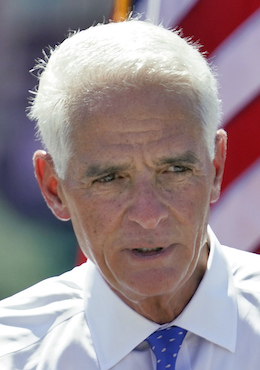
In the crime portion of his final State of the State speech, Gov. Charlie Crist touted the success of a new technology that he says is helping police close unsolved cases.
The technology — an advanced fingerprint and palm print identification system — has increased solve rates on cold cases three-fold, Crist said in his 43-minute address to a joint session of the Legislature on March 2, 2010.
“Florida’s new fingerprint identification system is improving our rate of solving cold cases by 300 percent, benefiting victims hurt by previously unsolved crimes,” Crist said.
Is this new technology putting that many more bad guys behind bars?
The new system Crist is talking about is called the Biometric Identification System, or BIS for short. According to the Florida Department of Law Enforcement, which manages the new system, BIS is more precise and has more capacity than previous systems.
Here’s how it works: Law enforcement officials from across the state upload fingerprint and palm print information from crime scenes and from people they arrest. The computer then tries to match the two, looking for people in the system who may have committed unsolved crimes. The concept isn’t new — FDLE has been matching fingerprints electronically for years — but the state is now able to match palm prints for the first time. The new system also improves accuracy in fingerprint searches, said FDLE spokeswoman Kristen Chernosky.
The new statewide BIS system has been up and running since May 2009 and has paid great dividends, Chernosky said.
In fact, the FDLE spokeswoman said it was the state law enforcement agency that provided Crist’s office the 300 percent figure he cited in his speech.
But the number isn’t calculating what Crist said it was.
“There has been an approximately 300 percent increase in the number of fingerprint hits that have been provided to our local law enforcement agencies,” Chernosky said. “That means there was some kind of match, but not necessarily the number of cases solved.”
Put another way, the new system is increasing the number of fingerprint and palm print matches to aid local law enforcement, but it’s yet unclear if those matches are leading to a similar increase in arrests. The FDLE hasn’t tracked that number, Chernosky said.
Bill Schade, who manages Pinellas County’s fingerprint records department, sings the praises of the new system. He said it produced 20 fingerprint hits on cold cases in February 2010, and already has produced a handful of matches in the first week of March. Some hits lead to arrests — he pointed to one case in Clearwater where a fingerprint match tied a suspect to a string of local burglaries. But many do not, Schade says.
A recent example involved a stolen washer and dryer. Forensics investigators were able to get prints at the home where the crime occurred, and eventually, law enforcement officials got a match. But in between the crime and finding a fingerprint match, the washer and dryer were returned to the home. In that case, no one wanted to press charges and the investigation stalled.
That’s an important distinction in assessing Crist’s claim. He said the new technology is “improving our rate of solving cold cases by 300 percent, benefiting victims hurt by previously unsolved crimes.”
Crist is right that the new BIS system is helping police and sheriff’s deputies. But he’s making it sound like the new technology is having a dramatic impact on the number of cases solved. In fact, fingerprint matches are up 300 percent, but that doesn’t correspond to a similar percentage of additional cases being solved. That data doesn’t exist, and system users acknowledge that fingerprint matches don’t always lead to arrests. As a result, we rate Crist’s claim Barely True.
Editor’s note: This statement was rated Barely True when it was published. On July 27, 2011, we changed the name for the rating to Mostly False.
Our Sources
State of the State address, March 2, 2010.
Interview with Kristen Chernosky, FDLE spokeswoman, March 3, 2010.
Interview with Bill Schade, Pinellas County Sheriff's Office, March 4, 2010.
Interview with Mike Puetz, St. Petersburg Police Department, March 4, 2010.
"Department of Law Enforcement Criminal Investigations and Forensic Science," Government program summaries.
"A good match, for all except criminals," St. Petersburg Times, April 17, 2009, accessed via Times archives.
"Tacoma company's system speeds up fingerprint checks," The New Tribune, March 14, 2008, acccessed via Nexis.