Says approximately 70 percent of jobs created in the United States in November 2007-2008 were in Texas.
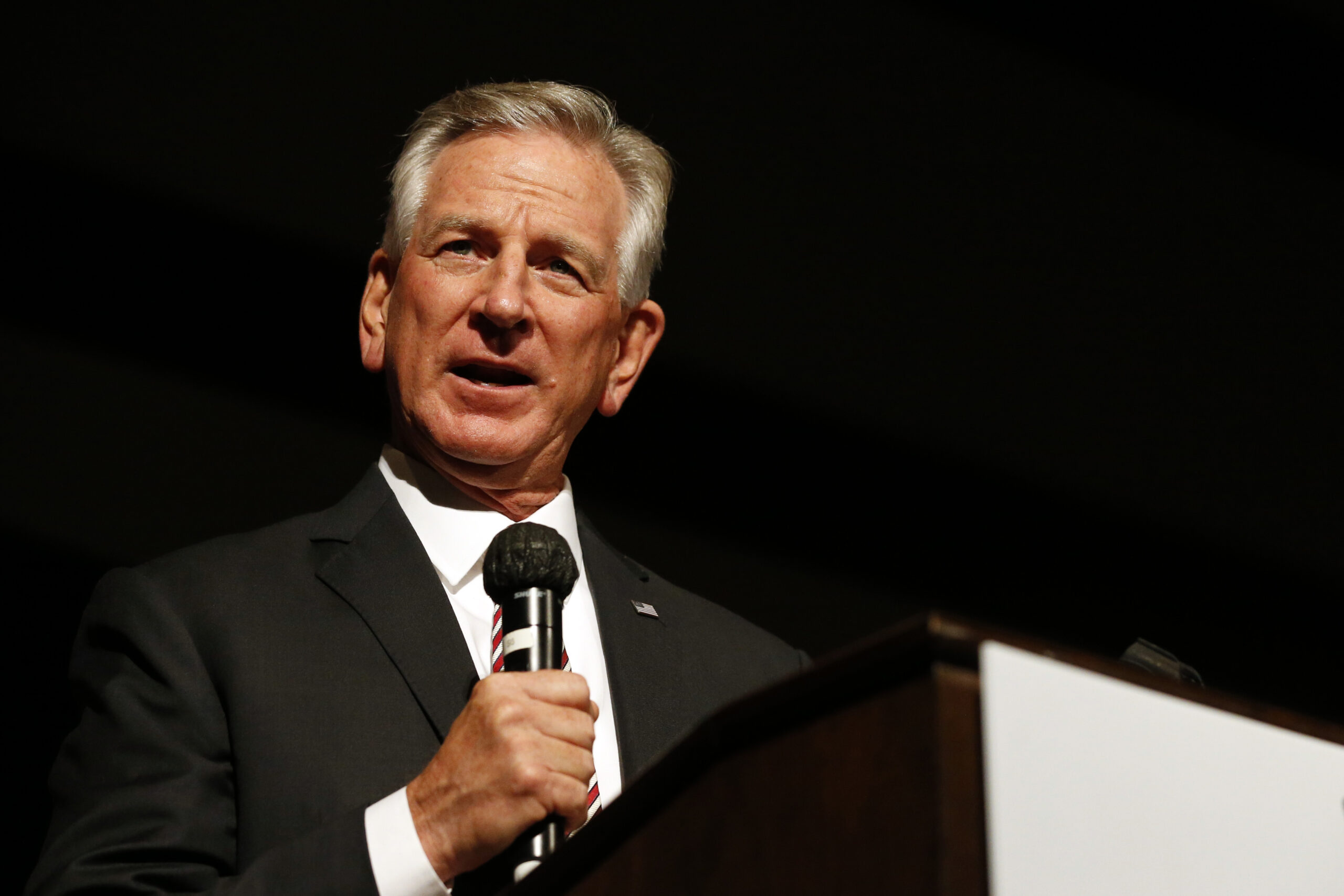
Perry claims Texas accounted for 70 percent of the country’s new jobs between November 2007 and November 2008.
Gov. Rick Perry frequently celebrates the Texas economy for out-performing those of other states.
His message that Texas could be a model for other states has been picked up in articles by Investors Business Daily, Trends Magazine and The Weekly Standard — all of which are touted on Perry’s campaign Web site.
The articles repeat the claim Perry made in a Jan. 15, 2009 press release stating: “Approximately 70 percent of the jobs created in the U.S. from November 2007-2008 were in Texas.”
We wondered if this eye-popping claim — posted online by Perry’s office and later echoed by State Comptroller Susan Combs, a fellow statewide officeholder — was true.
Perry’s office pointed us to the Texas Workforce Commission, where number crunchers said they started their analysis by adding up the total jobs created in states, including Texas, that had job gains during the one-year period. There were 13 other job-gaining states, plus the District of Columbia. The other gaining states were Oklahoma, Maryland, Louisiana, Wyoming, Kansas, Colorado, North Dakota, South Dakota, New Hampshire, Iowa, Virginia, Alaska and Nebraska.
Texas’s 221,000 new jobs amounted to 71 percent of the 310,000 jobs gained among those states and D.C. The state’s economy was “really kicking,” said Ann Hatchitt, the commission’s director of communications.
But the commission’s conclusion comes with a big wrinkle. Hatchitt said the commission did not take into account the new jobs created in 36 other states where job losses overall outnumbered gains.
Veronica Sanchez Downey, who analyzes data for the commission, said she’d feel comfortable summarizing the commission’s conclusion about Texas job gains this way: “Of all the states that gained jobs in the U.S. including the District of Columbia, Texas accounted for” 67.2 percent of the added jobs from November 2007 to November 2008. The 67.2-percent figure reflects adjustments of the data since the initial research.
Perry, of course, didn’t say it that way.
Two outside experts said the governor’s 70-percent claim overstates the Texas share of jobs created nationally.
Michael Brandl, a senior lecturer at the University of Texas McCombs School of Business, said the commission’s method of calculating the percentage wasn’t correct. By excluding all states with net job losses — regardless of any job gains in those states — the Texas share of total new jobs in the U.S. was overblown, even “laughable,” he said.
“To say it’s misleading is to be kind,” Brandi said. “It’s just not true.”
Douglas Hall, director of the Economic Research and Analysis Network at Washington’s non-partisan Economic Policy Institute, agreed that Perry’s summary was inaccurate. The institute focuses on the economic needs of low- and middle-income Americans.
Hall stressed that employment estimates, based on monthly surveys of employers, are frequently adjusted anyway: “On an annual basis, the numbers are revised significantly and what can often happen is that six of the previous 18 months get changed not just in their magnitude but sometimes even in their direction, highlighting the fact that one must always take these numbers with somewhat of a grain of salt.”
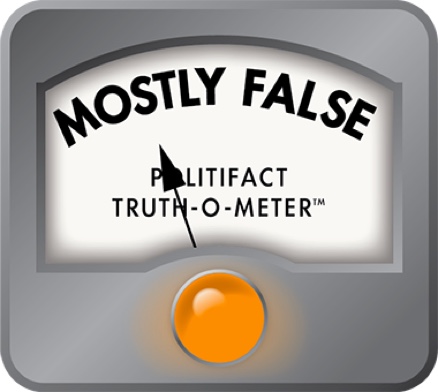
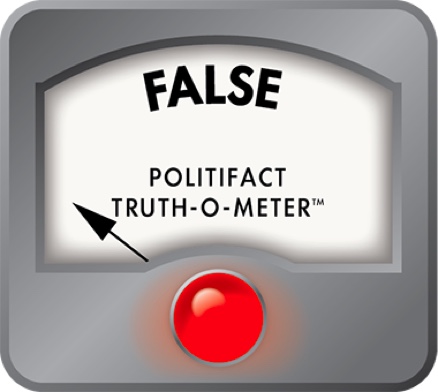
We find Perry’s conclusion to be incorrect and highly misleading, especially because the agency that made the calculation quickly pointed out an accurate — though less dramatic — way of summarizing its finding. We rate Perry’s statement as False.
Our Sources
Gov. Rick Perry, Press Releases, "Gov. Perry: Texas' Workforce and Economic Development are Key to Prosperity," Jan. 15, 2009
Interview, Ann Hatchitt, director of communications, Texas Workforce Commission, Dec. 16, 2009
Interview, Veronica Sanchez Downey, labor market analyst, Texas Workforce Commission, Dec. 17, 2009
Interview and e-mails, Michael Brandl, senior lecturer, University of Texas McCombs School of Business, Dec. 17, 2009 and Dec. 18, Dec. 21, 2009
Interview, Douglas Hall, director, Economic Research and Analysis Network, Economic Policy Institute, Washington, Dec. 17, 2009