What do fact-checkers around the world have in common?
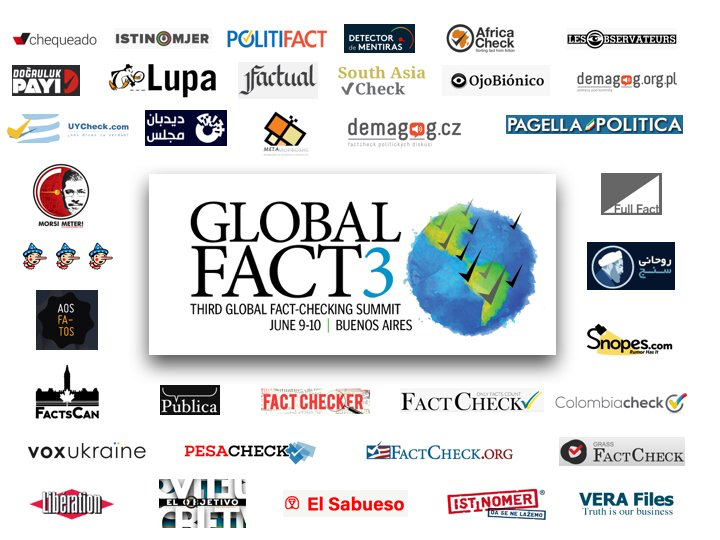
From Canada to Colombia, from Spain to South Africa, fact-checking is now spreading around the globe. In June, international fact-checkers gathered in Buenos Aires to compare notes on how we investigate claims, weigh evidence and publish our findings.
Those of us who gathered at the Global Summit on Fact-checking are a diverse lot. Some of us are journalists, as we are at PolitiFact. Others are researchers and writers who work for nonprofits. Still others consider themselves civic activists, agitating under repressive regimes to get truthful facts to the public.
While our identities are sometimes different, our work is usually the same: Credible, accurate information backed up with sources and evidence.
As fact-checking comes of age, PolitiFact founder Bill Adair, now a professor at Duke University, told conference participants that we need to make independence the hallmark of our approach.
“We need to show that we do not play favorites. We need to be impartial and apply the same standards to everyone we check. And we need to check everyone,” Adair said in his opening remarks.
Adair maintains a database of fact-checkers worldwide, and he’s noticed several that primarily fact-check just one party or side in their political system. That’s not a positive trend, he said.
“That’s not fact-checking; that’s advocacy. To be a reputable fact-checker, you must check all the players in your political systems,” he said.
As our discussion about fact-checking and accountability journalism continued over the two days of the conference, we discussed the idea of a statement of principles that fact-checkers around the world might agree on. Such principles might already be a long-standing commitment for some fact-checkers, while they might be aspirational goals for newcomers or those working under harsh press restrictions. But having stated ideals would go some distance to helping us agree on the definition of good fact-checking. The International Fact-checking Network, the group hosted by the Poynter Institute that organizes our conferences, is interested in putting forward such a statement of principles.
That got me thinking. What are the ideals that we adhere to at PolitiFact? And can any of those be translated to an international context? I put together a preliminary list, a set of goals that any fact-checker can follow.
Transparency. We note all our sources and thoroughly explain the reasons for our findings. This can include a source list, like the ones we use PolitiFact, or standard journalistic attribution within a report. The point is this: Our audience should leave a fact-check with a thorough understanding of the body of evidence and the logic behind fact-checkers’ conclusions.
Fairness. We use the same standard for every fact-check. We fact-check across the political spectrum. We don’t go easy on any person or party when they’re wrong, nor are we tougher or meaner to anyone. We don’t shade rulings to make two different sides look equivalent when they’re not. We follow the same process for everyone and let the evidence dictate the conclusions.
Thoroughness. We use the same rigor for every fact-check. We look in all the usual places for evidence, and then we think of unusual places specific to the fact being checked. We run our evidence by experts who specialize in the subject.
Independence. We check all sides of a debate. We don’t take policy positions or sides on the issues we’re fact-checking. We take measures to avoid any undue influence from funders, fact-checking supporters or anyone else. At PolitiFact, we are nonpartisan and independently owned.
Accountability. We fact-checkers hold politicians accountable by letting them know they will be fact-checked, especially when they make inaccurate statements. We are on the scene for major debates, speeches and events. Meanwhile, we fact-checkers are accountable to our readers and the public. We promptly correct errors and address legitimate reader concerns. We proactively publish our methodology and processes so people can better understand our work. We explain how we apply our methodology in controversial cases.
We fact-checkers are an independent lot, so I expect not every fact-checking group will want to sign on to a statement of principles. But having articulated standards will give us a basis for discussion when evaluating our own work, and a benchmark for promoting this unique form of accountability journalism around the world.
Our Sources
The Global Summit on Fact-checking, June 9-10, 2016
Duke Reporters' Lab, At GlobalFact 3, a call for transparency and impartial fact-checking, June 9, 2016
Poynter, In Buenos Aires, fact-checkers plan a code of principles and an International Fact-Checking Day, June 12, 2016