Fact-checking the Democratic NBC debate in South Carolina





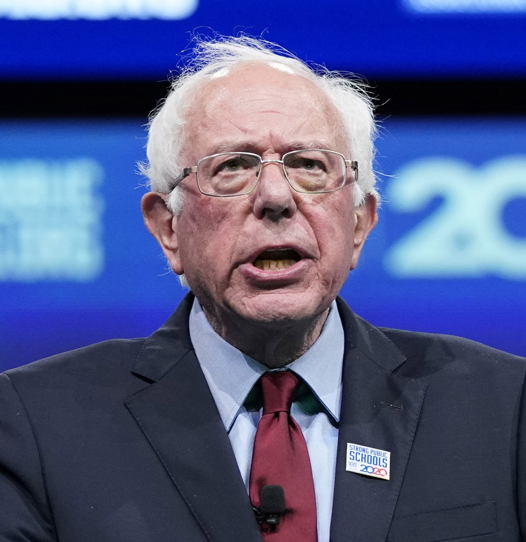
Hillary Clinton, Bernie Sanders and Martin O’Malley sparred over guns and health care in the first Democratic presidential primary debate of 2016, two weeks before caucus voters in Iowa head to the polls.
Sanders, a senator from Vermont, started the debate by calling Clinton’s attacks on his gun bill voting record “disingenuous,” bragging about a poor rating from the National Rifle Association. But Clinton doubled down on her criticisms, insisting Sanders has broken with supporters of gun control many times.
Sanders and Clinton also clashed over their approaches to reforming the nation’s health care system. Sanders wants to scrap the Affordable Care Act for a universal single-payer health care proposal. Clinton said that’s unrealistic given the intense intraparty fight over health reform even when Democrats had full control of Congress and the White House. Sanders had released details about how he would pay for his Medicare-for-all health plan just a couple hours before the debate started.
Here’s what the candidates got right and wrong in their attacks.
CLINTON ERRS ON HEALTH COSTS
Clinton defended the Affordable Care Act, saying that the discussion needs to shift away from replacing the health care law with a single-payer system.
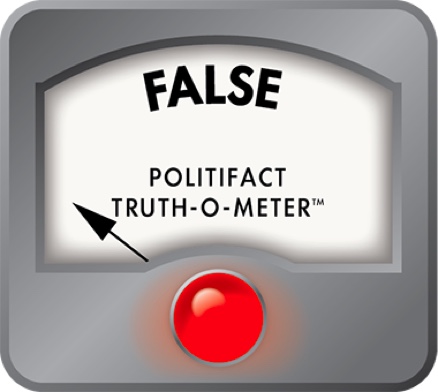
“We now have driven costs down to the lowest they’ve been in 50 years,” she said. “Now we’ve got to get individual costs down. That’s what I’m planning to do.”
We found that Clinton was incorrect, so we rate the statement False.
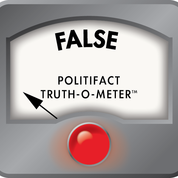
The actual per-person cost of health care has increased steadily over the last half-century.
The Clinton campaign admitted the candidate misspoke during the debate, and actually was talking about the rate at which health care costs have been going up.
SANDERS’ ‘HELP’ ON ACA
At another point, Sanders rejected assertions by Clinton that a Sanders presidency could imperil President Barack Obama’s signature legislative initiative.
Clinton said, “There are things we can do to improve (the Affordable Care Act), but to tear it up and start over again, pushing our country back into that kind of a contentious debate, I think is the wrong direction.”
Sanders countered, “We’re not going to tear up the Affordable Care Act. I helped write it.”
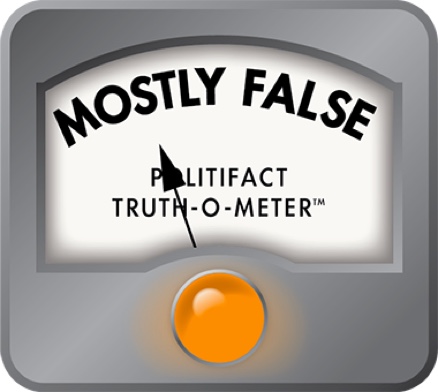
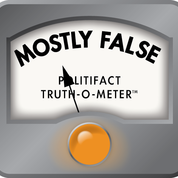
This overstates Sanders’ role in the process, making him sound like more of an insider than he actually was. We rate his statement Mostly False.
Sanders supported a more aggressive single-payer system, and multiple news articles quoted him as being undecided about supporting the main Democratic bill until late in the process.
Sanders did play a role, however, in securing $11 billion for community health centers, especially in rural areas. The insertion of this funding helped bring together both Democratic lawmakers on the left and Democrats representing more conservative, rural areas.
So there’s a case to be made that Sanders made an important contribution to the final legislation, but he oversells his role when he says he “helped write” it.
LIABILITY BILL REVERSAL
Clinton continued to hammer Sanders for his vote in support of a 2005 bill that dealt with liability for gun makers and sellers. Clinton contrasted Sanders’ 2005 vote with his recent change in position to make a subtle case of political flip-flopping.
“I am pleased to hear that Sen. Sanders has reversed his position on immunity,” Clinton said.
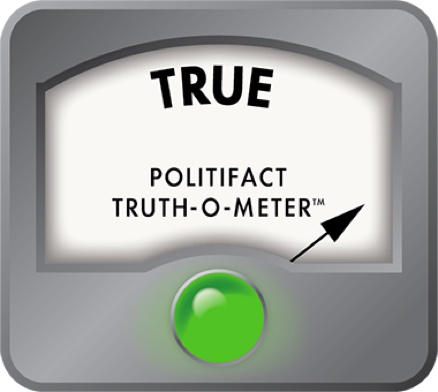
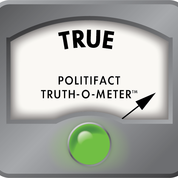
Clinton is right that Sanders has reversed his position in recent days. Her claim rates True.
After months of Sanders and his staff defending the 2005 vote during the current campaign, Sanders’ position started to evolve three months ago. Sanders said in October that he would “take another look” at the liability question. This is consistent with a Jan. 16 news release saying he supported a proposal to rescind the immunity provisions before Congress.
To look back only to October doesn’t tell the full story, ignoring not only the 2005 vote but also several instances in which Sanders or his staff defended those votes in interviews between June 2015 and early January 2016.
SANDERS AND THE ‘CHARLESTON LOOPHOLE’
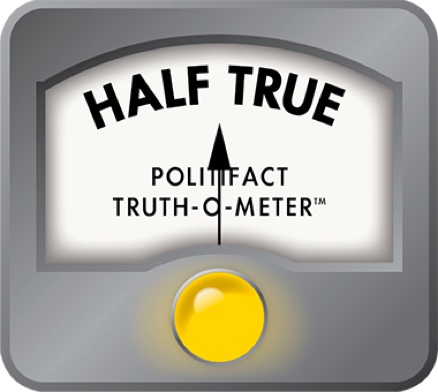
When Sanders said he had always supported background checks, Clinton countered that he had “voted for what we call the Charleston loophole,” referring to the June killing of nine African-Americans in a Charleston, S.C., church.
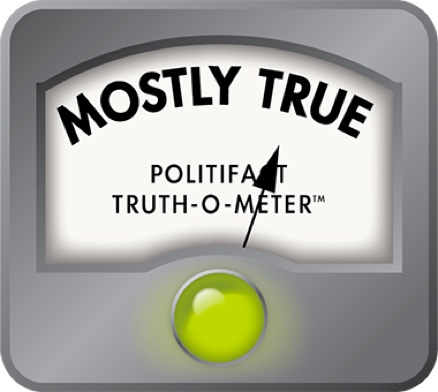
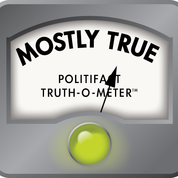
We rate Clinton’s claim Mostly True.
Clinton said that Sanders “voted for what we call the Charleston loophole.”
In 2015, Dylann Roof was able to buy a gun after time ran out for the government to perform a background check — the result of a clerical error when the FBI sought records from the wrong local law enforcement agency about Roof. Whether more time would have made a difference remains unknown. But Roof was able to purchase the gun after a three-day waiting period expired.
Sanders voted in 1993 to shorten the time window for the government to conduct its check. Roof was able to purchase a gun after waiting out a three-day time limit on background checks.
SANDERS ON DEFENSE SPENDING
Sanders lamented the nation’s defense spending, saying that the out-of-control budget isn’t focused enough on fighting modern threats.
“Unfortunately, much of that budget continues to fight the old Cold War with the Soviet Union,” Sanders said. “Very little of that budget — less than 10 percent — actually goes into fighting ISIS and international terrorism.”
We rated his claim that less than 10 percent of the Defense Department’s budget goes to fighting terrorism Mostly False.
He’s getting that number by using a very limited view of the overall defense budget, pointing only to specific allotments in the budget for addressing ISIS and other terrorist threats. Experts told us that no matter what amounts are designated for that purpose, those operations draw from resources paid for in the base budget. There’s no clear way to separate the two.
Sanders’ figure does refer to some specific funding but paints a misleading picture of overall defense spending.
This story will be updated as more fact-checks are published.
Our Sources
See fact-checks.