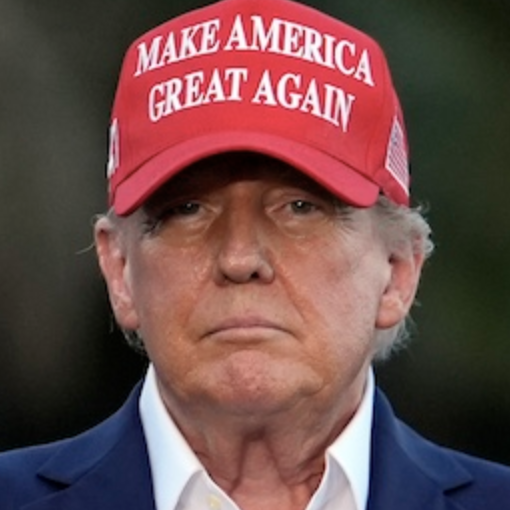
"We're going to work with them to build a state-of-the-art, next-generation missile defense shield. Just as Israel is now protected by the Iron Dome, a dream once thought impossible, America must have an impenetrable dome to protect our people. We worked with Israel to develop that Dome."
President Donald Trump's promised "Golden Dome" missile-defense system, modeled on Israel's Iron Dome program, took a step forward with the enactment of his signature tax and spending bill July 4.
The law includes $24.4 billion for integrated air and missile defense, which is earmarked for the Golden Dome project.
As a presidential candidate in 2023, Trump promised "to build a state-of-the-art, next-generation missile defense shield." On Jan. 27, Trump signed an executive order that set the plan in motion, and on May 20, he unveiled a design that includes a constellation of thousands of small satellites that could attack a missile shortly after it launches from a submarine or silo, which experts say is the most feasible time to shoot it down.
Trump said the project could be completed for $175 billion, so the nearly $25 billion in the new law gets the project a fraction of the way to being financed, with planning and construction expected to take years.
We continue to rate the promise In the Works.
In an Oval Office event, President Donald Trump unveiled new details on his plan for a U.S. "Golden Dome" missile-defense system, modeled on Israel's Iron Dome program.
As a presidential candidate in 2023, Trump promised "to build a state-of-the-art, next-generation missile defense shield." On Jan. 27, Trump signed an executive order that set the plan in motion.
At the May 20 White House event, Trump said he'd settled on a design and said protection could be up and running in three years. He tapped Gen. Michael Guetlein, vice chief of operations for the U.S. Space Force, to helm the project.
The U.S. "will deploy next-generation technologies across the land, sea and space, including space-based sensors and interceptors," Trump said. "This design for the Golden Dome will integrate with our existing defense capabilities and should be fully operational before the end of my term." Trump added that "we're going to make it all here" using U.S. suppliers and manufacturers.
The design includes a constellation of thousands of small satellites that could attack a missile shortly after it launches from a submarine or silo, which experts say is the most feasible time to shoot it down.
At the event, Defense Secretary Pete Hegseth called it "a generational investment in the security of America and Americans."
Guetlein said at the event that the project is needed because U.S. adversaries "have been quickly modernizing their nuclear forces."
Trump said the project could be completed for $175 billion, with a down payment of $25 billion included in the "big, beautiful" reconciliation bill the House passed May 22; that measure now goes to the Senate for consideration.
The nonpartisan Congressional Budget Office estimated the missile defense system's projected costs would range from $161 billion to $542 billion over two decades.
The Golden Dome's planning and construction will take years even under the most optimistic estimates, but Trump's announcement of a design, an official to spearhead the project and the inclusion of a $25 billion down payment in the bill advance the promise. It continues to rate In the Works.
Within a week of his second-term inauguration, President Donald Trump issued an executive order outlining his vision for an "Iron Dome for America," modeled on Israel's missile defense system.
As a presidential candidate in 2023, Trump promised, "to build a state-of-the-art, next-generation missile defense shield. Just as Israel is now protected by the Iron Dome, a dream once thought impossible, America must have an impenetrable dome to protect our people. We worked with Israel to develop that Dome."
On Jan. 27, Trump signed an order that said, "The United States will provide for the common defense of its citizens and the nation by deploying and maintaining a next-generation missile defense shield."
The order says that within 60 days, the defense secretary will submit "an implementation plan for the next-generation missile defense shield," including defending the U.S. "against ballistic, hypersonic, advanced cruise missiles, and other next-generation aerial attacks from peer, near-peer, and rogue adversaries." (These three categories refer to foreign adversaries, in descending levels of military and economic capabilities.)
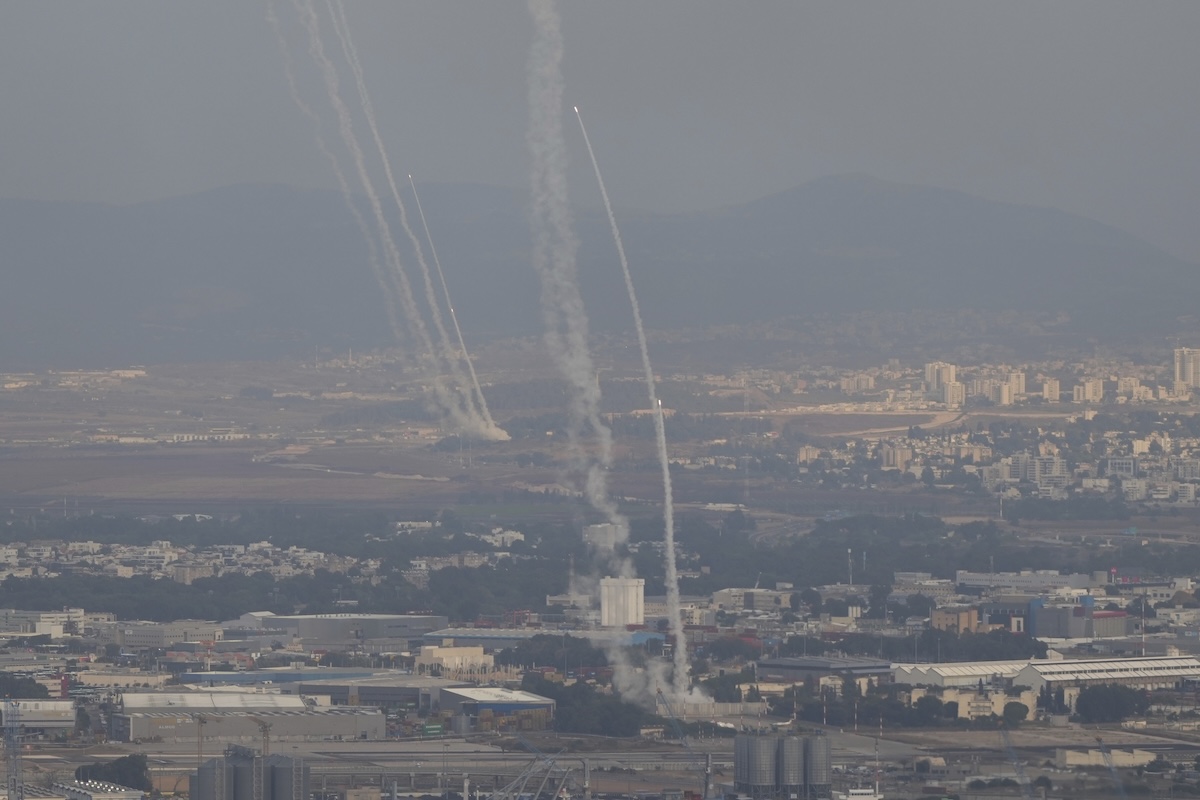
The Israeli Iron Dome air defense system fires to intercept rockets that were launched from Lebanon, as seen from Haifa in northern Israel, Nov. 11, 2024. (AP)
Trump's use of the term "Iron Dome" in respect to U.S. defense strategy is a bit of a misnomer: Iron Dome was designed to combat threats such as those faced by Israel, a small nation hemmed in by enemies. The United States is much larger and has less concern that its direct neighbors will fire rockets on Americans.
Calling the proposed U.S. system Iron Dome is "just a marketing slogan," said John Pike, director of globalsecurity.org, a national security think tank in Washington. "Israel and America face completely different types of missile threats."
Iron Dome is used primarily against short-range rockets or ground-launched cruise missiles; By contrast, the U.S., bordered on two sides by oceans, faces tougher challenges from submarine-launched cruise missiles and long-range, hypersonic cruise missiles.
Beyond the "Iron Dome" framing, missile defense experts told PolitiFact that Trump's order is vague, far-reaching, technically challenging and potentially expensive.
"The overall goals of the memo are incredibly far-reaching," said retired U.S. Air Force Col. Dana Struckman, a professor of national security affairs at the Naval War College. (Struckman said his views are his own and don't necessarily reflect those of the Naval War College, the Department of the Navy, the Defense Department, or the U.S. government.)
The order has "a lot of generalities that have been floating around for decades," Pike added. "But it's much more ambitious" than what previous presidents have ordered, he said.
Experts said the order's scope makes it difficult to determine how fast its goals can be achieved. It addresses defenses against ballistic missiles, hypersonic missiles, and other advanced cruise missiles, "which are all very different threats," said Brendan Green, a public policy professor at the University of Cincinnati.
The order also mentions defending against "advanced aerial attacks." Jaganath Sankaran, an assistant professor at the University of Texas's Lyndon B. Johnson School of Public Affairs, said that wording signals a new focus: "If it suggests a desire to provide nationwide air defense against fighters and drones, that is certainly a new effort."
Every piece of the order faces different technical challenges, Green said, though they all must grapple with the reality that "an effective system needs many more interceptors than there are attacking warheads," Green said. "This is because you are not going to hit 100% of incoming targets, and you need layered defenses that allow you multiple shots at 'leakers' that are not destroyed on the first shot."
Green added that intercepting a weapon midair is difficult because "simple, cheap decoys" can fool ground-based detection when attempting to intercept ballistic missiles in outer space.
Sankaran said an Iron Dome's price could become "a very significant concern. It makes sense to have some limited defense, but expanding the scope might divert resources from other vital efforts" to defend the U.S. homeland.
Green said there are "lots of moving pieces in the missile-defense problem." He added, however, that the U.S. "has made advances on many pieces of the problem, and seems capable of making further advances. So, if this project moves from pie-in-the-sky political rhetoric to something more reasonable, it could well achieve important capabilities against some parts of the threat profile."
Trump's executive order laid out an initial blueprint, and we will track the progress made on its vision. For now, the promise rates In the Works.
CORRECTION, Feb. 4, 2025: This article has been updated to clarify that decoys can specifically fool the interception of ballistic missiles in outer space. It also corrects the speaker of the final quote.