Back to Promises

End the Russia-Ukraine war within 24 hours

Promise Broken

The Promise

Made on: January 19, 2025
Promise Group: MAGA-Meter: Trump's Second Term
Promiser: Donald Trump
Ruling: Promise Broken

“If I were president, the Russia-Ukraine War would never have happened, never in a million years. But even now, if I were president, I’d be able to negotiate an end to this horrible and rapidly escalating war in 24 hours.”

Promiser:

Donald Trump

Promise Group:

MAGA-Meter: Trump's Second Term

Current Status

Last updated: April 29, 2025
Promise Broken
Obama promised, but didn't deliver.

Updates

2 updates
April 29, 2025

At 100 days, Trump’s administration struggles to achieve the Russia-Ukraine peace he promised

While campaigning, President Donald Trump repeatedly pledged to negotiate an end to the Russia-Ukraine war within 24 hours of his inauguration. Now, more than 2,300 hours into his second term, the war continues.

On April 22, Trump told Time magazine he'd exaggerated how fast he could end the war to make a point. 

"Obviously, people know that when I said that, it was said in jest, but it was also said that it will be ended," he said. 

Trump's promise is one of 75 that PolitiFact is tracking on the MAGA-Meter, just as we did with promises by Barack Obama, Trump during his first term, and Joe Biden.

When asked about the administration's efforts to end the war, a White House spokesperson pointed us to Trump's public comments.

Since January, Trump has echoed false Russian talking points, such as the claim that Ukrainian President Volodymyr Zelenskyy "started" the war in Ukraine with Russia. Trump has also expressed a desire to end the war quickly, regardless of Ukraine's territorial losses, and added the U.S. to a short list of countries that are willing to recognize Russia's 2014 annexation of Crimea. 

Trump administration officials in April repeatedly said the U.S. might walk away from peace talks entirely. 

Trump's main achievement toward ending the war was getting the negotiations started, said Lance Janda, a Cameron University history professor and social sciences department chair. Progress is limited, though, because his main strategy for ending the war has been pressuring Ukraine to make concessions to Russia. 

The administration's effort to end the war — and U.S. threats to exit negotiations — intensified as Trump approached his second term's 100-day mark. In recent days, Trump issued a public rebuke of Russian attacks on Ukraine's capital and had a private, face-to-face meeting with Zelenskyy before Pope Francis' funeral. 

The administration's efforts since Trump's original 24-hour deadline have included meetings with Russian and Ukrainian officials in Washington D.C., Paris and Riyadh, Saudi Arabia. But so far, no peace deal has been negotiated.

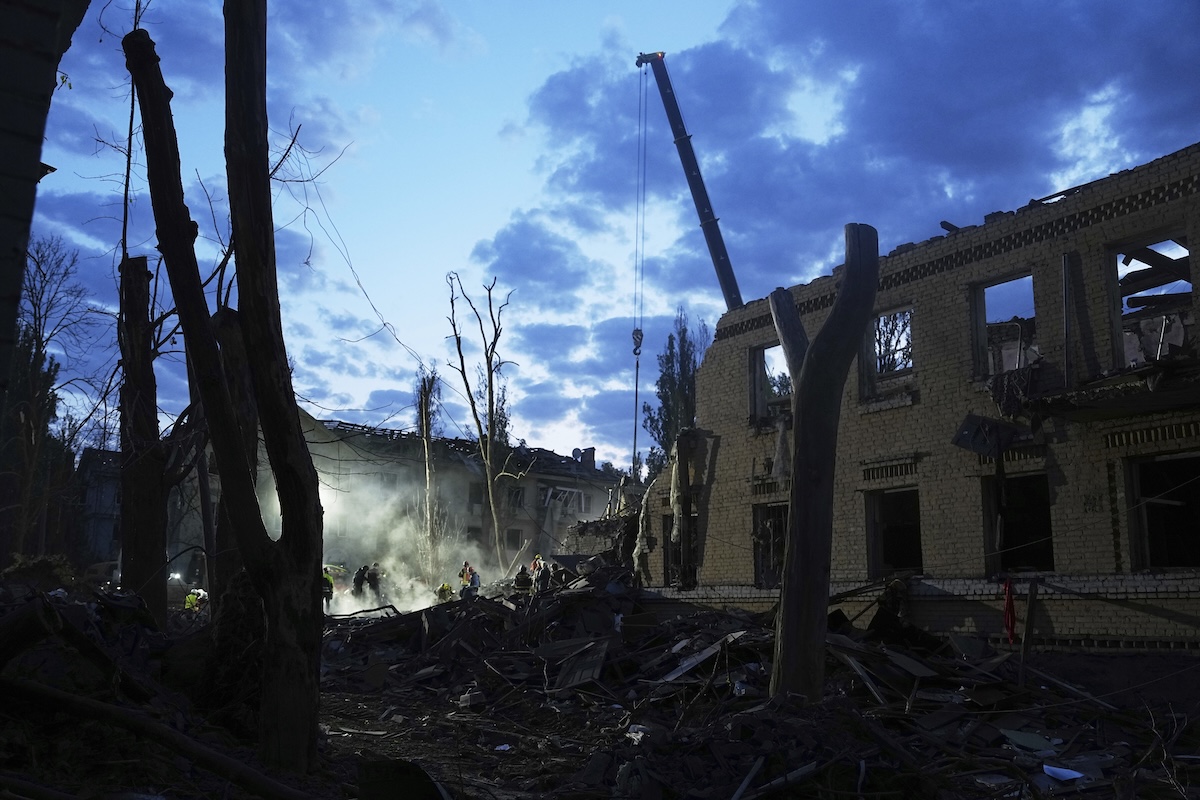
Rescue workers clear rubble after Russian missile attack in Kyiv, Ukraine, 4-24-2025
Figure 1: Rescue workers clear the rubble after a Russian ballistic missile attack in Kyiv, Ukraine, April 24, 2025. (AP)

Rescue workers clear the rubble after a Russian ballistic missile attack in Kyiv, Ukraine, April 24, 2025. (AP)

In April, Trump officials signaled the U.S. might abandon negotiations amid Crimea recognition dispute

On April 27, U.S. Secretary of State Marco Rubio said the talks were closer than they had been since Russia invaded Ukraine, but the two sides were "not there yet." 

"This week is going to be a really important week in which we have to make a determination about whether this is an endeavor that we want to continue to be involved in, or if it's time to sort of focus on some other issues some other issues that — that are equally, if not more, important in some cases," Rubio said.  

This came after Rubio's April 18 assertion that the deadline for reaching a peace deal before the U.S. would walk away was "a matter of days, not a matter of weeks." Shortly after that comment, U.S. officials proposed recognizing Russia's illegal 2014 annexation of Crimea as part of a potential peace agreement.  

Erik Herron, a political science professor at West Virginia University, said the proposal required concessions from Ukraine and the U.S., but "I have not heard of any concessions from the Russian side, and this is a recurring theme of the Trump administration's approach." 

Trump also told Time magazine April 22 that "Crimea will stay with Russia."

Harley Balzer, a Georgetown University government and international affairs emeritus professor, said that position puts the U.S. alongside Cuba, Nicaragua, Venezuela, Syria, Afghanistan and North Korea.

Zelenskyy rejected the idea of Ukraine legally recognizing Russia's occupation of Crimea, the Kyiv Independent reported April 22. 

"There is nothing to talk about," Zelenskyy said. "This violates our constitution. This is our territory, the territory of the people of Ukraine." 

In 2014, Russia seized Crimea, a Ukrainian peninsula on the northern coast of the Black Sea. The annexation — a precursor to Russia's 2022 full-scale invasion of Ukraine — followed protests in Kyiv that removed pro-Russia former Ukrainian President Viktor Yanukovych. At the time, then-President Barack Obama condemned Russia's actions.

In an April 23 Truth Social post, Trump said Zelenskyy's refusal to consider the proposal to recognize Russian authority over Crimea was "very harmful to the Peace Negotiations with Russia." 

"Nobody is asking Zelenskyy to recognize Crimea as Russian Territory but, if he wants Crimea, why didn't they fight for it eleven years ago when it was handed over to Russia without a shot being fired?" Trump wrote, saying Zelenskyy's "inflammatory statements" were making it difficult to end the war. 

The same day, Vance again warned the U.S. might walk away from negotiations.

Amid the April talks, Russia attacked Ukraine's capital, killing at least 12 people and injuring about 90 others, according to The Associated Press. Trump issued a rare reprimand to Russian President Vladimir Putin: "I am not happy with the Russian strikes on KYIV. Not necessary, and very bad timing. Vladimir, STOP!" 

Since the U.S. engaged in the peace talks, Putin announced a temporary 30-hour Easter ceasefire and plans to observe a temporary ceasefire May 8-10 to commemorate the end of World War II. During Putin's initial Easter truce, which started April 19, the fighting was quieter on the front lines, the BBC reported. Ultimately, though, Ukrainian officials said Russia continued its attacks on Ukraine during the ceasefire; Russian authorities said Ukraine's army broke the truce. 

As of April 28, no peace deal had been reached.

"This is going to be great television": U.S.-Ukraine leaders clash in Oval Office

One of the most noteworthy moments during the first 100 days of Trump's efforts to end the war was when an Oval Office meeting among Trump, Zelenksyy and Vice President JD Vance deteriorated into a televised argument.

Zelenskyy visited the White House on Feb. 28 to sign a deal that would give the U.S. access to Ukraine's mineral deposits as a means of Kyiv repaying the U.S. for aid. Experts said the deal represented another Trump administration focus during the negotiations: securing U.S. economic benefits from Ukraine.

Vance accused Zelenskyy of litigating disagreements in front of the American media and falsely said Zelenskyy had not thanked the U.S. for its support of Ukraine.

As Zelenskyy reiterated that he'd said thank you, Trump grew visibly upset, accusing Zelenskyy of "gambling with World War III."

Trump also signaled that he expected Ukraine to accept a ceasefire even without the security guarantees Zelenskyy said were important earlier in the meeting. Trump argued that Russia wouldn't break a ceasefire because "they respect me." Then he turned the conversation back toward U.S. support for Zelenskyy.

"I don't think you'd be a tough guy without the United States," Trump said. "And your people are very brave. But you're either going to make a deal or we're out. And if we're out, you'll fight it out. I don't think it's going to be pretty, but you'll fight it out."

Trump clasped his hands together and ended the meeting by declaring: "This is going to be great television, I will say that."

Zelenskyy left the White House without signing the minerals agreement. Trump said on Truth Social that he believed Zelenskyy was "not ready for Peace if America is involved."

Zelenskyy said March 1 on X that Ukraine is grateful for U.S. support and wants peace.

"We are ready to sign the minerals agreement, and it will be the first step toward security guarantees," he wrote. "But it's not enough, and we need more than just that. A ceasefire without security guarantees is dangerous for Ukraine." 

Two days later, a White House official told CNN that Trump ordered a pause on shipments of U.S. military aid to Ukraine until Trump was satisfied Zelenskyy was sufficiently committed to peace talks. CIA Director John Ratcliffe said March 5 that the U.S. had also stopped intelligence sharing with Ukraine.

Throughout March, Trump and Putin discussed a potential pause of strikes against Ukrainian energy infrastructure, officials explored a tentative agreement to stop fighting in the Black Sea and the United States resumed its Ukraine military aid and intelligence sharing. 

On April 17, Ukraine moved one step closer to finalizing a mineral deal with the U.S. But it was still unsigned as of April 25. Trump wrote that he hoped the deal would be signed immediately and said the overall Russia-Ukraine peace deal was "going smoothly."

As of April 28, it was unclear whether the U.S. could broker a peace deal or would walk away. For now, we continue to rate Trump's promise to negotiate an end to the Ukraine-Russia war within 24 hours of taking office Promise Broken.

PolitiFact Researcher Caryn Baird contributed to this report.

RELATED: Trump, Vance and Zelenskyy's tense Oval Office meeting about Ukraine and Russia, fact-checked

RELATED: Did Ukraine start its war with Russia, as President Donald Trump said? No, Russia invaded

January 22, 2025

Russia-Ukraine war continues despite passage of Trump’s first 24 hours in office

President Donald Trump ran for office on his dealmaking prowess, promising over and over that he would end the Russia-Ukraine war quickly.

In a 2023 campaign video, he said, "If I were president, I'd be able to negotiate an end to this horrible and rapidly escalating war in 24 hours."

He reiterated this at a 2023 New Hampshire campaign lunch: "I'll have that war settled in 24 hours, and it won't even be a tough one by comparison to other things."

He also repeated it in 2023 remarks in New Jersey, North Carolina, Texas and in an interview with Nigel Farage, the Trump-aligned leader of the United Kingdom's Reform U.K. Party. At times, he went further, promising to end the war even before taking office.

"I will get it settled before I even become president," he said during his September debate with Vice President Kamala Harris.

Now that Trump has been inaugurated, the 24-hour deadline has come and gone, but the war continues.

This promise is one of 75 that PolitiFact is tracking on the MAGA-Meter, just as we did with promises by Barack Obama, Trump during his first term, and Joe Biden.

Ending the war on any timeline presents challenges, military and foreign policy experts say.

"It will be extremely difficult for Trump to bring the war in Ukraine to a conclusion," said Lance Janda, a military historian at Cameron University. "To begin with, it's not our war to end. The war is between Ukraine and Russia, and they are the only ones who can end it."

Russia-Ukraine war has been going on for nearly three years

Russian President Vladimir Putin invaded Ukraine in February 2022; fighting and airstrikes have led to more than 30,000 civilian casualties, while 3.7 million people are internally displaced, and 6.5 million have fled Ukraine, according to the Council on Foreign Relations.

Under former President Joe Biden, the U.S. stood by Ukraine and delivered about $75 billion in aid since January 2022.

Even before Trump took office, some of his officials were dialing back the 24-hour time frame. During an interview with Fox News, retired Army Lt. Gen. Keith Kellogg, Trump's pick to serve as special envoy to Ukraine and Russia, set a goal of "100 days" for accomplishing a "near-term" solution.

As Trump signed executive orders Jan. 20, a reporter asked Trump how long it would take to end the war.

"I have to speak to President Putin," Trump answered, saying he could speak with him "very soon." 

Trump added, "We are going to have to find out. He can't be thrilled, he is not doing so well." 

Meanwhile, Trump said he spoke by phone with Ukrainian President Volodymyr Zelenskyy after winning the election in November. The two had met in person in New York in September.

PolitiFact tried to reach White House officials about when Trump expects to achieve his promise and other details, but we did not hear back.

On Jan. 22, Trump posted a call for Putin to negotiate: "I'm going to do Russia, whose Economy is failing, and President Putin, a very big FAVOR. Settle now, and STOP this ridiculous War! IT'S ONLY GOING TO GET WORSE. If we don't make a 'deal,' and soon, I have no other choice but to put high levels of Taxes, Tariffs, and Sanctions on anything being sold by Russia to the United States, and various other participating countries."

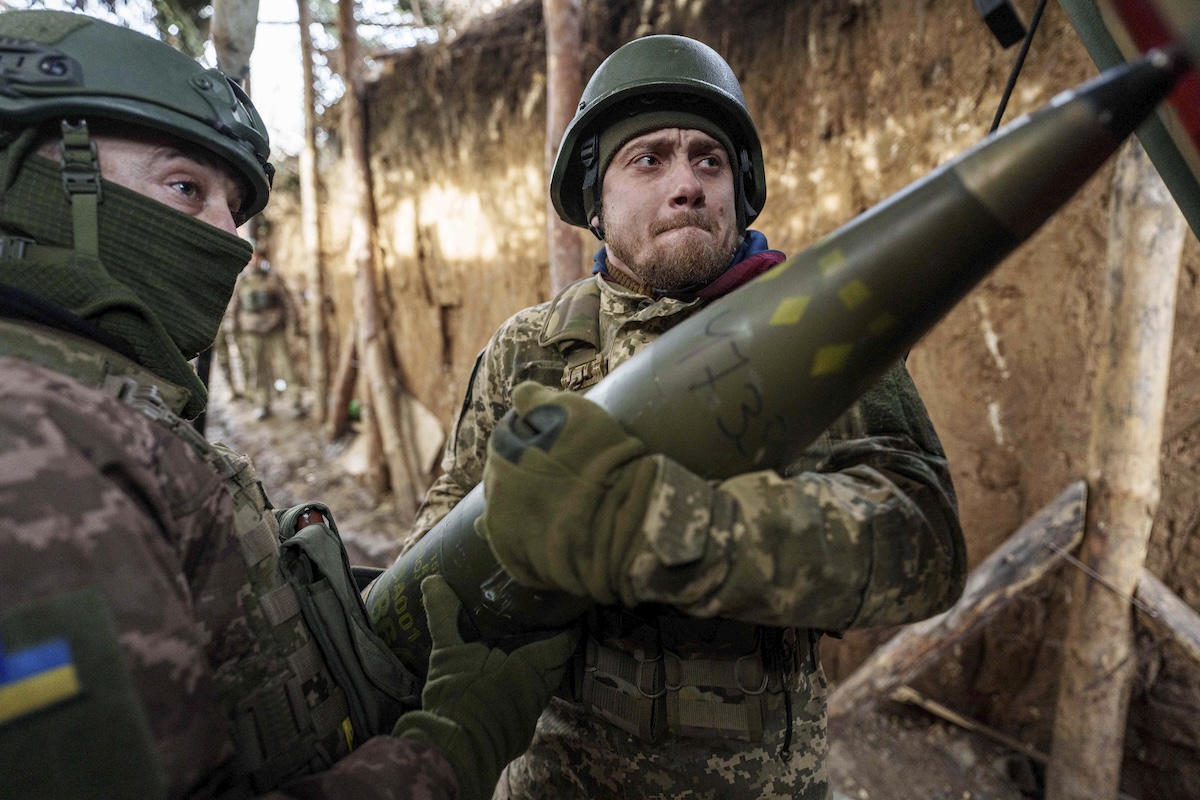
Ukrainian soldiers holding weapon, Jan. 2024
Figure 1: Ukrainian servicemen of 26th artillery brigade load ammunition into a howitzer before firing towards Russian positions in Ukraine's Donetsk region on Jan. 22, 2024. (AP)

Ukrainian servicemen of 26th artillery brigade load ammunition into a howitzer before firing towards Russian positions in Ukraine's Donetsk region on Jan. 22, 2024. (AP)

How hard will it be to end the war?

One thing Trump has going for him is war fatigue.

There is "a widespread exhaustion with the war, globally, and even in Ukraine," said Mark F. Cancian, senior adviser with the international security program at the Center for Strategic and International Studies, a Washington think tank. "Ukraine has not made a convincing argument for how it plans to win, and that feeds a fear that this will be a 'forever war.'"

But there are numerous short- and medium-term obstacles, said Michael O'Hanlon, a senior fellow in the Brookings Institution's foreign policy program. These include tricky negotiations over what happens to Ukrainian territory now occupied by Russia, whether Ukraine can get security guarantees, whether or when sanctions and freezes on Russian assets are lifted, and how any war crimes investigations will play out, O'Hanlon said.

Currently, Putin demands "a guarantee that Ukraine remain permanently neutral and not join NATO," the western military alliance, Janda said. He also wants limits on Ukraine's military size and removal of Ukraine's current government.

"He and other senior Russian officials have said any compromise on those points is impossible," Janda said.

Trump administration officials have said the U.S. can deploy to push the parties to the negotiating table, "increasing aid to Ukraine if Russia does not cooperate and reducing it if Ukraine does not cooperate," Cancian said. "That's not a crazy approach, but it's difficult to implement since aid levels take a lot of effort and cooperation to modulate."

Trump's promise to end the war within 24 hours as president did not come to fruition. If Trump can help end the war during his term, he could still end up with a Compromise rating, which is applied to promises where the president accomplishes substantially less than the pledge but still achieves something significant consistent with the original promise's goal.

For now, though, we rate this a Promise Broken.

RELATED: PolitiFact kicks off the MAGA-Meter to track Donald Trump's promises

RELATED: Lie of the Year 2022: Putin's lies to wage war and conceal horror in Ukraine