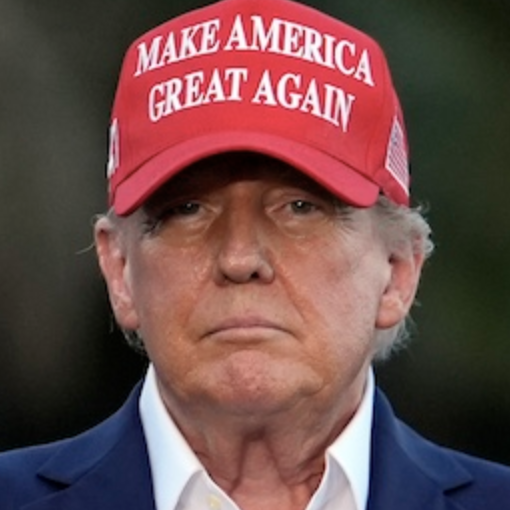
“On day one, I will immediately restore and expand the Trump Travel Ban.”
President Donald Trump reintroduced a multi-country ban on foreign travelers June 4, reviving one of his first term's efforts to curtail immigration.
The ban restricts nationals of Afghanistan, Myanmar, Chad, the Republic of Congo, Equatorial Guinea, Eritrea, Haiti, Iran, Libya, Somalia, Sudan and Yemen from entering the U.S. It partially restricts travelers from Burundi, Cuba, Laos, Sierra Leone, Togo, Turkmenistan and Venezuela from entering.
The ban is set to go into effect June 9 at 12:01 a.m.
Trump attempted to implement similar travel restrictions during his first term, but was initially blocked by the courts. The Supreme Court ultimately allowed Trump to enforce a modified restriction that affected seven countries. Former President Joe Biden rescinded the policy when he took office.
Trump's new policy covers more countries, 19 in total. For 12 countries, it suspends the entry of foreigners coming as immigrants or visitors.
For the seven countries with partial restrictions, the order blocks all immigrants as well as certain visitor visas, including business, tourism, cultural exchange and student visas. Most work authorization visas are unaffected, but the policy aims to reduce the window of time that all visas can be used to enter the country.
The policy includes a restriction on student visas from all 19 countries.
The ban provides some exceptions. It allows people from the targeted countries to travel into the U.S. if they are lawful permanent residents, immediate family members of U.S. citizens, diplomatic visa holders or "individuals whose entry serves U.S. national interest." It also does not apply to athletes, coaches and support staff participating in the 2028 Summer Olympics in Los Angeles and 2025 and 2026 World Cup matches hosted in the U.S. But the ban would include fans coming to attend the events.
Trump's announcement follows a Jan. 20 executive order calling on national security agencies to identify countries with "deficient" vetting and screening processes for issuing visas that would "warrant a partial or full suspension on the admission of nationals from those countries."
In his announcement video, Trump said the countries listed were chosen based on national security analysis considering "the large-scale presence of terrorists, failure to cooperate on visa security, inability to verify travelers' identities, inadequate record keeping of criminal histories, and persistently high rates of illegal visa overstays."
Trump also referenced the recent Boulder, Colorado, Molotov cocktail attack on people gathered to demand the release of hostages held by Hamas. Trump said the attack "underscored the extreme dangers posed to our country by the entry of foreign nationals who are not properly vetted, as well as those who come here as temporary visitors and overstay their visas." The suspect, Mohammed Sabry Soliman, is Egyptian; Egypt is not one of the countries restricted by the new policy.
During Trump's first term, he restricted citizens from several Muslim-majority countries following his campaign promise to establish a "complete and total shutdown" on Muslims entering the country. When courts blocked the policy, the Trump administration modified its list to include non-Muslim majority countries, such as North Korea, and Venezuela, and added more exceptions and periodic review. North Korea is the only country that was included in the first term's final set of restrictions and is not in the current proposal.
Jeff Joseph, immigration lawyer and president-elect of the American Immigration Lawyers Association, said the 2025 ban is likely to be challenged, but it will be "a very hard war to wage." Challengers would have to show how this ban differs from one the Supreme Court upheld in 2018.
Plus, Joseph said, "the new order does appear to address some of the concerns that litigants had with the previous travel ban," including periodic revisions of the policy and exceptions for dual citizens.
With this set of travel restrictions, Trump has taken a substantive step toward a new version of an expanded travel ban. But given the history of legal blocks to similar policies, we will continue to monitor implementation. We rate this promise In the Works.