How both sides play tricks with stimulus numbers

When Congress was deliberating the $787 billion economic stimulus package last winter, Republicans complained that it would not boost the economy fast enough. Six months later, they’re still complaining.
It can be difficult to make sense of the debate. Republicans make it sound like only a trickle of money has gotten to the economy, while the Obama administration makes it sound like there’s been a gusher.
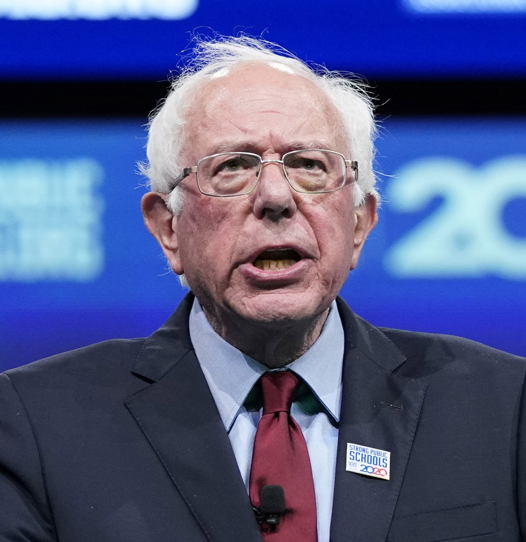
To sort it out, we decided to check a claim from each side: one from Republican Jon Kyl, a senator from Arizona, and one from Vice President Joe Biden, who has been appointed by President Barack Obama to lead the recovery efforts.
It turns out they’re both mostly right.
That’s because the debate over stimulus spending is being waged with some very precise verbs. Republicans have said “spent” because it is the lowest amount of money and it makes the stimulus look less effective. Democrats, meanwhile, have used the amount of money “committed” because it is a larger number that makes the stimulus look bigger and more effective.
As long as the person making the claim is careful about the wording, either term can be accurate. The words simply refer to different amounts of money on the timeline of stimulus spending.
So, on July 12, 2009, when Kyl told George Stephanopoulos, host of ABC’s
This Week
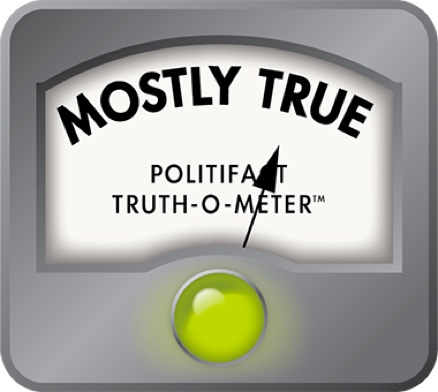
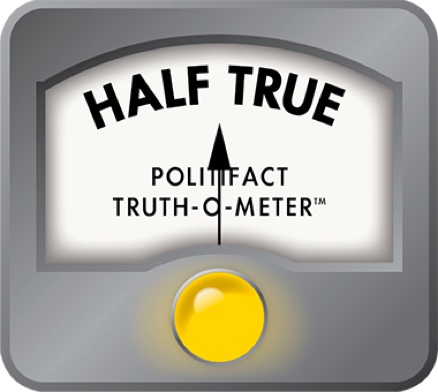
, that “only about 6.8 percent of the money has actually been spent,” he was close enough to earn a
Mostly True
on our Truth-O-Meter.
As of July 3, $60.4 billion in stimulus money had been spent, according to the Obama administration’s Recovery.gov records. If you divide this by the full stimulus amount of $787 billion, you get 7.7 percent — a bit higher than Kyl’s 6.8 percent, but in the ballpark. It appears that Kyl was a few weeks out of date in his statistics. The figure spent by June 19 was 6.7 percent; in the subsequent two weeks of reported data, the government shelled out an additional $7.5 billion, boosting the percentage slightly. But on the larger point, Kyl was accurate: A relatively small portion of the stimulus has been spent. So we rated his claim Mostly True.
Meanwhile, Biden issued this talking point to make it sound like a tidal wave of money was flowing into the economy: “Across the country, $174 billion of the Recovery Act have [sic] been committed in its first 130 days.”
We counted 130 days after Obama signed the bill on Feb. 17, which took us to June 27. On that day, the government had committed $157.8 billion, according to Recovery.gov, slightly less than the $174 billion cited by Biden. Today, the amount committed is $174.9 billion.
Those numbers are culled from weekly reports submitted by all federal agencies. The total stimulus cost will ultimately be roughly $787 billion, with about $499 billion for new spending. (The other $288 billion is for tax relief.) So that means that about 35 percent of the spending ($174.9 billion of $499 billion) has been allocated so far.
So, while Kyl was talking about money spent, Biden was referring to money committed to projects. They are two very different things, as John Porcari, deputy secretary of the Department of Transportation, wrote on the White House Web site after getting what he considered some bad press in a
USA Today
story that maintained that only $132 million of the total $27.5 billion earmarked for road construction funding has been spent.
“Whenever a state obligates or dedicates their Recovery dollars to a project that means it is green-lighted,” Porcari wrote. “States can start advertising the project and soliciting bids and once a bid is awarded contractors can buy supplies, bring workers on board and start breaking ground. It could be weeks before the reimbursement process starts so those outlays are in no way an indicator of how much money is getting to states, how much work is being done or how many people are working. The $16 billion obligated to thousands of highway projects is the true measure of how much highway money is reaching states.”
Using his definition, about $16 billion has been obligated to road construction projects, far more than what’s actually been spent.
So for practical purposes, money “committed” is the same as “obligated” and “allocated.” It’s money that will be spent on a particular project.
It’s fair to use those broader terms, according to Jim Horney, a budget expert at the left-leaning Center on Budget and Policy Priorities, because the guarantee of the money can sometimes be enough to keep an agency or a company from laying off a worker.
“It’s not just when the check has been written that we see an impact,” he said.
Take Virginia, for example. Earlier in the year, lawmakers were planning to lay off teachers to save cash. But when the stimulus passed, the state knew it would be getting some financial relief, so officials changed their budget to keep those teachers employed.
The money isn’t in the state treasury at that moment, but it still has a ripple effect on the economy, Horney said.
“If [teachers] knew they would be laid off, they would have started saving money, stopped buying clothes, preparing for hard times ahead,” he said. Knowing they would have a job in the coming school year, teachers were less likely to adopt austerity measures.
Horney had this caveat: Impact on the economy depends on how quickly the money is actually spent or reimbursed. If it takes five years for the government to pay a state back for a project, then the state may take some cost-cutting measures in the meantime.
Conservatives, though, say the true measurement of economic impact is money actually spent, said Brian Riedl of the Heritage Foundation, a conservative think tank.
“The economic theory behind the stimulus suggests only actual outlays can create jobs and drive money through the economy,” he said.
So both Biden and Kyl earned Mostly Trues, and they would have been completely right if they’d just used updated numbers.
The lesson for those of us trying to make sense of the stimulus debate is that words matter. Listen carefully for the verbs and caveats.
Our Sources
See Truth-O-Meter items.