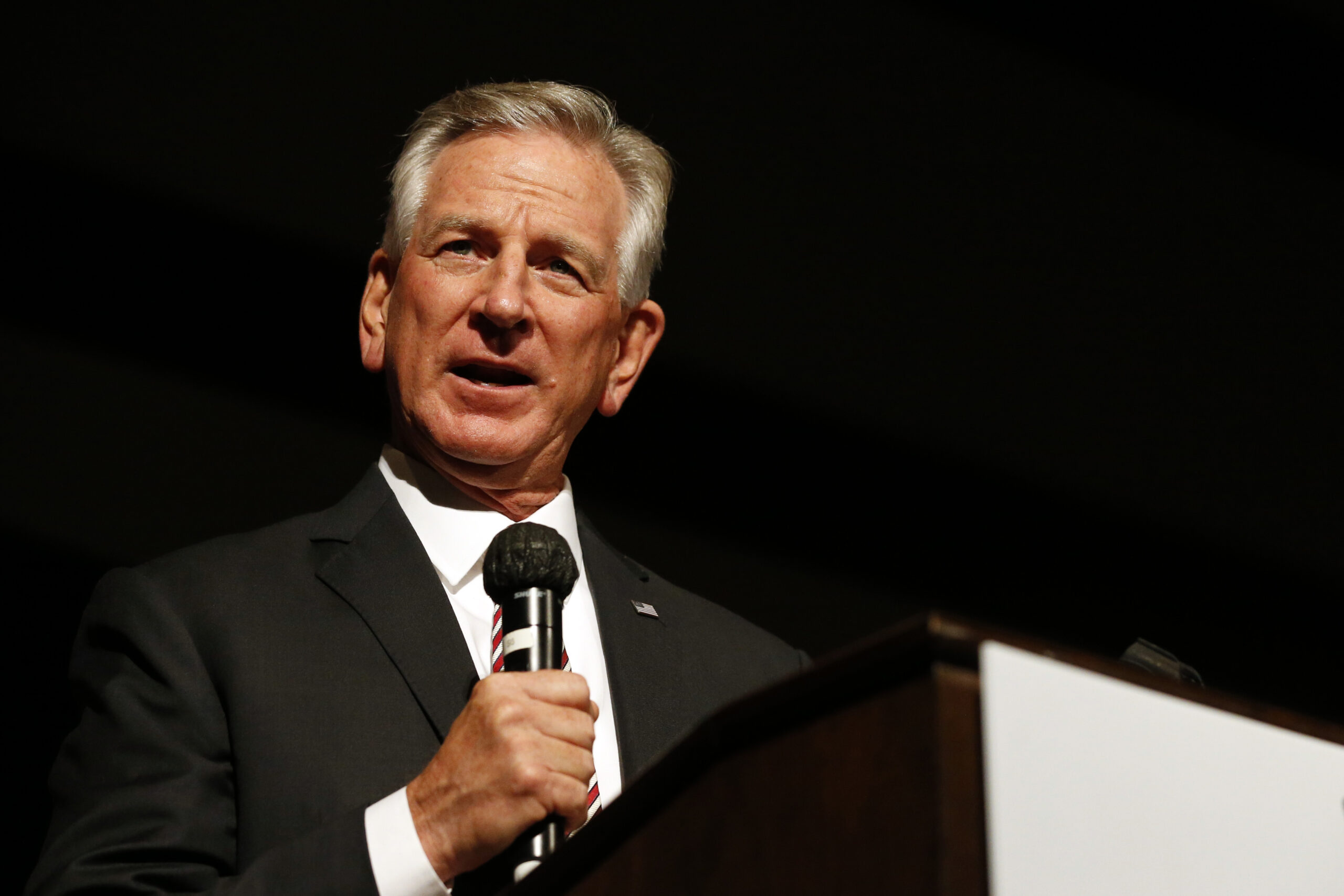
A new state agreement with Foxconn “will save Wisconsin taxpayers $2.77 billion.”



Gov. Tony Evers doesn’t tell whole story with claim that new Foxconn deal saves taxpayers $2.77B
If your time is short
-
A new agreement promises $2.77 billion less in state tax credits than an earlier one, which means taxpayers are on the hook for significantly less money.
-
In the current budget, that frees up some money officials could funnel elsewhere.
-
But Evers’ claim doesn’t reflect the possibility that Wisconsin may never have paid a dime in subsidies under the previous deal, based on slow progress and shrinking Foxconn plans
Gov. Tony Evers has wasted no time touting Wisconsin’s new deal with Foxconn.
The Democratic governor negotiated a new deal with the technology giant that would create 1,454 jobs and invest $672 million by 2026. In return, the company will receive a maximum of $80 million in tax subsidies — up to $37 million of which could be paid over the next two years.
The plan dramatically scales back promises of 13,000 jobs and $10 billion in investment negotiated under former Republican Gov. Scott Walker that would have cost the state nearly $3 billion. But the company’s proposed LCD manufacturing facility in Mount Pleasant never came to fruition, and the company now seems to be shifting its focus to create a wider range of products on that campus.
Evers contends the new agreement is a better outcome for Wisconsin.
“We fixed that agreement and found a better deal with Foxconn that will save Wisconsin taxpayers $2.77 billion while still bringing good, family-supporting jobs to Wisconsin,” he tweeted on April 21, 2021.
We’re going to focus on that number. Does the new Foxconn deal save taxpayers $2.77 billion?
Breaking down the numbers
When asked for evidence to support the governor’s claim, Evers spokeswoman Britt Cudaback pointed to the difference in tax credits between the new agreement and what Walker negotiated.
The original plan would have provided Foxconn up to $2.85 billion in tax credits compared to $80 million under the new contract. The new deal includes $60.3 million in job and capital investment credits, plus another $19.7 million in performance credits if Foxconn meets and maintains job projections.
If you subtract $80 million from $2.85 billion, you get the $2.77 billion Evers cited.
That means when the governor is talking about savings, he’s really referring to how much the state will spend on subsidies.
But how does that fit into the larger picture of taxpayer dollars?
It’s first worth noting that Wisconsin has not yet given Foxconn any money.
The Wisconsin Economic Development Corp. decided last year not to award tax credits to the company for work done in 2019 after determining it didn’t hire enough people. State officials expected the company to fall short for several more years and therefore didn’t plan to issue any subsidies during that time.
Still, the state had to budget assuming Foxconn would meet its goals and be eligible for the money. For example, Cudaback said the 2019-21 state budget included roughly $211 million in case the company reached its job targets in the 2021 fiscal year.
“That’s more than $200M that couldn’t be spent on other priorities like schools, healthcare, broadband so Wisconsinites lost out on having that money invested in those areas because it had to be budgeted for Foxconn even if they did not ultimately qualify to receive those credits,” she said.
It’s part of the process for the 2021-23 budget, too. In an April 23, 2021 letter to chairmen of the Joint Finance Committee, Administration Secretary Joel Brennan asked that the spending plan reflect $37.4 million for Foxconn from 2021-23, based on the new deal.
Taxpayer savings?
Now, back to Evers’ original claim.
It’s clear that Foxconn affected the state’s bottom line because officials had to set aside money for tax credits should the company meet its end of the agreement. But as Cudaback noted, that money theoretically could have been spent on something else if it wasn’t already earmarked — meaning it still could’ve hit taxpayers’ pocketbooks.
The same is true for future savings, though none of that has been budgeted beyond the two-year spending plan in front of the Legislature.
“Because of the renegotiated contract, the $2.77 billion saved — or, on average, nearly $200 million per biennium — can be allocated for other purposes in the state budget rather than being earmarked for a potential Foxconn payoff,” Cudaback said.
Evers’ claim also doesn’t reflect the possibility that Wisconsin may never have paid a dime in subsidies under the previous deal, based on the slow progress and shrinking Foxconn plans. So, in that respect, can one really save money that may never have been spent? That’s part of the issue when Evers and others make such claims about tax incentives.
On the other side, if the original deal had been fulfilled — and Foxconn met all of the investment and job goals — the state would have paid more. And if a fully-realized massive LCD facility was the result, the state would have also seen a much bigger boon in jobs and economic development in return for those incentives.
Our ruling
In a tweet, Evers said the new Foxconn deal “will save Wisconsin taxpayers $2.77 billion.”
The agreement does involve $2.77 billion less in state tax credits, which means taxpayers are on the hook for significantly less money. It’s important to note that the state had not paid subsidies to the company under the previous deal and wasn’t on track to do so for several years, so it’s possible much — or even all — of that never would have been paid.
That said, the new contract also frees up funds that officials could funnel elsewhere. There’s no telling how this will affect future budgets, but if the state does choose to reallocate that money and spend it elsewhere, taxpayers won’t enjoy the savings Evers boasted about.
Our definition for Half True is a statement that’s partially accurate but leaves out important details or takes things out of context.
That fits here.
Our Sources
-
Milwaukee Journal Sentinel, Foxconn, state agree to new deal; Foxconn expecting to hire up to 1,454 by 2025. The company originally promised to hire up to 13,000 people, April 20, 2021.
-
Milwaukee Journal Sentinel, Foxconn could receive up to $37M from state over next two years under new deal, April 23, 2021.
-
Milwaukee Journal Sentinel, Foxconn's new deal shows how project has changed since 2017; here are some of the major changes and points, April 21, 2021.
-
Email from Britt Cudaback, communications director for Gov. Tony Evers, April 28, 2021.
-
Milwaukee Journal Sentinel, Wisconsin denies tax credits to Foxconn for 2019 work, says company did not create enough jobs to fulfill agreement, Oct. 12, 2020.
-
Milwaukee Journal Sentinel, State does not anticipate giving Foxconn tax credits during next three fiscal years, Dec. 2, 2020.
-
Letter from Joel Brennan to Sen. Howard Marklein and Rep. Mark Born, April 23, 2021.