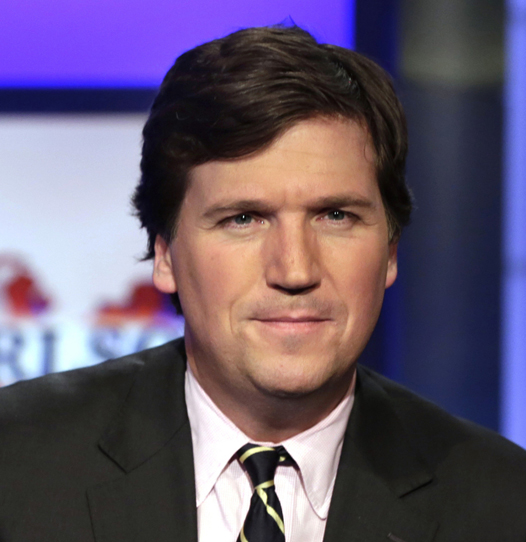
“We made a ridiculous deal (with Iran). We gave them $150 billion. We gave them $1.8 billion, and we got nothing.”

Donald Trump miscasts the money and the terms in the Iran nuclear deal
The G7 meeting closed with a possible sign of reduced tensions between Iran and the United States. After months of charges and counter charges, both President Donald Trump and Iranian President Hassan Rouhani floated the idea of meeting with each other.
In May 2018, Trump pulled out of the multinational agreement that had rolled back Iran’s nuclear program and opened its facilities to international inspectors.
In a post-G7 news conference alongside French President Emmanuel Macron, Trump said the United States had “made a ridiculous deal” with Iran.
“We gave them $150 billion,” Trump said Aug. 26. “We gave them $1.8 billion, and we got nothing.”
We’ve checked this before and on the numbers, the $150 billion is sketchy at best, while the $1.8 billion is reasonably accurate. But it’s important to remember that however much money was involved, it started out as Iran’s. It had been frozen by sanctions since 1979.
As for whether the United States “got nothing” from the deal, that view puts a value of zero on rolling back Iran’s nuclear program, which the agreement accomplished.
The $150 billion
The 2015 agreement, promoted by then President Barack Obama, freed up Iranian assets that had been frozen under sanctions. Called the Joint Comprehensive Plan of Action, the deal included Iran and the United States, China, France, Germany, Russia, the United Kingdom and the European Union.
The agreement only affected sanctions imposed to punish Iran for its nuclear program. Iran has other frozen assets that were untouched by the deal.
Some conservatives have put the amount released as high as $150 billion, which is the highest of estimates we have seen. Another estimate from Iran’s Central Bank topped out at about $29 billion in readily available funds, with another $45 billion tied up in Chinese investment projects and the foreign assets of Iran’s Oil Ministry.
After talking with officials at Iran’s Central Bank, Nader Habibi, professor of economics of the Middle East at Brandeis University, told PolitiFact in 2018 that the actual total is between $25 billion and $50 billion.
In July 2015, U.S. Treasury Secretary Jack Lew told lawmakers Iran would gain access to $56 billion.
Even though Trump said that “we gave” Iran the money, little of that money was under the control of the United States or any U.S. bank. Most of it, Habibi said, was in central and commercial banks overseas. Furthermore, it was Iran’s money to begin with, not a payment from any government to buy Iran’s cooperation.
The $1.8 billion
The Congressional Research Service, the nonpartisan analytic arm of Congress, reviewed the cash transfer of $1.7 billion in a 2018 report.
That was the amount that U.S. and Iranian negotiators settled on to resolve an arms contract between the United States and Iran that predated the Iranian revolution in 1979. Iran had paid for military equipment, and it was never delivered.
As of 1990, there were $400 million in that account. Negotiators agreed that accrued interest would add $1.3 billion to the amount, which is a lot of money — but 25 years is a long time for interest to build up the balance.
Not nothing
Trump’s claim that we got “nothing” in return misses the point of the deal: blocking Iran from building a nuclear bomb.
“We got major restrictions and intrusive transparency on Iran’s nuclear program. Beyond being not ‘nothing,’ this is the entire reason why we put the sanctions on in the first place,” Richard Nephew, an expert on economic sanctions at Columbia University’s Center on Global Energy Policy, told us in 2016. “Reasonable people may disagree whether we got enough for the sanctions relief, but it wasn’t nothing.”
“There’s a long list (of things we got), such that even the Israeli intelligence community has concluded that, for the duration of the deal, Iran will not acquire a nuclear weapon,” said George Perkovich, an expert on nuclear strategy at the Carnegie Endowment for International Peace.
Under the deal, Iran agreed to lose 97% of its stockpile of enriched uranium and give up 14,000 of its 20,000 centrifuges, which are needed to enrich uranium. It also agreed to curb production of plutonium (the other element that can be used to build a bomb) and dismantle its one plutonium reactor.
To make sure Iran held up its end of the bargain, the deal also permitted international inspectors to “implement continuous monitoring.” What that means and whether it was enough are up for debate.
Our ruling
Trump said that under the 2015 nuclear deal, the United States “gave” Iran $150 billion and $1.8 billion, and “got nothing” for either.
The $150 billion — which was not a gift, but an unfreezing of Iran’s assets — is the highest estimate we’ve seen, and the one with the least evidence to support it. The high-end estimate from the U.S. Treasury Department in 2015 was $56 billion, and outside analysts believe the number could be lower.
The $1.8 billion is reasonably accurate. The official amount is $1.7 billion.
As for “getting nothing” out of the deal, while some people will disagree that the United States got enough, it prevented Iran from getting enough fuel to build a bomb and allowing international inspectors. That’s more than nothing.
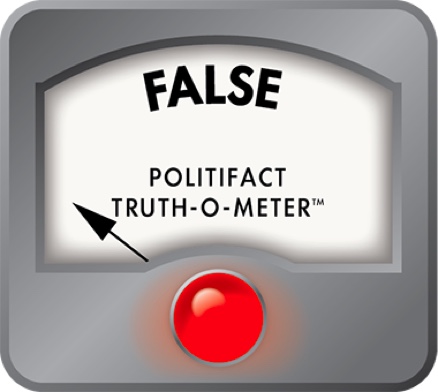
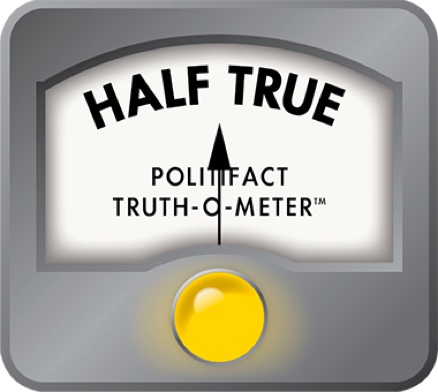
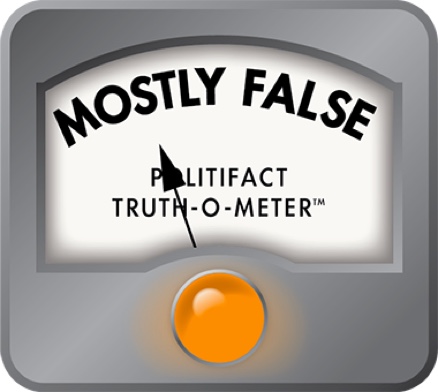
The official record backs up just one out of the three elements in Trump’s statement. We rate this Mostly False.
Our Sources
Reuters, "Shell repays Iran 1.77 billion euros debt for oil deliveries," March 7, 2016
White House, "Implementation Day," Jan. 16, 2016
The Conversation, "Iran’s frozen funds: how much is really there and how will they be used?" Aug. 11, 2016
Government of Iran, The future of Iran's economy after a nuclear deal, July 30, 2013
U.S. State Department, Letter to House Committee on Foreign Affairs, March 17, 2016
Wall Street Journal, U.S. Transferred $1.3 Billion More in Cash to Iran After Initial Payment, Sept. 6, 2018
Los Angeles Times, $1.7-billion payment to Iran was all in cash due to effectiveness of sanctions, White House says, Sept. 7, 2016
C-SPAN, "Iran Nuclear Agreement," July 23, 2015
NPR, "Ex-Mossad Chief Supports Iran Nuclear Deal," July 31, 2015
PolitiFact, No, Donald Trump, we are not giving Iran $150 billion for 'nothing', March 17, 2016
Interview, Nader Habibi, professor of economics of the Middle East, Brandeis University, April 26, 2018
Email interview, Richard Nephew, program director at the Center on Global Energy Policy, March 16, 2016
Email interview, George Perkovich, vice president at Carnegie Endowment, March 16, 2016