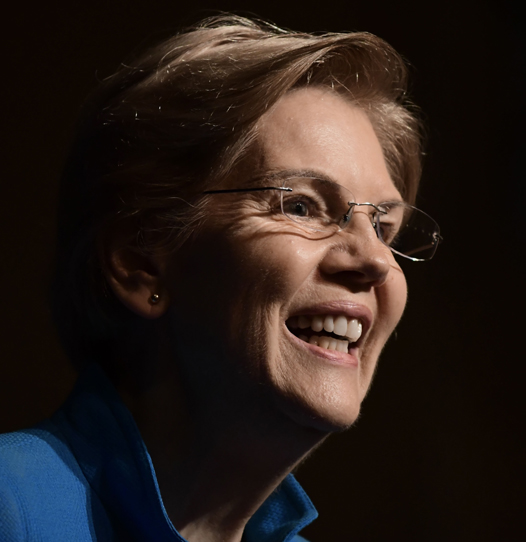
“By rubber-stamping the Bayer-Monsanto merger, the Justice Department is handing control over one quarter of the world’s seeds and pesticides market to one ginormous agribusiness.”…
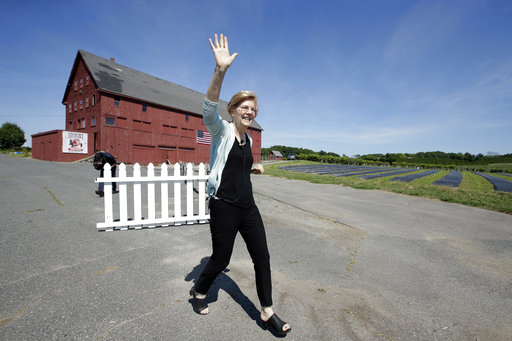

Warren: U.S. rubber-stamped deal; Bayer-Monsanto now controls 25% market share
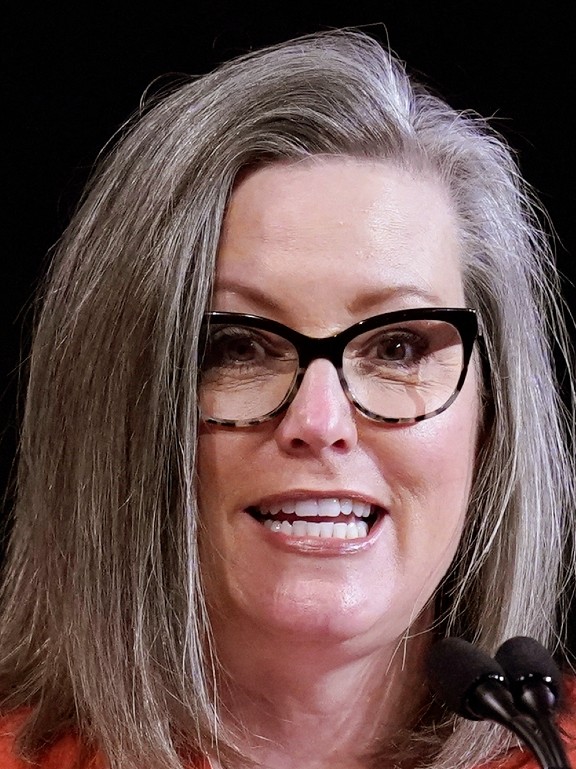
Democratic presidential candidate Elizabeth Warren has put regulating the power of large firms at the center of her campaign. She often speaks about the big banks, but recently, she trained her sights on agribusiness.
“By rubber-stamping the Bayer-Monsanto merger, the Justice Department is handing control over one quarter of the world’s seeds and pesticides market to one ginormous agribusiness,” the Massachusetts senator posted on Facebook Feb. 4. “That’s bad for farmers, bad for our food supply, and bad for consumers everywhere.”
In this factcheck, we look at whether U.S. antitrust regulators gave the merger little thought, and whether the deal produced a company as large as Warren said.
The $60-plus billion merger of German-based Bayer with the American firm Monsanto essentially won U.S. antitrust approval in May 2018. That came about 18 months after the two multinational firms struck a deal.
After long negotiations, the Justice Department secured what it called the largest merger divestiture ever before letting Bayer’s purchase of Monsanto go through. The value of the sell-off was over $7 billion.
Bayer had to unload its cotton, canola, soybean and vegetable seed businesses, as well as its Liberty herbicide line, all of which overlapped with what Monsanto was doing.
It’s also worth noting that European regulators approved the deal months before the Justice Department acted.
Critics of the Justice Department’s decision, such as the National Farmers Union, described it as rubber-stamping. The government’s process was more deliberate than that term implies.
A big company emerged
Industry analyst Jonas Oxgaard with the investment research firm Sanford Bernstein told us Bayer is now “pretty close to one fourth of the world’s market.”
There’s been a spate of mergers and acquisitions over the past two decades, and today, just four firms dominate the seeds and agrichemical business.
Oxgaard said Bayer has about $12 billion in crop protection sales out of a world market of $56 billion, or about 21 percent of sales. And for seeds, Bayer has $10 billion out of a total $40 billion market, or about 25 percent.
There are different ways to slice the data. Other analysts put Bayer at 33 percent of global seed sales and 22.9 percent of agrichemical sales.
Either way, Warren’s number is a reasonable shorthand. But we found opinions mixed on what Bayer’s hefty market share means.
For certain crops, the seed business now is in the hands of just two firms.
“In the two by far most valuable crops for the seed producers, corn and soybean, Bayer and DowDupont together have around 75 to 80 percent market share, a classic duopoly,” Oxgaard told us. “That said, that still hasn’t led to massive price increases over the last several years. The end result of the duopoly seems rather that they don’t compete particularly vigorously to capture market share from each other.”
For rice and wheat, Oxgaard said, both Bayer and DowDupont are “bit players.”
But Philip Howard, associate professor in the Department of Community Sustainability at Michigan State University, said the small number of firms “creates an environment conducive to price signaling and may result in higher prices.”
In a study of growing industry concentration, the U.S. Agriculture Department reported in 2012 that “for the past two decades, the prices of farm inputs have been rising faster than the prices U.S. farmers receive for their crops and livestock.”
This likely limited the impact of market dominance, Howard said. He told us that in recent years, falling commodity prices have put a brake on rising prices for seed and agricultural chemicals, because farmers can’t afford to keep paying more.
The story for chemicals can play out a bit differently than for seeds. Oxgaard noted that protecting crops from insects and diseases is a moving target. Dupont, for example, had a lock on a chemical that killed a moth that hit Brazil a few years ago. It made high profits, until the threat largely disappeared.
“A company might control the only means of protection against one specific threat, but that is temporary,” Oxgaard said.
Our ruling
Warren said the Justice Department “rubber stamped” a deal that cleared the way for one firm to control one-fourth of the seeds and pesticide market worldwide.
The regulatory process took many months and Bayer had to sell substantial business lines to win approval. “Rubber-stamped” gives the wrong impression that it happened without scrutiny or conditions.
The market share number is generally correct. However, Bayer plays a commanding role in the sale of some seeds, such as corn and soybeans, and not in others. And the experts we reached described the limits of control, even when one or two firms dominate a market.
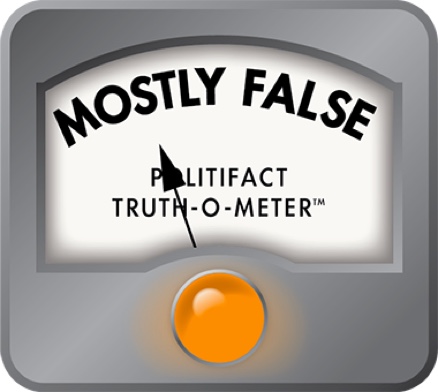
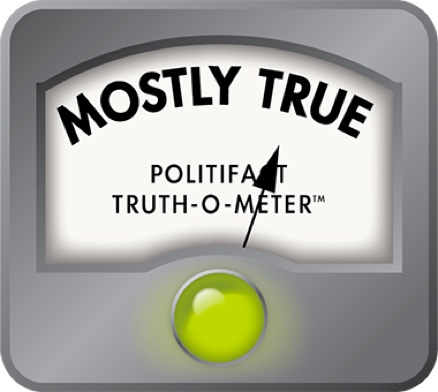
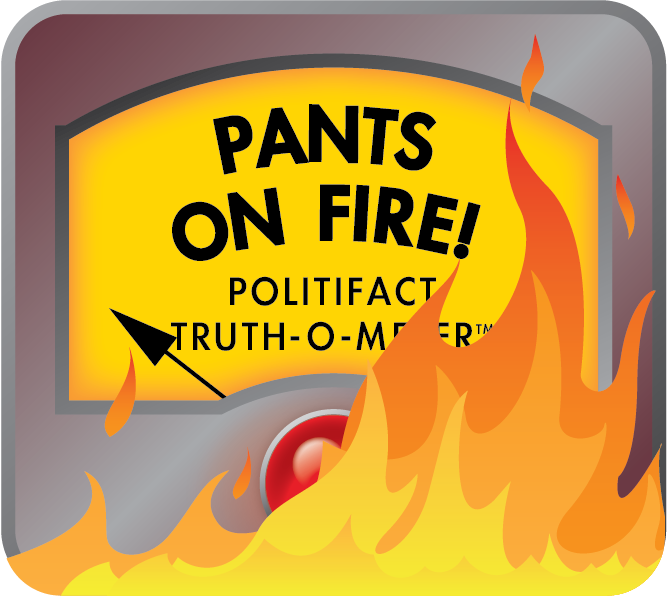
We rate this claim Half True.

PolitiFact Rating:
 PolitiFact Rating:
Our Sources
Elizabeth Warren, Facebook post, Feb. 4, 2019
U.S. Justice Department, Justice Department Secures Largest Negotiated Merger Divestiture Ever to Preserve Competition Threatened by Bayer’s Acquisition of Monsanto, May 29, 2018
AGROW-Informa, 2018 Award winners, 2018
Philip Howard, Global Seed Industry Changes Since 2013, Dec. 31, 2018
ETC Group, Blocking the chain, 2018
Bloomberg: Opinion, Why the EU Approved Bayer-Monsanto, March 23, 2018
Texas A&M University Agricultural and Food Policy Center, Effects of Proposed Mergers and Acquisitions Among Biotechnology Firms on Seed Prices, 2016
U.S. Agriculture Department, Rising Concentration in Agricultural Input Industries Influences New Farm Technologies, Dec. 3, 2012
Chemistry World, Bayer–Monsanto merger momentum, May 31, 2018
Friends of the Earth, DOJ Releases Formal Approval of Toxic Mega-Merger between Bayer and Monsanto, Jan. 30, 2019
Email interview, Jonas Oxgaard, agricultural industry analyst, Sanford Bernstein, Feb 12, 2019
Email interview, Philip Howard, associate professor, Department of Community Sustainability, Michigan State University, Feb. 12, 2019
Email interview, Chris Hayden, spokesman, Warren for President, Feb. 12, 2019