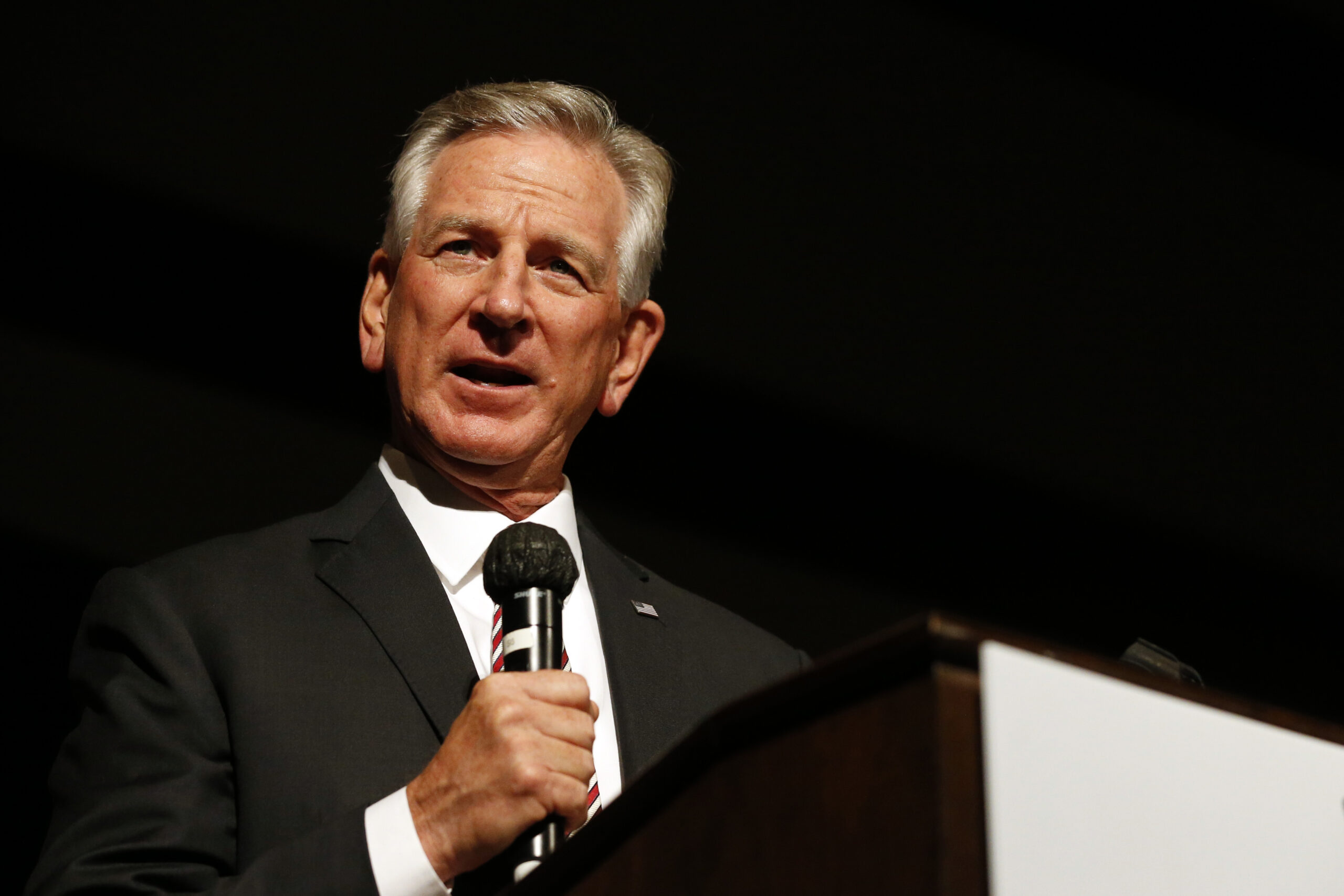
“Black Americans still earn less than 73 percent of what white men make.”



Do black workers earn 73% of what white men make?
Making the case for his election in a campaign email, gubernatorial hopeful Andy Gronik cited a racial pay gap as one reason Wisconsin needs new leadership.
Before laying out his pledge to “fight for the rights of everyone in Wisconsin,” Gronik highlighted a gap between the earnings of black and white workers.
“When black Americans still earn less than 73 percent of what white men make in America, we have work to do,” the Democratic businessman from Fox Point wrote on Aug. 27, 2017. “It’s time to stand up and say that people of color deserve all of the opportunities and privileges that the rest of us have.”
In other words, Gronik says the “wage gap” is 27 percentage points between the two races.
Let’s see if Gronik’s numbers add up.
Cited gap doesn’t account for differences
When asked for evidence to back up Gronik’s claim, a Gronik spokesman pointed to a 2016 Pew Research Center report.
But the candidate’s email misstates the comparison. The email compares “black Americans” with just white men, while the Pew report is saying black men have 73 percent the hourly earnings of white men.
The Pew report uses 2015 data and is based on median hourly earnings for each race. It does not take into account differences between the education levels of white and black workers, their experience, occupation or other factors.
(The unadjusted earnings data from Pew showed Asian men earn 117 percent what white men do and Hispanic men earn 69 percent what white men do.)
“From a statistical standpoint you’d want to compare apples v. apples, and those comparisons with unadjusted data would be comparing apples to oranges really,” said Mark Perry, a scholar at the right-leaning American Enterprise Institute and professor of economics at the University of Michigan-Flint. “You’re not controlling for any of the factors that could explain differences in earnings.”
The left-leaning Economic Policy Institute, a nonprofit think tank, examines these factors each year and put the black-white wage gap at 14.5 percent for 2016. The calculation controls for gender, race, education, experience and geographic division.
Their data shows the gap has steadily widened in recent years. The wage gap was around 9 percent in the late 1970s and 10 percent in the 1980s, rising to a record 15.2 percent in 2015 before dropping slightly in 2016.
The wage gap varies greatly between men and women. The institute’s detailed 2016 study tabbed the gap as 22 percent between white men and black men and 11.7 percent between white women and black women, when adjusted for education, experience, metro status and region.
Differences in factors such as education and experience levels explained only about one-fourth of the black-white wage gap for men and one-third for women, the study said.
The study struggled to identify a cause for the rest, saying the gaps are growing due to either discrimination “or racial differences in skills or worker characteristics that are unobserved or unmeasured in the data.”
Segments show larger, smaller gaps
More detailed data from the U.S. Bureau of Labor Statistics shows the wage gap rises and falls between various educational and occupational groups.
Examples from a 2016 comparison of median weekly earnings:
· Among college graduates, black workers earned 78 percent of what their white counterparts earned.
· Among those with less than a high school diploma, black workers earned 89 percent of what their white counterparts earned.
· Black workers in management, professional and related occupations earned 80 percent of what white workers did.
· Black workers in natural resources, construction and maintenance occupations earned 93 percent of what white workers did.
· Black men earned 76 percent of what white men did overall.
· Black women earned 84 percent of what white women did overall.
Our rating
Gronik said “black Americans still earn less than 73 percent of what white men make.”
His claim runs into problems on several levels. First, he garbled the statistic, comparing all black workers to only white men. He also referred to unadjusted earnings data, which does not account for differences between workers’ experience and backgrounds that explain some of the wage gap.
He also used 2015 data, when 2016 data is available from various sources.
But his central point — that there is an observable difference between what black workers and white workers make — is supported by the data. Experts vary in their methodologies and definition of a wage gap, and more nuanced calculations show it is notably smaller than the figure Gronik cited. But a gap does exist, both between all workers and between workers who are similarly situated.
We rate Gronik’s claim Half True.
Our Sources
Economic Policy Institute, State of Working American Data Library, Feb. 13, 2017
Economic Policy Institute, Black-white wage gaps expand with rising wage inequality, Sept. 20, 2016
Pew Research Center, Racial, gender wage gaps persist in U.S. despite some progress, July 1, 2016
Interview with Mark Perry, scholar at American Enterprise Institute, professor of finance and business economics at the University of Michigan-Flint, Sept. 21, 2017
Bureau of Labor Statistics, Highlights of women’s earnings in 2016, August 2017
Bureau of Labor Statistics, analysis of U.S. Census Bureau Current Population Survey
Email exchange with Brandon Weathersby, spokesman for Andy Gronik, Aug. 28-30, 2017