“Afghanistan has more hectares (of opium poppies) planted today than they had before we started this war.”

Does Afghanistan grow more opium poppies than before 2001?
President Donald Trump’s budget puts a number of foreign assistance programs at risk, if not outright elimination. His plan to cut about 30 percent from the State Department and the U.S. Agency for International Development has drawn resistance from both Republicans and Democrats.
At a March 28 hearing, Rep Ted Yoho, R-Fla., came to the defense of several prominent projects, including the Overseas Private Investment Corporation and two Obama-era programs aimed at boosting electric capacity in Africa and agriculture globally. But Yoho did agree with cuts in one area — the war on drugs. He said it was ineffective.
“I look at the poppy fields in Afghanistan,” Yoho said. “They have more hectares planted today than they had before we started this war.” Opium poppies produce a key ingredient for heroin and other opioids.
Afghanistan remains the world’s top opium poppy producer, despite the billions of dollars America has put into the country. Since late 2001 when the United States and its allies retaliated against the Taliban and al-Qaida for the 9/11 attacks, America has spent about $25 billion to rebuild Afghanistan’s economy and $8.5 billion to rid it of narcotics.
Yoho’s office said he got his information from a United Nations report. The latest survey found that in 2016, farmers were growing poppies on more than 200,000 hectares. In 2002, the number was 74,000 hectares.
The U.N.’s chart below shows the pattern over the decades. The black lines show the high and low estimates. In conflict zones, satellite images replaced on-the-ground observations.

Aside from a few years, the land under poppy cultivation has trended up. The actual tons produced has jumped around more, but it too is higher today than in 2002. The big drop in 2001 came after the Taliban banned production in 2000. The Taliban later reversed itself, leading to a rapid spread after 2012.
According to the U.N., most of the opium comes from Afghanistan’s southern provinces.

Only in terms of Gross Domestic Product does opium play a smaller role than in the past. The International Monetary Fund reported that in 2004, opium exports were equal to half of the country’s non-opium GDP. Today, it is closer to about 15 percent.
But it still provides about 400,000 jobs, more than the Afghan National Security Forces.
Reports from the private research group RAND and the World Bank say the driver is simple economics. Opium offers a better return to farmers than most crops. In a regrettable twist, American-led efforts to make legal crops more lucrative can backfire.
In Helmand Province, a project successfully shifted a number of landowners away from poppies, but then they no longer needed the sharecroppers and tenant farmers who had been working the land. World Bank researchers said this “created a displaced, cheap, and mobile population, skilled in poppy cultivation.” They moved to marginal land and poppy production increased.
Our ruling
Yoho said Afghanistan has more land producing poppies than before the U.S. war began. U.N. surveys back that up. In 2002, the country had about 74,000 hectares in poppy cultivation. In 2016, the number was over 200,000. The amount of land used for growing poppies has gone up and down, but the long term trend is definitely up.
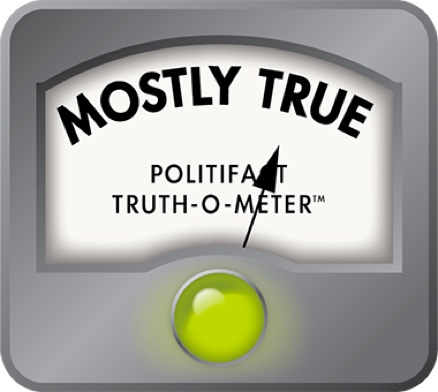
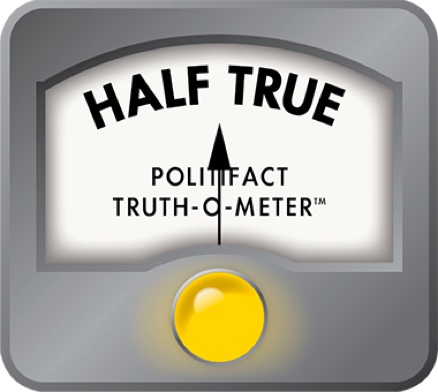
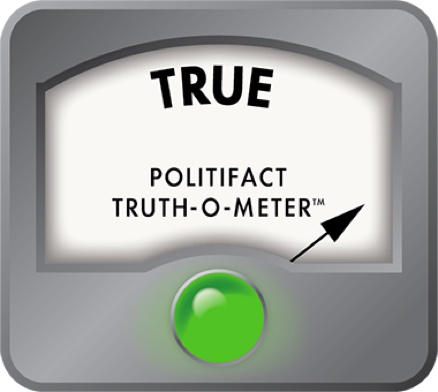
We rate this claim True.

 Politifact Rating:
Our Sources
Congressional Quarterly, House Foreign Affairs Committee hearing, March 28, 2017
United Nations Office of Drugs and Crime, Afghanistan opium survey, October 2016
Rand, Reducing the Cultivation of Opium Poppies in Southern Afghanistan, 2015
World Bank, Islamic Republic of Afghanistan: Agricultural sector review, 2014
International Monetary Fund, Islamic Republic of Afghanistan, June 23, 2015
White House Office of Management and Budget, America first budget blueprint, March 16, 2017
Special Inspector General for Afghanistan Reconstruction, 34th Quarterly report to Congress, Jan. 30, 2017
New York Times, Popular Domestic Programs Face Ax Under First Trump Budget, Feb. 17, 2017