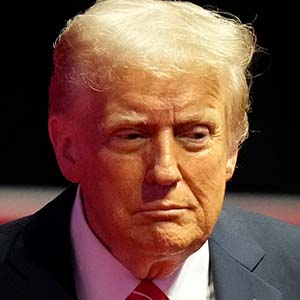
“You (Hillary Clinton) get a subpoena, and after getting the subpoena you delete 33,000 emails.”

Donald Trump says Hillary Clinton deleted 33,000 emails after getting a subpoena
The FBI concluded that Hillary Clinton should not be prosecuted over her decision to conduct State Department business exclusively over a private email server, but Donald Trump pledged to appoint a special prosecutor to investigate the matter if he becomes president.
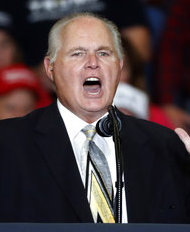
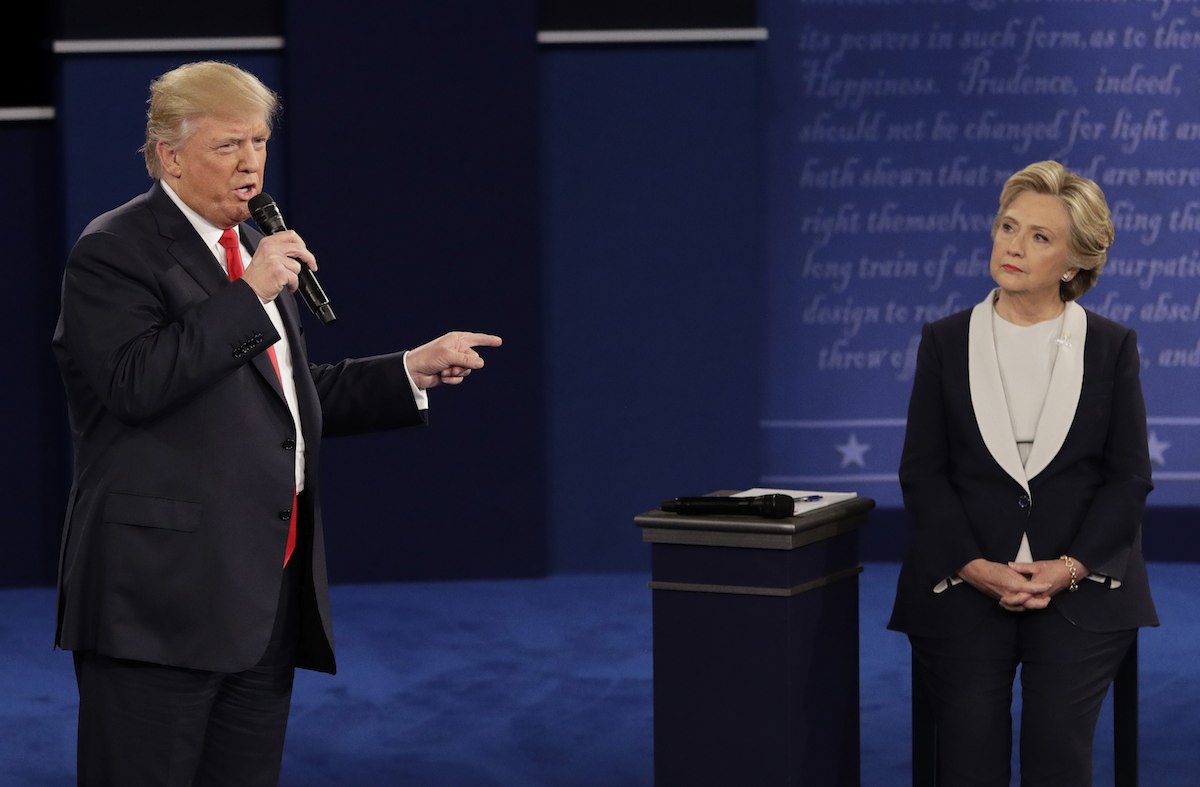
At the second debate between the two presidential nominees, Trump criticized Clinton for turning over half her emails held on her server to the State Department and deleting the rest. He said Clinton should be “ashamed” of herself for deleting 33,000 emails.
“There has never been anything like this,” Trump said at the Oct. 9 event in St. Louis. “You get a subpoena, and after getting the subpoena you delete 33,000 emails.”
Clinton and her campaign don’t dispute that she deleted these 33,000 emails. They argue that these were personal in nature, rather than work-related, and therefore were not necessary to turn over.
However, they have denied that they deleted the emails after receiving a congressional subpoena from the House Select Committee on Benghazi on March 4, 2015. But an August 2016 FBI report on its investigation shows that Trump’s claim has some merit.
Let’s take a look at the timeline of relevant events, according to the FBI report. (The most pertinent information is on pages 15-19 of this document.)
Feb. 1, 2013: Clinton serves her last day as secretary of state.
July 23, 2014: The State Department reaches an agreement with the Benghazi committee about producing records for its investigation into the 2012 attack on a U.S. embassy in the Libyan city.
Oct. 28, 2014: The State Department sends an official letter to Clinton’s staff requesting “emails related to their government work.” Clinton’s lawyer, David Kendall, and aide Cheryl Mills oversaw the review of Clinton’s email archives to produce work-related documents to the department.
Dec. 5, 2014: Clinton’s team provides 55,000 pages of emails, or about 30,000 individual emails, to the State Department. Mills tells an employee at Platte River Networks, which managed the server, that Clinton does not need to retain any emails older than 60 days.
March 2, 2015: The New York Times breaks the story that Clinton used a personal email account while secretary of state.
March 4, 2015: The Benghazi committee issues a subpoena requiring Clinton to turn over all emails from her private server related to the incident in Libya.
Between March 25-31, 2015: The Platte River Networks employee has what he calls an “oh s—” moment, realizing he did not delete Clinton’s email archive, per Mills’ December 2014 request. The employee deletes the email archive using a software called BleachBit.
March 27, 2015: Clinton’s lawyers send a letter to the Benghazi committee saying that the State Department already has the relevant emails, as they were included in the Dec. 5, 2014, turnover.
Trump’s timeline is correct. The congressional subpoena came on March 4, 2015, and an employee deleted the emails sometime after March 25, 2015, three weeks later.
However, the implication — that Clinton deleted emails relevant to the subpoena in order to avoid scrutiny — is unprovable if not flat wrong.
The FBI’s investigation did find several thousand emails among those deleted that were work-related and should have been turned over to the State Department. However, FBI Director James Comey said in a July 2016 statement that the FBI investigation “found no evidence that any of the additional work-related emails were intentionally deleted in an effort to conceal them.”
Comey added in a later congressional hearing that the FBI learned no one on Clinton’s staff specifically asked the employee to delete the emails following the New York Times story and subpoena. Rather, the employee made that decision on his own.
Clinton told the FBI that she did was not involved in deciding whether individual emails should be sent to State Department, nor “did she instruct anyone to delete her emails to avoid complying with FOIA, State or FBI requests for information.”
Our ruling
Trump said, “You (Hillary Clinton) get a subpoena, and after getting the subpoena you delete 33,000 emails.”
Clinton’s staff received a subpoena for Benghazi-related emails March 4. An employee managing her server deleted 33,000 of Clinton’s emails three weeks later.
The FBI found no evidence that the emails were deleted deliberately to avoid the subpoena or other requests. Clinton’s team requested for the emails to be deleted months before the subpoena came. They also argued that all the emails that would be relevant to the subpoena had already been turned over to the State Department.
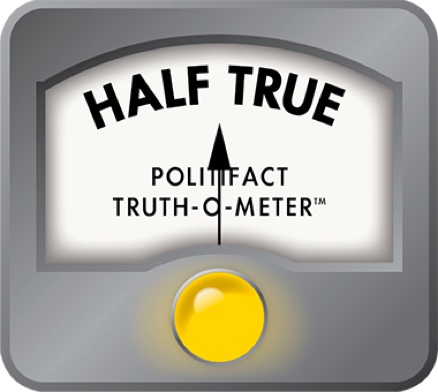
We rate Trump’s claim Half True.

 Politifact Rating:
Our Sources
FBI, report on investigation into Clinton emails, released Sept. 2, 2016
FBI, Statement by FBI Director James B. Comey on the Investigation of Secretary Hillary Clinton’s Use of a Personal E-Mail System, July 5, 2016
House Oversight and Government Reform Committee, transcript of Comey hearing, July 7, 2016
House Select Committee on Benghazi, "Select Committee on Benghazi Releases Clinton Subpoena," July 8, 2015
Washington Post, "Hillary Clinton’s e-mails: a timeline of actions and regulations," March 10, 2015
FactCheck.org, "The FBI Files on Clinton’s Emails," Sept. 7, 2016
CNN, "Reality Check: Trump on Clinton emails," Oct. 4, 2016
PolitiFact, "Hillary Clinton and the House Republicans battle over Benghazi subpoena," July 9, 2016
Email interview, Trump spokesman Steven Cheung, Oct. 9, 2016
Email interview, Clinton spokesman Josh Schwerin, Oct. 9, 2016