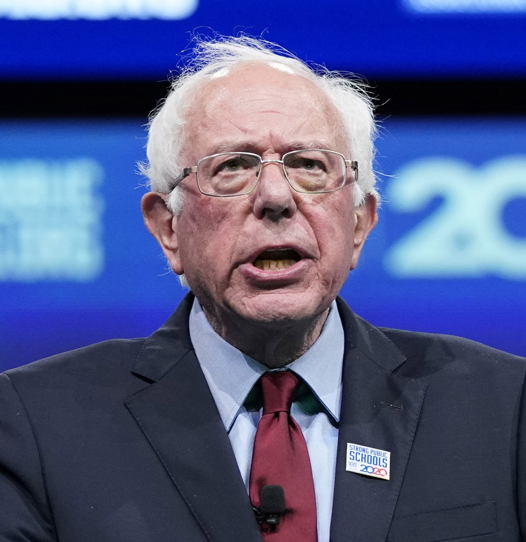
Says Bernie Sanders “voted for regime change with respect to Libya.”

Hillary Clinton says Bernie Sanders voted for regime change in Libya
Sen. Bernie Sanders and former Secretary of State Hillary Clinton got into a tussle over their differing foreign policy visions at the Democratic presidential debate in New Hampshire.
Sanders criticized Clinton for being too hawkish in the Middle East.
“I think — and I say this with due respect — that I worry too much that Secretary Clinton is too much into regime change and a little bit too aggressive without knowing what the unintended consequences might be,” he said Dec. 19. “Yes, we could get rid of (former Iraqi leader) Saddam Hussein, but that destabilized the entire region. Yes, we could get rid of (former Libyan dictator Muammar) Gaddafi, a terrible dictator, but that created a vacuum for ISIS. Yes, we could get rid of (Syrian dictator Bashar) Assad tomorrow, but that would create another political vacuum that would benefit ISIS. So I think, yeah, regime change is easy, getting rid of dictators is easy. But before you do that, you’ve got to think about what happens the day after.”
Clinton shot back, “With all due respect, senator, you voted for regime change with respect to Libya. You joined the Senate in voting to get rid of Gaddafi, and you asked that there be a Security Council validation of that with a resolution.”
We wondered if Clinton was right — that Sanders previously wanted the Libyan leader gone, even though he now views Gaddafi’s ousting as a cautionary tale.
The vote
The U.S. military spent about $2 billion and several months backing the Libyan uprising against Gaddafi, who had held power for decades. The uprising — part of the Arab Spring — toppled Gaddafi in August 2011, and rebel forces killed him the following October.
Congress never voted to authorize U.S. military action in Libya, so what is Clinton talking about?
On March 1, 2011, the Senate approved a resolution “strongly condemning the gross and systematic violations of human rights in Libya.”
The Senate approved the resolution by unanimous consent, so senators never actually voted on it. But Sanders showed his support by joining in as one of 10 cosponsors.
The resolution called for peaceful regime change, saying Gaddafi should “desist from further violence, recognize the Libyan people’s demand for democratic change, resign his position and permit a peaceful transition to democracy.”
A Senate resolution carries very little weight. It has no legal teeth and is more like a statement expressing the general “sense of Congress,” said Joshua Huder, senior fellow at the Government Affairs Institute at Georgetown University.
“In effect, all this resolution does is say, ‘Gaddafi is a bad person and should stop,’ ” Huder said, noting that this document cannot be interpreted as expression of congressional intent to take specific action to oust Gaddafi.
Sanders’ campaign said Clinton was misrepresenting his record because the Senate resolution was nonbinding and not a show of support for U.S. military action.
In a March 28, 2011, interview, Sanders described his position toward regime change in Libya. He wanted Gaddafi gone, but not at all costs.
“Look, everybody understands Gaddafi is a thug and murderer,” Sanders said to Fox News. “We want to see him go, but I think in the midst of two wars (in Iraq and Afghanistan), I’m not quite sure we need a third war, and I hope the president tells us that our troops will be leaving there, that our military action in Libya will be ending very, very shortly.”
Clinton also said Sanders’ vote signaled support for United Nations action to get rid of Gaddafi.
The Senate resolution asked “the United Nations Security Council to take such further action as may be necessary to protect civilians in Libya from attack, including the possible imposition of a no-fly zone over Libyan territory.”
The two related U.N. resolutions — 1970 and 1973 — called for drastic measures to pressure Gaddafi to stop his alleged human rights abuses, including establishing a no-fly zone and imposing an asset freeze on members of the regime. Neither resolution explicitly call for regime change, though.
But Clinton as secretary of state and leaders from other countries did use the two U.N. resolutions as a platform to take actions that they hoped would pressure Gaddafi to step down and allow a transition to democracy.
“While our military mission is focused on saving lives, we must continue to pursue the broader goal of a Libya that belongs not to a dictator, but to the Libyan people,” Clinton said at the International Conference on Libya March 29, 2011.
Our ruling
Clinton said Sanders “voted for regime change with respect to Libya.”
The reality is a bit more complicated than the sound bite. Sanders supported a non-binding Senate resolution that called on Gaddafi to resign his post in a peaceful, democratic transition of power. While the Senate passed the resolution by unanimous consent — meaning no one actually voted on it — Sanders was one of 10 cosponsors.
At the time, Sanders told the media he wanted Gaddafi out of power, but it might not be worth it if it required sustained U.S. military involvement.
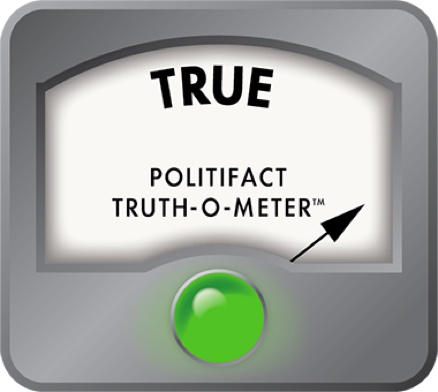
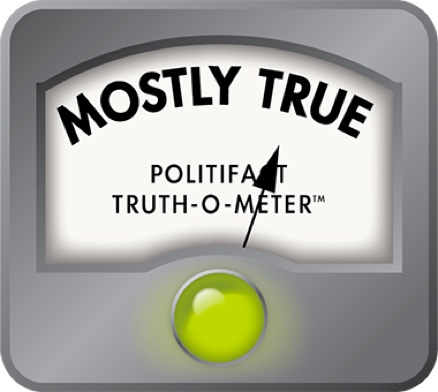
We rate Clinton’s statement Mostly True.
Our Sources
ABC News, Democratic presidential debate in New Hampshire, Dec. 19, 2015
Congress.gov, S. Res. 85, March 1, 2011
Congressional Quarterly, bill analysis archive search, conducted Dec. 21, 2015
U.N., "Security Council Approves ‘No-Fly Zone’ over Libya, Authorizing ‘All Necessary Measures’ to Protect Civilians, by Vote of 10 in Favour with 5 Abstentions," March 17, 2011
U.N. Resolution 1970, Feb. 26, 2011
U.N., Resolution 1973, March 17, 2011
State Department, "Remarks at the International Conference on Libya," March 29, 2011
Fox News, "Sanders Questions ‘War’ in Libya," March 28, 2011
Email interview, Clinton spokesman Joshua Schwerin, Dec. 21, 2015
Email interview, Sanders policy adviser Warren Gunnels, Dec. 21, 2015
Email interview, Joshua Huder, senior fellow at Georgetown’s Government Affairs Institute, Dec. 21, 2015