“We live in the most incarcerated country in the world.”

Fact-checking John Legend’s claim that ‘we live in the most incarcerated country in the world’
And the Oscar for Best Real Talk in an Acceptance Speech goes to —
Actually, that’s a tough one. Some of Sunday’s Oscar winners issued sincere pleas for wage equality, suicide prevention and calling your parents, not to mention lingering racial injustice 50 years after the civil rights movement.
Musicians John Legend and Common left the audience with a tear-inducing performance of their Oscar-winning Selma anthem “Glory” and then a powerful message about setbacks for black Americans in voting rights, police relations and imprisonment.
“We know that right now the struggle for freedom and justice is real. We live in the most incarcerated country in the world,” Legend said. “There are more black men under correctional control today than there were under slavery in 1850.”
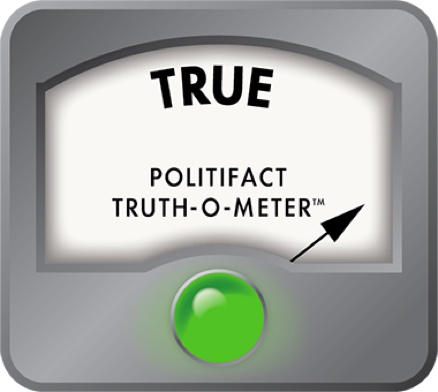
As for Legend’s latter claim, it is true in terms of raw numbers. There are almost double the number of African-American men under state and federal criminal justice supervision as male slaves in 1850 — about 1.68 million prisoners compared to about 873,000 slaves. (The claim isn’t as solid if you adjust for the share of the black population.)
PunditFact wanted to take a closer look at the first half of Legend’s first claim. Is the United States really the most incarcerated country in the world?
The London-based International Centre for Prison Studies is the best resource for comparing worldwide prison statistics, experts said, pointing to the group’s World Prison Brief, which is updated monthly as data becomes available.
The United States led the world in raw numbers, with 2.23 million prisoners at the end of 2012.
More than half of those prisoners were held in state prisons, followed by people held at local jails, federal prisons, juvenile detention facilities, military and U.S. territorial prisons, immigration detention facilities, and Indian country jails, according to a breakdown of the center’s data performed by the Prison Policy Initiative, a nonprofit group that supports reducing the prison population.
Ranking just below the United States is China at 1.7 million, Russia at 671,700, Brazil at 581,500, and India at about 412,000.
China’s population could very well be higher, the center notes. Chinese government officials reported in 2009 that more than 650,000 people were being held in detention centers around China on top of the count for sentenced prisoners. If that number was the same in mid 2013, the total prison population would be more than 2.35 million in China, pushing it above the United States.
But we can’t settle that possibility here.
A better way to compare prison populations worldwide is to measure a country’s prison population as a share of the national population, experts told us.
Adjusted for population, the United States’ prison population (707 prisoners per 100,000 population) exceeds countries around its size, including China.
But according to the latest data, it ranks second — not first — worldwide. That distinction goes to the tiny nation of Seychelles, which posts the highest rate of 868 prisoners per 100,000 population based on the most recent data.
Peter Wagner, executive director of the Prison Policy Initiative, said he would not ding Legend for not accounting for Seychelles. The countries are not at all in the same league.
Seychelles is a group of African islands in the Indian Ocean northeast of Madagascar and is home to just over 90,000 people. For perspective, the least populous U.S. state is Wyoming with more than 580,000 residents.
The addition of 240 Seychellois from 2012 to 2014 into an already small prison population dramatically pushes the rate from 707 prisoners per 100,000 population to 868, overtaking the United States.
“I think countries that small are just not comparable,” Wagner said, adding that his group’s 2014 States of Incarceration report filtered out countries with less than a half-million residents.
What sets American prisons apart from the rest of the world?
“We’ve criminalized so much behavior,” said University of South Carolina criminology professor Geoff Alpert, singling out sentences for drug and property offenses in particular.
Our ruling
Legend said, “We live in the most incarcerated country in the world.”
The United States far and away incarcerates more people than its peers, in terms of the portion of its population behind bars, despite having a comparable amount of crime.
Only Seychelles technically has a higher incarceration rate than the United States. But experts said it’s an outlier because of its miniscule size and largely should be disregarded.
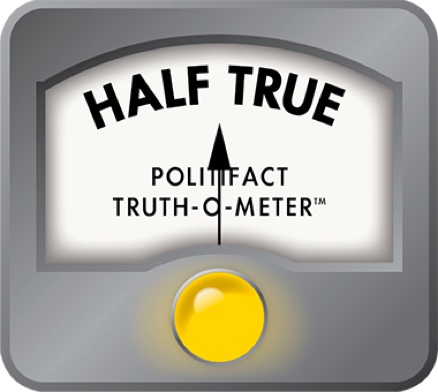
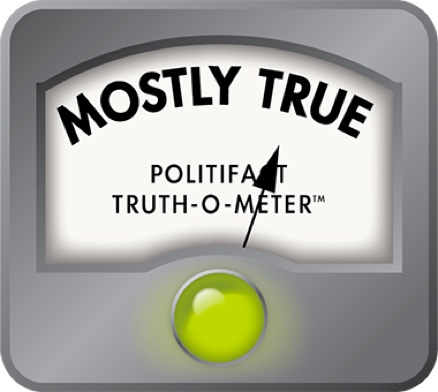
Maybe so, but it is a point at least worth noting. Legend’s Oscar-night claim is accurate but needs additional information. We rate it Mostly True.
Our Sources
Interview with Peter Wagner, Prison Policy Initiative executive director, Feb. 23, 2015
Email interview with Helen Fair, research fellow at the International Centre for Prison Studies, Feb. 23, 2015
Interview with Geoff Alpert, University of South Carolina criminology professor, Feb. 23, 2015
Interview with Raymond Paternoster, University of Maryland criminology professor, Feb. 23, 2015
International Centre for Prison Studies, world prison brief, accessed, Feb. 23, 2015