Is marijuana less addictive than both alcohol and tobacco?
Marijuana use, both recreationally and medicinally, is a glowing dot on the nation’s political radar screen. Two states, Washington and Colorado, voted to legalize recreational use of the drug last year, and other states are contemplating following.
The same is true in Oregon, where as many as three marijuana-related initiatives may be heading toward the November ballot.
The claim:
U.S. Rep. Earl Blumenauer, on his official website, makes clear where he stands. The Oregon Democrat supports legislation that would allow states to enact marijuana laws without federal interference, remove the ban on industrial hemp and “allow the marijuana industry to operate in a normal business environment.”
Among the claims tucked under the heading “The Facts about Marijuana” is this: “Marijuana is less addictive than both alcohol and tobacco.”
Plenty has been written about all three substances, but with Oregon possibly facing one or more pot measures on the ballot this November, we decided to see if Blumenauer is right about marijuana’s addictive qualities.
The analysis:
We emailed Blumenauer’s office to ask about its sources for the claim. Spokesman Patrick Malone responded with a statement saying in part, “We certainly always need more research on marijuana and its medicinal properties,” but he offered no sourcing.
Next we dug into PolitiFact’s database and found several claims that, while not precisely on point, added to our understanding.
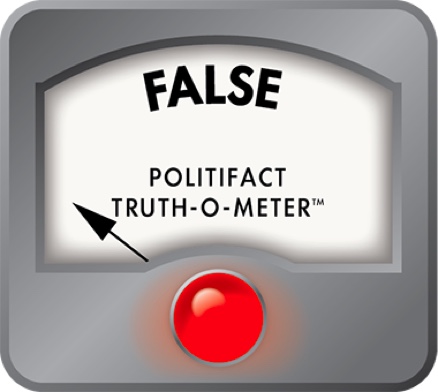
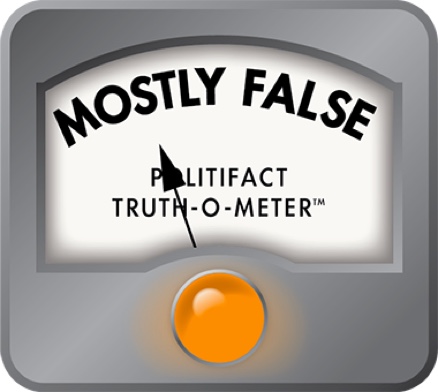
In one, John Morgan, the high-profile Florida attorney leading an effort to legalize medical marijuana in the Sunshine State, said “nobody’s addicted” to marijuana. When contacted by PolitiFact, Morgan corrected himself, saying, “It was a huge mistake. I’m sorry and I messed up.”
Experts contacted for that story agreed that marijuana can be addictive. Morgan’s claim was rated False.
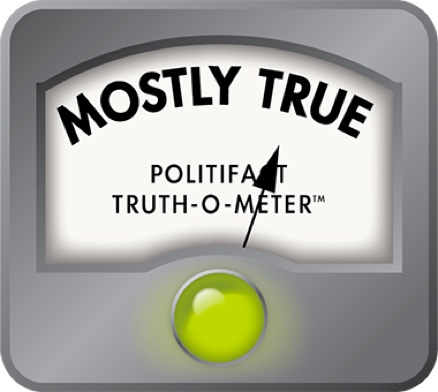
In another, a pro-pot group, also in Florida, claimed marijuana is “less toxic” than alcohol. The claim was rated Mostly True.
Finally, there was a claim in Massachusetts that “today’s marijuana is 300 percent to 800 percent more potent than the pot of yesteryear.” It was rated True.
So, yes, marijuana can be addictive; yes, it’s less toxic than alcohol; and, yes, it’s far stronger than previous strains of the drug.
We called Dr. J. Wesley Boyd, a faculty member at Harvard Medical School and a recognized expert on addiction issues. Narrowly construed, he said, what Blumenauer posted on his website is correct — marijuana is less addictive than both alcohol and tobacco.
“But like a lot of things,” Boyd added, “the question is much more complicated than that. There are a lot of gray areas to all of this.”
First, there’s the definition of “addictive,” since that’s the key to Blumenauer’s claim.
“For me,” Boyd said, “when someone is addicted to something, they feel a strong compulsion to use that substance even in the face of known harms that the substance causes them.”
And marijuana is addictive, he said. Boyd cited research from the National Institute on Drug Abuse showing that about 9 percent of those who use marijuana become addicted. (Estimates from research suggest that 32 percent of tobacco users and 15 percent of alcohol users become addicted, according to the NIDA.)
However, when it comes to withdrawal, alcohol is by far the worst of the three, he said.
If someone is truly addicted to alcohol and tries to stop, Boyd said, the symptoms can be profound: heart and pulse rates through the roof, overwhelming anxiety, seizures and, in rare instances, “a slim but possible chance of dying.”
What about tobacco?
“It’s far closer to marijuana in terms of physical effects,” he said. “In both instances, regular users can feel, from a psychological standpoint, remarkably uncomfortable. Cravings, sleep disturbances and depression are common.”
Other research confirmed what most people already know about the toll tobacco exacts on health. Smoking costs society at least $289 billion annually, according to the Centers for Disease Control and Prevention, the lead federal agency for comprehensive tobacco prevention and control.
There are no comparable figures for marijuana.
We consulted three other sources, all of which agreed that marijuana is the lesser of addictive evils when compared with tobacco. In addition to a 2008 report issued by a British research foundation, both Dr. Neal L. Benowitz of the University of California at San Francisco and Dr. Jack E. Henningfield of the National Institute on Drug Abuse ranked marijuana below nicotine when it comes to withdrawal, dependence, tolerance and intoxication.
Both Benowitz and Henningfield, in their rankings, determined that users get hooked on alcohol and tobacco faster than marijuana, and that, when it comes to quitting, marijuana is far easier to put down than either a cigarette or a bottle.
The ruling:
U.S. Rep. Earl Blumenauer, D-Ore., posts a “drug fact” on his official website asserting that “marijuana is less addictive than both alcohol and tobacco.”
Though Blumenauer’s office provided no sourcing for the claim, the congressman’s website provides links to a number of studies.
A Harvard Medical School psychiatrist agreed that of the three, alcohol is the most addictive in terms of withdrawal. He and other experts we contacted also agreed that alcohol and tobacco are more difficult to give up than marijuana, and said it’s easier to become dependent on alcohol and tobacco in the first place.
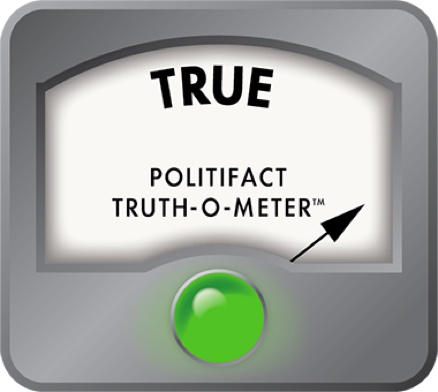
We rate the claim True.
Return to OregonLive.com/politics to comment on this article.
Our Sources
Email from Patrick Malone, Blumenauer spokesman, June 4, 2014.
Telephone interview with Dr. J. Wesley Boyd, Harvard Medical School, June 2, 2014.
Official website, U.S. Rep. Earl Blumenauer, D-Oregon.
Henningfield-Benowitz substance comparison charts, Dr. Neal L. Benowitz, University of California, San Francisco, and Jack E. Henningfield, National Institute on Drug Abuse.
Email from the National Institute on Drug Abuse, June 4, 2014.
Website, Centers for Disease Control and Prevention.
PolitiFact, "Marijuana is ‘less toxic’ than alcohol," Aug. 15, 2013.
PolitiFact, "Nobody’s addicted to marijuana," Sept. 22, 2013.
PolitiFact, "Today’s marijuana is 300 percent to 800 percent more potent than the pot of yesteryear," March 30, 2014.