“Last month, more Americans stopped looking for a job than found one.”
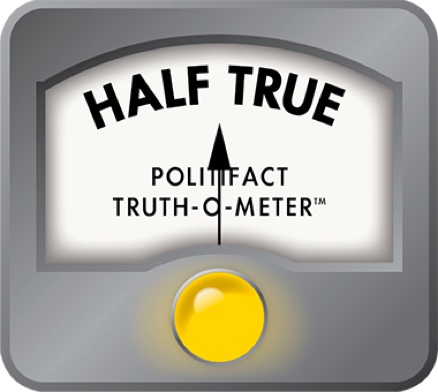

Rep. McMorris Rodgers says more people stopped looking for a job than found one
After President Barack Obama delivered his State of the Union address, which focused largely on his plans to boost the economic well-being of struggling Americans, Republicans responded with their own approach. Rep. Cathy McMorris Rodgers, R-Wash., said her party’s mission was to close the gap “between where you are and where you want to be.”
McMorris Rodgers blamed the president and his policies for that gap and noted that “last month, more Americans stopped looking for a job than found one.”
In this fact-check, we examine that claim.
The congresswoman’s staff pointed us to numbers from the Bureau of Labor Statistics. In December, the nation added about 74,000 jobs. But in that same month, the labor force shrunk by 347,000.
There are several problems with this comparison. The biggest is that a large portion of those people who left the workforce simply retired. We don’t know exactly how many, but it is a demographic reality that an ever growing number of Americans are getting older.
Based on federal data, Gary Burtless, an economist at the Brookings Institution, has calculated that the percentage of the adult population over 55 has risen from 27 percent in 1999-2000 to 32 percent in 2011-12. Burtless has estimated that half to two-thirds of the recent decline in the labor participation rate has been due to the aging of the population, depending on the time period you look at.
Economists say that a tough job market has led thousands of people to retire earlier than they might have. But the raw numbers don’t give us a clear picture.
The Bureau of Labor Statistics asks questions that give us some clues but not a definitive answer. The data on “discouraged workers” counts people who looked for a job in the past year but did not during the last month. And the reason they didn’t look, according to the bureau, might have been that there was no work available, that employers thought they were too young or too old, or that the people didn’t have the skills needed to compete for the openings they found.
By using December numbers, McMorris Rodgers has cherry-picked a more dire statistic. In that month, the number of discouraged workers rose by 155,000. That is higher than the 74,000 jobs the economy gained.
But looking back at the other months throughout the year, a different picture emerges.
During 2013, there were only two months, June and December, when the number of discouraged workers grew by more than the number of new jobs added. The monthly numbers are not fully comparable because the discouraged worker count is not seasonally adjusted and the number of jobs is. But with that caveat, the overall trend for the year is more positive because the number of new jobs exceeded discouraged workers.
Our ruling
McMorris Rodgers said more people stopped looking for a job than found one in December. The congresswoman relied on figures that included a large fraction of people who retired from the workforce and she cherry-picked one of only two months in 2013 that supported her claim.
The statement is partially accurate but leaves out important details. We rate the claim Half True.
Our Sources
Rep. Cathy McMorris Rodgers, Republican response to the State of the Union address, Jan. 28, 2014
Bureau of Labor Statistics, Table B-1. Employees on nonfarm payrolls by industry sector and selected industry detail, Jan. 10, 2014
Bureau of Labor Statistics, Table A-16. Persons not in the labor force and multiple jobholders by sex, not seasonally adjusted, Jan. 10, 2014
Bureau of Labor Statistics, The employment situation - December 2013, Jan. 10, 2014
Bureau of Labor Statistics, The employment situation - November 2013, Dec. 6, 2013
Bureau of Labor Statistics, Historic data - Table A-16
PolitiFact, Rep. Cathy McMorris Rodgers says fewer now working than any point since 1979, April 12, 2013