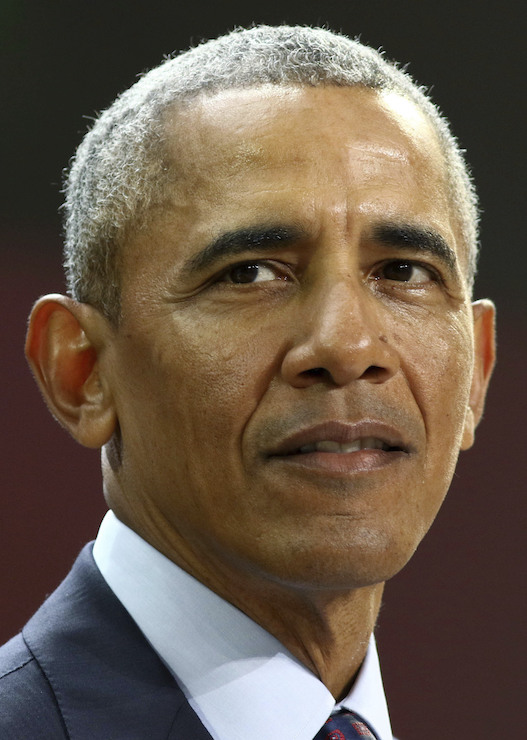
Obama says he’s “put forward a specific $4 trillion deficit reduction plan.”

Obama says he will cut deficits by $4 trillion
In the first presidential debate, President Obama and Mitt Romney disagreed sharply over who had the best way to rein in federal deficits.
Romney relies on spending cuts and reshaping the tax code. The first would make it easier to reach fiscal balance and the second would spur growth that would fill the government coffers with higher tax revenues, he says.
Obama favors what he calls a balanced approach. It uses a mix of spending cuts and a variety of tax and fee increases to curb the deficit .
“I’ve put forward a specific $4 trillion deficit reduction plan, Obama said. “You can look at all the numbers, what cuts we make and what revenue we raise. And the way we do it is $2.50 for every cut, we ask for $1 of additional revenue.”
Is Obama’s $4 trillion claim accurate? Sort of — but $1.7 trillion dollars of it depends on when you start counting the savings.
We rely on two Washington think tanks for this fact-check. The Committee for a Responsible Federal Budget, a bipartisan organization that is very keen on debt reduction, crunches the numbers in the President’s 2013 budget and finds that by 2022, Obama’s program trims the deficit by $2.4 trillion. That’s compared to what the committee thinks the fiscal picture would have looked like without the president’s plan.
The other think tank is the Center on Budget and Policy Priorities, a left-leaning group. It comes up with pretty much the same result. It sees $2.1 trillion in deficit trimming that would accumulate between 2013 and 2022.
Neither of these reach the $4 trillion mark. But last year, between a series of continuing resolutions that froze department budgets and a major deficit reduction compromise between President Obama and Congress, the government racked up $1.7 trillion in savings.
If you add that to either of the think tank numbers, you get close to or over the $4 trillion the president counts in his plan. Whether that’s legitimate is a matter of debate.
Our fact-checking colleagues at the Washington Post say, “No matter who is the president, the savings are already in the bank.” Thus, don’t count them.
The Center on Budget and Policy Priorities argues that since the effort to trim the deficit began in earnest in 2011, that those savings should be counted toward the goal.
Here, it’s useful to see where the $4 trillion goal came from. Its origins lie in the Simpson-Bowles National Commission on Fiscal Responsibility and Reform. That bipartisan panel said a blend of spending cuts and tax hikes could deliver nearly $4 trillion in deficit reductions by 2020.
The president adopts that general approach on the fiscal side, but note the difference in the timelines. With all these plans, the biggest savings come at the end and the president is working with two more years than the Simpson-Bowles group. The difference is huge.
Jason Peuquet, research director for the Committee for a Responsible Federal Budget, said if you add two years to the Simpson-Bowles approach, you reach deficit reductions in the range of $6 trillion starting from the same point that the president begins his tally. Obama cites the Simpson-Bowles report to justify his balanced approach of spending cuts and tax increases. However, that report taken as whole would push the president to do much more than he has proposed
“The president’s plan is a good start but does not go far enough,” said Pequet.
Our ruling
President Obama said he had “put forward a specific $4 trillion deficit reduction plan.”
According to independent analysts, that’s true only if you include the spending cuts that took place last year. It is not necessary to resolve that debate to assess the president’s claim. Obama cherry-picks the elements from the commission report that gave rise to the $4 trillion goal.
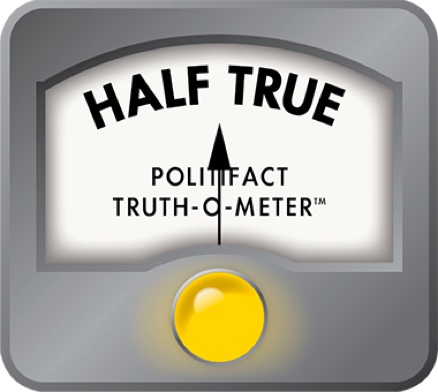
We rate the statement Half True.
Our Sources
CNN, First presidential debate transcript, October 3, 2012
PolitiFact, Obama says his budget plan will cut deficits by $4 trillion, September 7, 2012
National Commission on Fiscal Responsibility and Reform, Final Report, December 2010
Tax Policy Center, Bowles-Simpson plan summary
Washington Post, Fact checking the first presidential debate, October 4, 2012
Center for Budget and Policy Priorities, How Does the Obama Budget Do In Meeting Deficit Reduction Goals?, February 16, 2012
Congressional Budget Office, An analysis of the President’s 2013 budget, March 2012
Center on Budget and Policy Priorities, Of Zeno’s Dichotomy Paradox, "Takers," and Deficit Reduction, February 16, 2012
Interview with Jason Peuquet, research director, Committee for a Responsible Federal Budget, September 18, 2012