Says that if Texas, California and New York all voted for Democratic presidential nominees, “it would be mathematically impossible for Republicans to elect a president.”
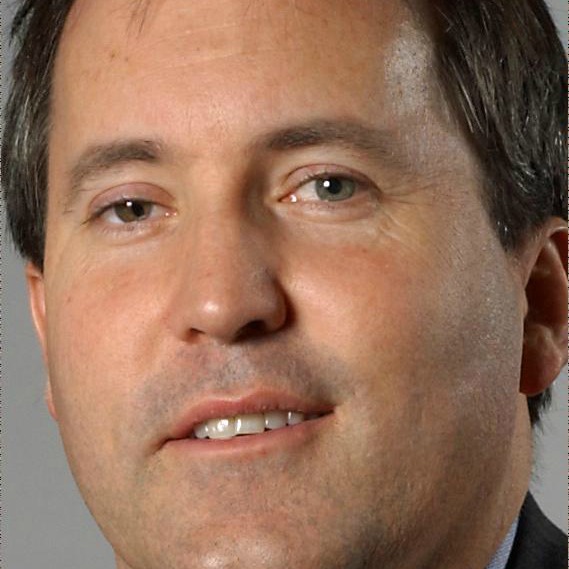
Gilberto Hinojosa says if a Democrat carries Texas, California and New York for president, it’s “mathematically impossible” for a Republican to prevail nationally
Talking up the importance of Texas turning blue, the chairman of the Texas Democratic Party said at the Democratic National Convention that if Texas voted for Democratic presidential nominees, the combination of its electoral votes with those of California and New York mean “it would be mathematically impossible for Republicans to elect a president.”
Hinojosa’s comment came to our attention in a news article on Hinojosa’s work for the party in the Sept. 6, 2012, Austin American-Statesman.
Two days earlier, a news story in the San Antonio Express-News quoted Hinojosa along similar lines. After saying a Texas Democrat has not won statewide since 1994, it said: “But the growing Latino population is expected to tip the Lone Star State from Republican to Democratic by the end of the decade,” meaning Texas would shift to preferring Democratic presidential nominees, the story said. “If Texas becomes a blue state, it will become blue because of the Hispanic vote,” Hinojosa was quoted as saying. “And the day that Texas becomes blue, it becomes mathematically impossible for Republicans to elect the president of the United States.”
Really?
We made a run at testing Hinojosa’s statement as noted by the Austin newspaper.
Nationally, it takes 270 of the country’s 538 electoral votes to win the presidency, as spelled out on a federal website devoted to the Electoral College. If the 38 electoral votes of Texas, 55 votes of California and 29 of New York flow to the Democratic nominee, he or she would have 122, leaving 416 votes unclaimed.
So the Republican nominee would need to win 270, or 65 percent, of those remaining votes.
That’s not mathematically impossible.
We failed to reach Hinojosa.
But Bill Brannon, the Texas party’s executive director, suggested Hinojosa’s point is that if a Democratic presidential nominee carries each of the states, it becomes nigh impossible for a Republican to prevail. “What ends up happening is there is no coalition out there that creates a path to victory for a Republican candidate,” Brannon said by phone. “In the current political environment, it is fair to say that it’s beyond highly improbable that any path to victory would exist for a Republican presidential nominee.” The party’s deputy director, Jacob Limón, later made a similar point.
For outside perspective, we turned to Allan Keiter, the founder of the 270towin website, which features an interactive Electoral College map for 2012 as well as information on past elections and a reminder that presidential candidates can win without winning a majority of the national vote: “Since electoral votes are generally allocated on an ‘all or none’ basis by state, the election of a U.S president is about winning the popular vote in enough states… It is not about getting the most overall popular votes.”
By telephone, Keiter said that mathematically speaking, Hinojosa’s claim is incorrect. If a Democrat carried Texas, California and New York, he said, a Republican still could win. Broadly, he said by email, the “minimum number of states needed to reach 270 (electoral votes) is 11.”
Then again, Keiter said, in the context of how voters in the states lately lean, such a claim has verve.
That is, with California and New York considered Democratic territory, he said, if voters in Republican-leaning Texas preferred the Democratic nominee, President Barack Obama, he would likely pile up 239 electoral votes — presuming the other states choose one candidate or the other as polls were signaling as of early September 2012.
For Romney to prevail, Keiter said, he would then have to a goodly share of the 11 remaining “battleground” states. Those states are, west to east, Nevada, Colorado, Iowa, Wisconsin, Michigan, Ohio, Pennsylvania, North Carolina, Virginia, New Hampshire and Florida. (Obama carried each one in 2008.)
And “practically speaking, since Texas would likely only go to the Democrat in a landslide, most of these other states would also likely be blue,” Keiter wrote.
Separately, we reached Elchanan Mossel, a professor of Statistics and Computer Science at the University of California Berkeley who has compared the risks of the Electoral College method resulting in errors affecting the winner of the race as opposed to simply tabulating total votes nationwide.
Mossel emailed that Hinojosa’s comment “is not correct on the math,” and even “nonsense.”
He added later that he would prefer to characterize the Republican’s chances under the chairman’s described scenario as “extremely unlikely.” The Democrat’s statement, he said, indicates “some assumptions are being made.”
Our ruling
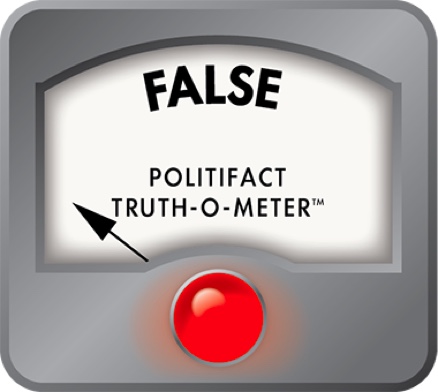
Hinojosa said that if Texas, California and New York all backed the Democratic presidential nominee, it would be mathematically impossible for the Republican nominee to win.
Mathematically speaking, that is incorrect.
A case can be framed for the notion that if a Democrat carried the three states, he or she would hold a commanding position. Maybe, but that also assumes that many states would stay politically fixed one way or the other through the indefinite future based on voters’ current leanings — “ifs” that are, at the least, open to debate and speculation.
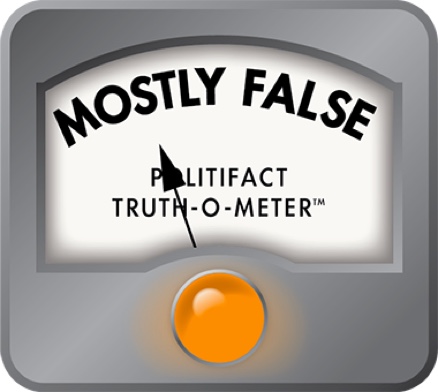
All told, regardless, Hinojosa put no qualifiers on his statement. We rate it as False.
Our Sources
Telephone interview, Bill Brannon, executive director, Texas Democratic Party, Sept. 7, 2012
Emails (excerpted) and telephone interview, responses to PolitiFact Texas, Allan Keiter, president, 270towin.com website, Sept. 6 and 11, 2012
Emails (excerpted), responses to PolitiFact Texas, response to PolitiFact Texas, Elchanan Mossel, professor, Statistics & Computer Science, University of California, Berkeley, Sept. 6 and 11, 2012
Telephone interview, Jacob Limón, deputy director, Texas Democratic Party, Sept. 10, 2012