Public education has been permanently cut “by $1.6 billion through changes in the Standards of Quality funding formula.”
Kitty Boitnott says Virginia has cut $1.6 billion from minimum school standards
The Virginia Education Association says the state has been saving money by lowering public school standards.
“Since the 2008 General Assembly, we have permanently cut biennial funding for public education by $1.6 billion through changes in the Standards of Quality funding formula,” VEA President Kitty Boitnott said in a Jan. 23 news conference.
The $1.6 billion cited by Boitnott is an eye-popping number. We wanted to know if her figure is correct and if the loss of the funding is, as she said “permanent.”
The Standards of Quality are minimum mandates Virginia sets forth for public education on teacher-pupil ratios, benefits for educators and basic curricula. The General Assembly sets the benchmarks every two years after considering recommendations by the state Board of Education.
Virginia is required by law to pay 55 percent of the overall cost of the SOQs and local school districts must pay the rest. For this two-year budget cycle, which began July 1, 2010, the state will pay about $9.6 billion toward meeting the SOQs, and localities will pay about $7.8 billion.
Boitnott is essentially saying the state obligation would have been $1.6 billion higher if the General Assembly had not taken steps since 2008 to lower Virginia’s education standards.
Robley Jones, the VEA’s director of government relations, said Boitnott’s figures came from a report on education funding released last month by the Senate Finance Committee. The study contained a table detailing the 10 “substantive” reductions to public education programs approved by the General Assembly since 2008. The cuts came to a biennial total of $1.57 billion, and Boitnott rounded up.
The biggest savings came from reducing the number of support positions — such as clerks, teacher aides and bus drivers — required by the state. That action removed $754 million in SOQ obligations.
Lawmakers in 2010 found another $513 million in savings by eliminating certain types of equipment and travel from SOQ calculations and changing the formula for estimating health care costs for school employees.
Boitnott, however, is slightly off in her analysis of the the Senate Finance Committee’s data. The table makes no claim that the 10 cut education programs it lists were part of the SOQs, as Boitnott suggests.
In fact, four of the items were not part of the state’s minimum requirements, according to Charles Pyle, a spokesman for the Department of Education. They account for $174 million in biennial costs.
So the real reduction in SOQ mandates comes to about $1.4 billion per biennium. Jones, who provided the information for Boitnott’s statement, said he made an inadvertent mistake in computing the SOQ reductions.
That brings us down to one last question: Are the cuts to the SOQ formula permanent, as Boitnott says?
Technically, they are not. The General Assembly is free to restore the funding, but that is not likely to happen. Julie Grimes, a spokeswoman at the Department of Education, said officials there cannot recall an instance where legislators cut funding for an SOQ program and later replenished it.
When the state reduces funding for SOQ programs, localities often absorb the costs. Most school districts in Virginia are not satisfied with just attaining minimum SOQ standards and fund their schools at far greater levels than the state demands.
The SOQs allow legislators to claim they fund 55 percent of the state’s educational mandates. But a different picture emerges when total expenditures on Virginia public education are computed. The localities pay about 50 percent, the state, the state pays 40 percent and roughly 10 percent comes from the federal government.
Our ruling:
Boitnott said that since 2008, the legislature has permanently cut $1.6 billion in programs from the state’s formula for funding public schools. She’s a bit off; the actual figure is $1.4 billion.
Boitnott said these losses are “permanent.” The General Assembly could restore funding, but a spokesman at the state Department of Education said officials cannot recall an instance where lawmakers cut an SOQ program and later reversed themselves.
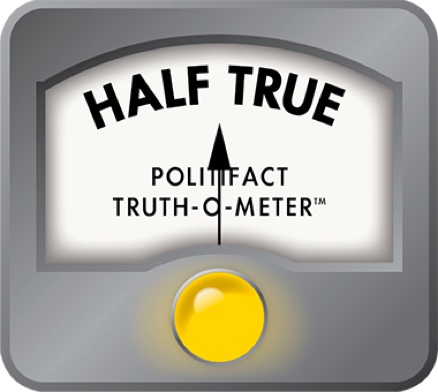
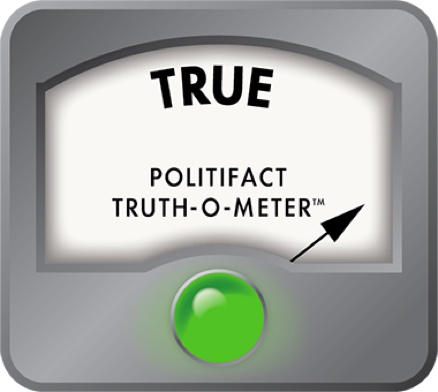
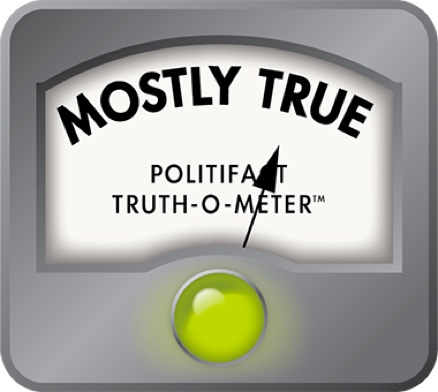
We rate Boitnott’s claim Mostly True.
Our Sources
VEA President Kitty Boitnott’s statement, at Jan. 23, 2012 news conference.
Interviews with Robley Jones, director of government relations at the Virginia Education Association, January 25 and February 3, 2012.
E-mails from Charles Pyle, spokesman for the Virginia Department of Education, Jan. 31 and Feb. 2, 2012.
Virginia Senate Finance Committee, Education Subcommittee Overview Briefing: Part I, Jan. 17, 2012.
Joint Legislative Audit and Review Committee draft report, State Spending on Standards of Quality (SOQ) costs, FY 2010, December 2010.
Interview with Jim Regimbal, principal of fiscal analytics, Feb. 2, 2012.
Gov. Bob McDonnell, Governor McDonnell to send down executive budget amendments, Jan. 13, 2012.
Emails from Mary Jo Fields, director of research at the Virginia Municipal League, Jan. 31, 2012.
Interview with Mary Jo Fields, Jan. 31, 2012.
Virginia Senate Finance Committee, Funding Virginia’s schools in a global economy and digital world, Nov. 18, 2011.
Virginia House Appropriations Committee, Public Education -- Update: States’ actions during tough times, Nov. 16, 2010.
Joint Legislative Audit and Review Committee draft report, State spending on the standard of quality (SOQ): FY 2011, Dec. 12, 2011.
JLARC Senior Division Chief Robert B. Rotz’s presentation to the Virginia Senate Finance Committee, Feb. 27, 2008.
Joint Legislative Audit and Review Committee, 2011 Report to the General Assembly, Sept. 12, 2011.
Richmond Times-Dispatch, "Va. faces $3.5 billion hole in next two-year budget," November 20, 2009.
Richmond Times-Dispatch, "House committee to hear state budget forecast," November 17, 2009.
Richmond Times Dispatch, "Board of Education hears cost of cap on support staff, July 23, 2009.
Richmond Times-Dispatch, "Education board shifts on funding -- panel seeks spending options, not cash for Standards of Quality," November 21, 2008.
E-mail from Julie Grimes, spokeswoman for the Virginia Department of Education, February 26, 2012.
Virginia Association of School Business Officials, 2010 Legislative Program, accessed February 6, 2012.
Virginia Superintendent of Public Instruction annual report for Virginia, table 15, March 25, 2011.
PolitiFact Virginia, "Plum says Virginia is shirking school funding requirements," August 12, 2011.