Says House Republicans rejected a straightforward measure that would prevent members of Congress and the president from being paid during a government shutdown.

Congress can’t agree on cutting its own pay in the event of a government shutdown
We’ve found something Republicans and Democrats say they agree on: If Congress shuts down, members of Congress should not be paid during the closure. Current law says they get their paychecks, shut down or no.
Yet when someone actually proposes changing the law, things start to get a little, well, weird.
We figured it was time for a fact-check when Sen. Barbara Boxer, D-Calif., accused House Republicans of voting down language she had proposed to stop the congressional paychecks. Instead, she said, the Republicans adopted a bill containing a provision designed to ensure that it would die in the Democratic-controlled Senate.
“Attaching their pay measure to a bill that has no prayer of ever becoming law shows House Republicans are not serious about ‘no budget, no pay,’” Boxer said Friday. “This is nothing more than an April Fools’ Day gimmick.”
Back in February, Boxer announced she was introducing legislation to stop members of Congress from being paid during a shutdown.
“Failing to keep the government open because of politics, or because there’s no will to compromise, is a failure of government,” Boxer said. “If the government is forced to shutdown, members of Congress and the president should be treated like all other federal employees: We should not be paid. And to take it one step further, we should not be paid retroactively once the government re-opens.”
It’s strange but true: Members of Congress get paid during a shutdown, even though most other federal employees do not. Also exempt from a pay freeze are the president, presidential appointees, certain legislative branch employees and employees either doing emergency work or ensuring an orderly shutdown, according to a recent report by the nonpartisan Congressional Research Service. The report noted that in the past federal employees were paid retroactively once shutdowns ended.
Boxer’s bill passed the Senate by unanimous consent on March 1.
Now let’s look and see what’s happened over in the Republican-controlled House of Representatives.
The House voted on Friday, April 1, 2011, to stop pay for members of Congress as part of the Government Shutdown Prevention Act. But the act also contained a provision that the Democrats in the Senate were sure to reject.
The act says that if the Senate doesn’t approve a budget, then the provisions of the House budget bill already rejected by the Senate “are hereby enacted into law.” The original Republican budget proposal had been rejected by the Senate on a 44-56 vote back on March 9.
So, House Republicans are asking the Senate to approve a bill that says if the Senate didn’t approve another bill, the House version of the budget becomes law. That would appear to violate the U.S. Constitution, which says both chambers must approve laws which then must be signed by the president.
We’ve never heard of anything like this before, and we were frankly perplexed by the idea. We asked majority leader Eric Cantor’s office for a comment on this, but we didn’t hear back.
So we turned to longtime government watcher Norm Ornstein of the conservative American Enterprise Institute.
“First of all, it is farcical,” Ornstein said. “Of course, no bill can be ‘deemed’ into law without passage by both houses in identical form and the signature of the president (or a veto overridden by two-thirds of both houses). … I have never seen anything like this, for good reason.”
“This is all about one thing and one thing only: trying to shift blame if there is a shutdown,” he added.
Getting back to Boxer’s statement, she said the House had a chance to vote on a more straightforward “no budget, no pay” bill, without the references to one-chamber approval of the House budget bill.
There was a motion to substitute the text of Boxer’s bill and remove references to H.R. 1, the House budget bill. But the motion, proposed by Rep. Tim Walz, D-Minn., failed on a largely party line vote, with Republicans voting no and Democrats voting yes.
Finally, there’s one more issue at work here, and it’s a significant one: It might be unconstitutional for Congress to cut its own pay or that of the president.
Article II, Section 1 says the president’s compensation “shall neither be increased nor diminished during the Period for which he shall have been elected.” The 27th amendment, meanwhile, says, “No law varying the compensation for the services of the Senators and Representatives shall take effect, until an election of Representatives shall have intervened.”
So the whole argument over “no budget, no pay” may be moot anyway.
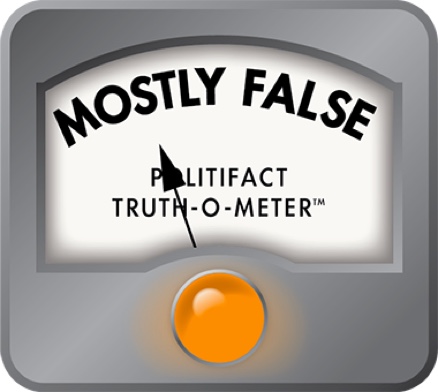
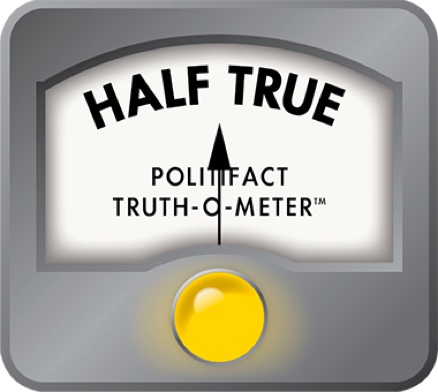
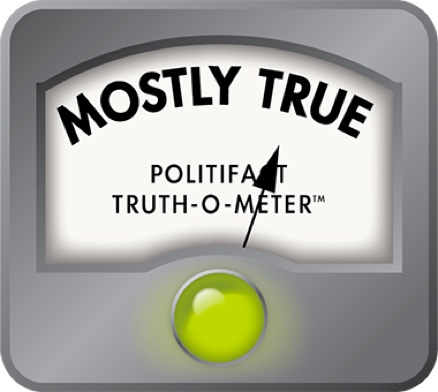
To sum up: The House passed a bill to stop pay for members during a shutdown. But the measure clearly had a poison pill provision on a different topic — the budget itself, which is the cause of the impasse in the first place. The House did have a chance to vote on something similar to Boxer’s bill, but it turned it down on a near party-line vote. So, Boxer is correct on that point. There’s still a question whether her bill is would pass constitutional muster. We won’t find out, though, because the two chambers seem unlikely to agree on legislation. Given that impasse, we rate Boxer’s statement Mostly True.
Our Sources
THOMAS, A bill to prohibit members of Congress and the president from receiving pay during government shutdown (Boxer bill), accessed April 5, 2011
THOMAS, The Government Shutdown Prevention Act, April 1, 2011
Congressional Record, Debate on the Government Shutdown Prevention Act, April 1, 2010
Congressional Research Service, Shutdown of the Federal Government: Causes, Processes, and Effects, Feb. 18, 2011
U.S. House of Representatives, On motion to recommit with instructions, Government Shutdown Prevention Act, April 1, 2011
U.S. House of Representatives, Government Shutdown Prevention Act, April 1, 2011
Sen. Barbara Boxer, Boxer, Casey laud Senate passage of their bill to prevent lawmakers from being paid during a government shutdown, March 1, 2011
Sen. Barbara Boxer, Boxer statement on House Republicans' efforts to protect their pay during a government shutdown, April 1, 2011
The Washington Post, White House liaison: Democratic no-pay bill is unconstitutional, April 1, 2011
U.S. Rep. Tim Walz, D-Minn., Walz Says No Pay for Representatives or President if Government Shuts Down, April 1, 2011
U.S. Senate, vote on H.R. 1, March 9, 2011