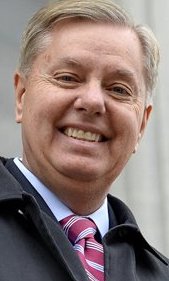
“Now, there was a time when someone like Scalia and Ginsburg got 95-plus votes.”

Supreme Court nominees got Senate votes with big margins
Sen. Lindsey Graham got a few chuckles during the Supreme Court nomination hearing for Judge Sonia Sotomayor.
“Now, unless you have a complete meltdown, you’re going to get confirmed,” he said, adding that he didn’t expect such a meltdown.
Graham, R-S.C., then went on to more philosophical ruminations about how senators decide to vote for or against nominees, citing then-Sen. Barack Obama’s reasoning for voting against nominee John Roberts in 2005.
“He said something about the 5 percent of the cases that we’re all driven by,” Graham said. “He said something to the effect, in those difficult cases, the critical ingredient is applied by what is in the judge’s heart. Well, I have no way of knowing what is in your heart any more than you have knowing what’s in my heart. So that to me is an absurd, dangerous standard.” (Read Obama’s full 2005
statement on John Roberts
.)
Graham added that it used to be that nominees would be confirmed by large margins, even nominees who had established views on controversial issues.
“Now, there was a time when someone like (Antonin) Scalia and (Ruth) Ginsburg got 95-plus votes,” Graham said. “If you were confused about where Scalia was coming down as a judge, you shouldn’t be voting, any more than if (it was) a mystery about what Justice Ginsburg was going to do in these 5 percent of the cases. That is no mystery.”
To be clear, we’re not ruling on Graham’s philosophy for confirming Supreme Court nominees. But we wondered if the margins were as large as Graham said for the confirmation votes of Justices Scalia and Ginsburg, who represent the conservative and liberal extremes of the court, respectively.
It turns out Graham is right. Scalia, who was nominated by President Ronald Reagan, was confirmed by a vote of 98-0 on Sept. 17, 1986. Ginsburg, nominated by President Bill Clinton, was confirmed by a vote of 96-3 on Aug. 3, 1993. (You can browse the votes for
all Supreme Court nominees
on the U.S. Senate Web site.)
Graham said he didn’t know how he would vote on Sotomayor, and that he would respect senators who didn’t feel that they could vote in favor of her. But he also seemed to urge a return to deference for a president’s nominee.
“President Obama won the election and I will respect that,” Graham said. “But when he was here (as a senator), he set in motion a standard, I thought, that was more about seeking the presidency than being fair to the nominee when he said, ‘The critical ingredient is supplied by what is in the judge’s heart.’ Translated, that means, ‘I’m not going to vote against my base, because I’m running for president.’ We’ve got a chance to start over. I hope we’ll take that chance.”
Graham may be giving Obama too much credit (or blame) by saying Obama “set in motion” a standard of voting against nominees based on political leanings. Reagan appointee Robert Bork, for example, lost a 42-58 Senate confirmation vote amid much partisan rancor in 1987. Obama was then a community organizer in Chicago.
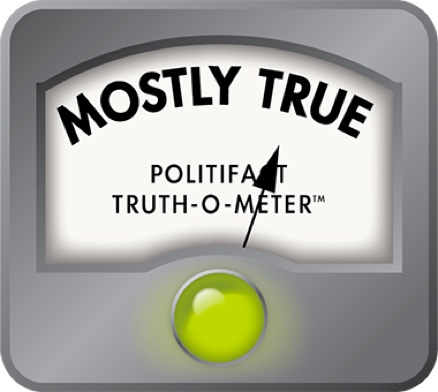
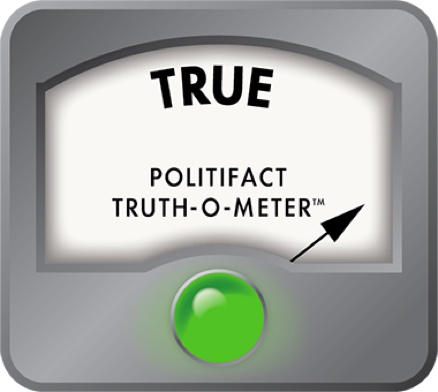
Here, though, we’re checking if Graham was right that Scalia and Ginsburg were confirmed by such large margins. They were. We rate Graham’s statement True.
Our Sources
Confirmation of Sonia Sotomayor, hearing transcript, July 13, 2009
U.S. Senate, Supreme Court Nominations , present - 1789 , accessed July 13, 2009
Internet Archive, statement of Barack Obama on John Roberts , Sept. 22, 2005