“Teddy Roosevelt first called for (health care) reform nearly a century ago.”

Obama invokes Republican icons on health care
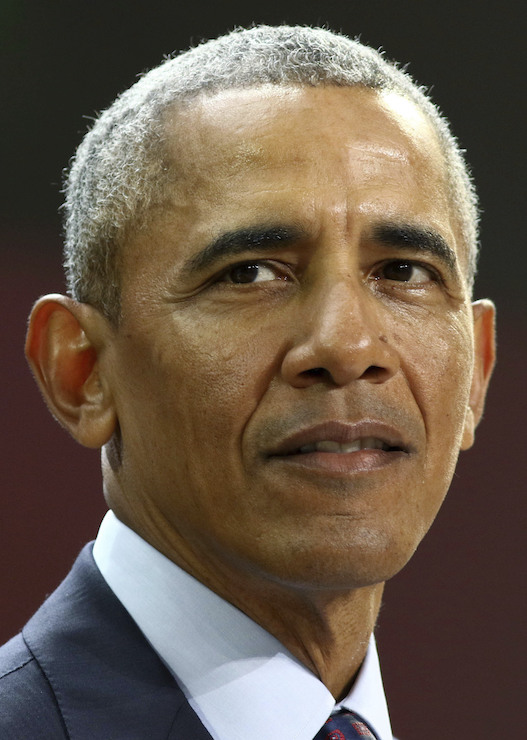
Not content to emulate Abraham Lincoln and Ronald Reagan, Republican icons for whom President Obama has expressed admiration in the past, Obama has aligned himself with a third GOP hero on the issue of health care.
“The problems we face today are a direct consequence of actions that we failed to take yesterday,” Obama said, opening a health care conference in the East Room of the White House on March 5. “Since Teddy Roosevelt first called for reform nearly a century ago, we have talked and we have tinkered. We have tried and fallen short, we’ve stalled for time, and again we have failed to act because of Washington politics or industry lobbying.”
We wondered whether Roosevelt really proposed reform on the scale of the near-universal health care Obama advocates, or if the new president was pushing the whole bipartisan-appeal thing a bit far.
We consulted two well-regarded biographers of Roosevelt, H.W. Brands and Kathleen Dalton. Both confirmed that in 1912, when the former Republican president was running as a Progressive Party candidate for what would have been his third term (after a four-year break), the party advocated national health insurance in its
platform
.
Health care was the 11th issue listed under “Social and Industrial Justice,” after occupational safety, a child labor prohibition, a minimum wage, “one day’s rest in seven” and other progressive ideas.
“The supreme duty of the Nation is the conservation of human resources through an enlightened measure of social and industrial justice,” the platform said. “We pledge ourselves to work unceasingly in State and Nation for … the protection of home life against the hazards of sickness, irregular employment and old age through the adoption of a system of social insurance adapted to American use.”
“What this envisioned was pretty much what FDR accomplished with Social Security, but with health insurance added,” said Brand, author of
TR: The Last Romantic
(1998).
“We don’t know the specifics of the plan,” said Dalton, author of
Theodore Roosevelt: A Strenuous Life
(2002). “The roots were probably British, though he knew about German health insurance.”
Dalton said unequivocally Obama was on solid ground evoking Roosevelt. Brands more or less agreed, though he cautioned that health care was “not the priority that trust-busting or conservation was” for Roosevelt. “It’s worth remembering that health care was a far smaller concern in those days,” Brands said. “Doctors had few medicines, and most people died or got better on their own. The biggest issues were public health — eradicating malaria, cleaning up water supplies, and so on.”
In
Healthcare Reform in America: A Reference Handbook
(2004), Jennie Kronenfeld, a sociology professor at Arizona State University, writes that “this was the first inclusion of a health insurance plank in any national platform with a major candidate, although the Socialist Party had endorsed a compulsory system as early as 1904.”
Roosevelt and the Progressives, nicknamed the Bull Moose Party, lost the election to Woodrow Wilson, the Democratic Party candidate. Republican William Taft finished third.
Clearly, Obama is on solid ground tracing the push for national health care back to Theodore Roosevelt. We find this claim to be True.
Our Sources
Healthcare Reform in America: A Reference Handbook (2004), Jennie Kronenfeld and Michael Kronenfeld
New York Times, Obama's Remarks at the White House Health Care Forum , March 5, 2009, accessed March 5, 2009
E-mail exchange with Kathleen Dalton, instructor at Phillips Academy and associate fellow at the Charles Warren Center for Studies in American History at Harvard University, March 5, 2009
E-mail exchange with H.W. Brands, author of TR: The Last Romantic, March 5, 2009
The American Presidency Project, Progressive Party Platform of 1912 , accessed March 5, 2009