When the United States invaded Iraq, Saddam Hussein wanted to acquire weapons of mass destruction, and “he said so himself after his capture.”

Hussein did say he hoped to get WMD
Sen. John McCain visited St. Petersburg, Fla., on June 4, 2008, to raise money for his presidential campaign, and sat down with
St. Petersburg Times
political editor Adam C. Smith for an interview.
McCain criticized his opponent, Sen. Barack Obama, as inexperienced, especially in foreign policy.
When asked about Obama’s early opposition to the Iraq war when others, including McCain, thought it was necessary, McCain defended the invasion, saying the intelligence community believed Iraqi leader Saddam Hussein possessed weapons of mass destruction.
Smith pointed out that Florida’s Bob Graham, former chairman of the Senate Intelligence Committee, opposed the war, too.
“I respect Sen. Graham enormously,” McCain said. “But I don’t think there’s any doubt that Saddam Hussein, who had acquired and used weapons of mass destruction before, had invaded a neighbor, Kuwait, where we had to fight one war with him, that his intent was — and he said so himself after his capture — to acquire and use weapons of mass destruction.”
Most of what McCain said here has been heavily discussed, but we were intrigued by the very last sentence in McCain’s quote, in which he says that Hussein had said after his capture that he intended to acquire and use weapons of mass destruction. True?
Among the most definitive records yet produced on Iraq and weapons of mass destruction is a report from the Iraq Survey Group, a group affiliated with the CIA. It released its initial report in 2004 and a concluding addenda in 2005. The report stated that Iraq did not possess weapons of mass destruction during the run-up to the U.S. invasion in 2003.
The detailed report, which runs more than 1,000 pages, emphasizes that the story of Iraq’s weapons is complex and unfolded over many years. One complicating factor was Hussein’s repressive style of leadership, in which he often avoided direct discussion of sensitive military matters. Another was his desire to pursue multiple goals that sometimes conflicted with each other. After the Persian Gulf War of 1991, for example, Hussein very much wanted to present his country as an imposing military presence to avoid invasion by either the United States or Iran. But he also wanted to satisfy weapons inspectors and stop international sanctions that were causing economic problems for his country.
The report concluded that Hussein did away with his weapons program in the years after the Persian Gulf War, but deliberately encouraged ambiguity about whether his regime possessed the weapons or not. Hussein believed the threat of weapons would act as a deterrent to Iran and the United States. The report also said that Hussein intended to restart the program after the scrutiny of the international community was off him. Though that prospect could have been years off, Hussein kept weapons experts employed in the country for that purpose.
But, what about Hussein’s remarks after he was captured? Here’s what we know:
The Iraq Survey Group interviewed scores of people, including Hussein’s top advisers. After his capture in 2003 by the U.S. government, the survey group gained access to information gleaned from Hussein during detention.
In 2008, Hussein’s interrogator for the group, George Piro of the FBI, gave a lengthy interview to Scott Pelley of
60 Minutes
in which he discussed what Hussein said while in custody.
Piro, a native Arabic speaker, said that Hussein told him he wanted to pursue weapons of mass destruction again.
“What weapons of mass destruction did he intend to pursue again once he had the opportunity?” Pelley asked.
“He wanted to pursue all of WMD,” Piro said. “So he wanted to reconstitute his entire WMD program.”
“Chemical, biological, even nuclear?” Pelley asked.
“Yes,” Piro said.
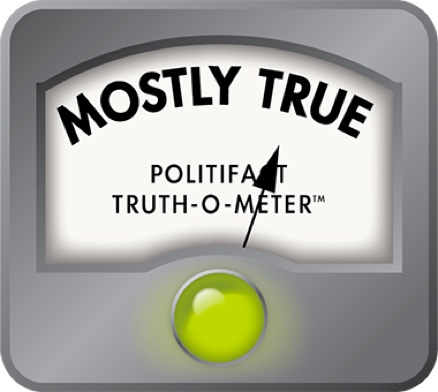
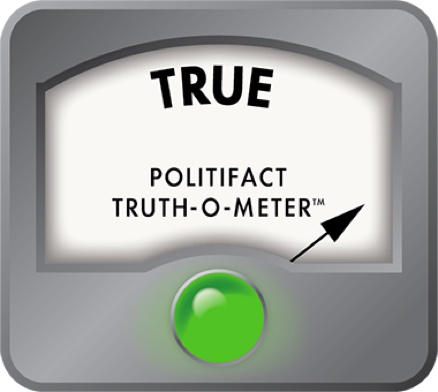
McCain’s statement was quite specific: He said Hussein intended to acquire weapons, not that he had them. That’s what our review of the evidence shows. Granted, the evidence was compiled by the U.S. intelligence community, the same group that got the weapons question wrong before the invasion. But it’s the best record publicly available, and it supports McCain’s statement. Hussein told Piro that he did want to pursue weapons of mass destruction someday. So we find McCain’s statement to be True.
Our Sources
St. Petersburg Times, Crist has experience to be vice president, McCain says , June 5, 2008
Associated Press, CIA's final report: No WMD found in Iraq , April 25, 2005
The Iraq Survey Group, Comprehensive Revised Report with Addendums on Iraq's Weapons of Mass Destruction (Duelfer Report)
60 Minutes, Interrogator Shares Saddam's Confessions , Jan. 27, 2008