
Mailbag: ‘You have ruined your credibility with this nonsense’
Summer is upon us, and for some readers, the temperature is rising. Here’s a rundown of recent reader emails bearing complaints, comments and a few compliments.
Summer is upon us, and for some readers, the temperature is rising. Here’s a rundown of recent reader emails bearing complaints, comments and a few compliments.
Shortly before Senate Republicans released their bill to repeal and replace the Affordable Care Act, we asked several health policy analysts for the aspects of the bill that they would be paying close attention to. They came up with five key issues to watch.
Now that a Senate health care bill has been unveiled, senators will be jousting over its provisions to repeal and replace the Affordable Care Act, President Barack Obama’s signature health care law.
Senate Republicans are soon scheduled to unveil the bill they will use to seek to repeal and replace the Affordable Care Act. The bill -- drafted in secret, away from even most Senate Republicans -- has prompted intense speculation about what might be included.
As Senate Republicans move closer to repealing and replacing the Affordable Care Act, Democrats have ramped up their attacks against the secrecy Republicans have used to write the bill -- and have particularly targeted the hypocrisy of Republican lawmakers who criticized Democrats in previous years for crafting legislation in secret.
Following tension-filled interactions at the NATO and G-7 summits, President Donald Trump and German Chancellor Angela Merkel have been engaging in something of a war of words.
When President Donald Trump’s budget director, Mick Mulvaney, released the administration’s budget proposal on May 23, he emphasized that the administration believes that three percent annual growth is a reachable goal. But economists are skeptical.
We wanted to examine three key questions surrounding Trump’s legal situation. First, does the information revealed so far offer a plausible case that Trump committed obstruction of justice? Second, can a sitting president even be criminally prosecuted? And third, what does all this mean for possible impeachment proceedings?
On the morning of May 12, 2017, President Donald Trump tweeted, "James Comey better hope that there are no "tapes" of our conversations before he starts leaking to the press!" Already primed to look at the parallels between Trump’s presidency and Richard Nixon’s, observers jumped on the suggestion that Trump could be following Nixon’s lead in secretly taping conversations in the White House. We wondered: Would it be within Trump’s legal rights to conduct secret taping in the White House?
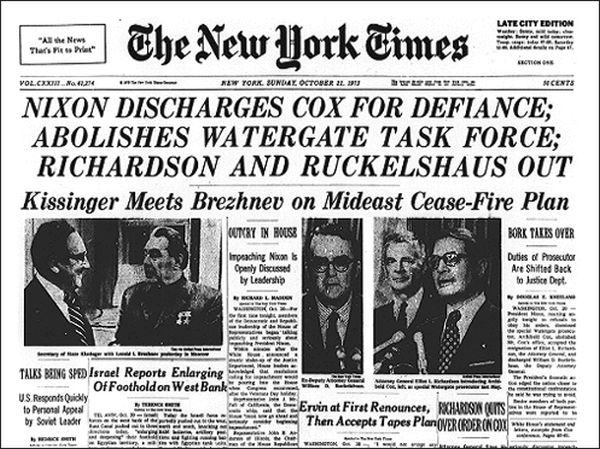
For many political observers, President Donald Trump’s sudden firing of FBI Director James Comey immediately called to mind President Richard Nixon’s Saturday Night Massacre. That night back in 1973, Nixon fired Watergate special prosecutor Archibald Cox, even as his top two Justice Department officials resigned in protest rather than carry out Nixon’s order.
If it were possible to have a bromance across the centuries, Presidents Andrew Jackson and Donald Trump would almost certainly qualify.
In a sign that it’s never too early to start planning for one’s reelection, President Donald Trump’s campaign released an ad on May 1 -- approximately 1,360 days before the 2020 election -- to tout the accomplishments of his first 100 days in office.