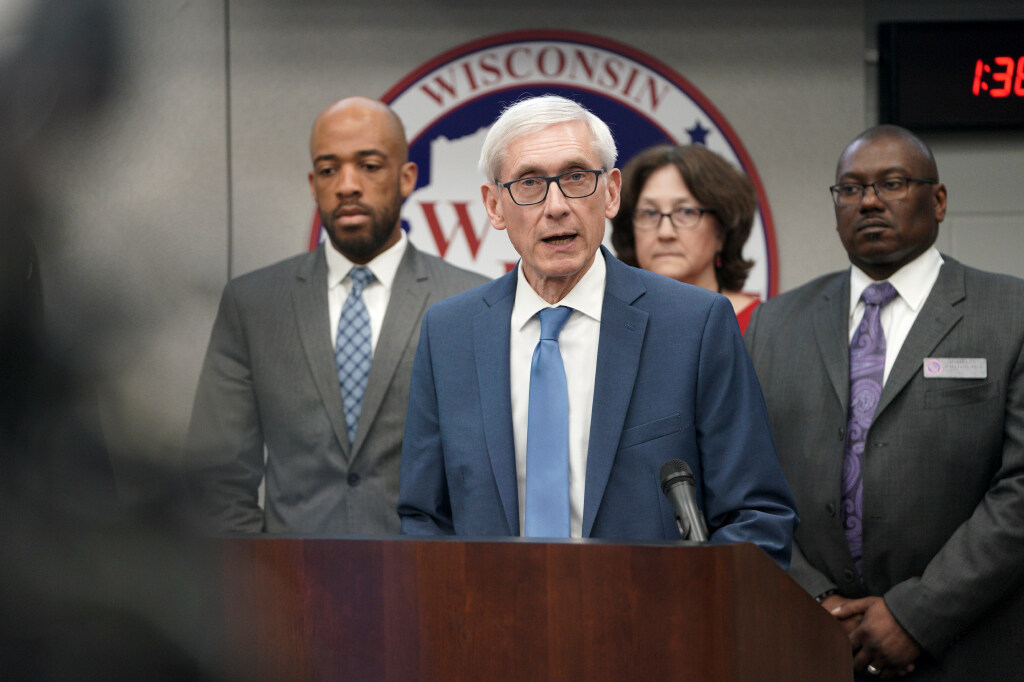
“As governor, Tony will: Ensure access to high speed broadband in every Wisconsin home and business.”
In 2021, a task force on broadband appointed by Gov. Tony Evers released a report outlining strategies for making high-speed internet available to every home, business and institution in the state by 2025.
The report called for more funding for the state broadband expansion grant program, establishing a program to help low-income families afford service, increased consumer protections and improved pricing transparency.
From 2019, the year Evers took office, to early 2022, Wisconsin had allocated nearly $60 million for broadband, also known as high-speed internet, aimed at tens of thousands of households and businesses. On June 24, 2022, the Wisconsin Public Service Commission awarded an additional $125 million in broadband expansion grants for 71 projects aimed at reaching around 83,000 homes and 4,600 businesses.
The PSC says about 650,000 people in the state lack home internet access of 25 megabit-per-second downloads and 3 Mbps uploads, which is adequate for streaming a video or taking an online class. And, officials say, another 650,000 people just can't afford the service that's available to them.
So, progress is being made on getting high-speed broadband access to homes, but there are still hundreds of thousands of homes and businesses without access.
This promise was previously rated In the Works.
In some cases, such as raising the minimum wage, there has been no progress under Evers. In this case, there has been progress – just not enough to meet the original goal.
With the end of the term approaching, we rate this one Compromise.
Gov. Tony Evers promised on the 2018 campaign trail to get high-speed Internet access for everyone in Wisconsin.
One year into his term, he has taken steps toward fulfilling this sweeping pledge, though -- like many of his initiatives -- he found tough sledding in the Republican-controlled Legislature.
Evers' 2019-21 budget plan sought $74 million across the two years to extend the Broadband Expansion Grant Program. The Legislature reduced that to $44 million, and also removed the staff position Evers sought to add, according to the Legislative Fiscal Bureau. The final budget settled in at $48 million, according to Evers' veto message.
But that still represents a dramatic increase over prior years.
The program, designed to expand high-speed internet in underserved areas of the state, totaled $20 million in grants from 2014 to 2019.
On the flip side, the Legislature got rid of a more explicit step toward Evers' promise. The governor's budget established a goal for all businesses and homes in the state to have service of at least 25 megabits per second download by 2025. The Legislature deleted that provision.
Evers has a ways to go to fulfill this promise, but he also has three years left in his term.
For now, we rate this promise In the Works.