Florida Gov. Ron DeSantis pushes for E-Verify to crack down on undocumented immigration
The Promise
After a bill to crack down on the hiring of undocumented immigrants died in Florida earlier this year, Republican state senators have filed a new bill ahead of the 2020 session to enact E-Verify.
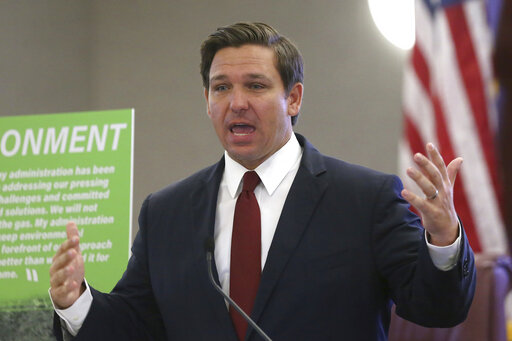
The idea has the support of Gov. Ron DeSantis, who told reporters that he continues to work toward his campaign promise to enact the program.
“I think the best way to help deter illegal immigration is to pursue E-Verify so we are going to be doing that,” he told reporters at a pre-session briefing. “And I think that that will end up saving taxpayers money and obviously it will be a deterrent for people to come illegally.”
E-Verify is an online program by the federal government that allows enrolled employers to confirm the eligibility of their employees to work in the United States by matching information employees provide against federal Social Security and immigration records.
Some states require E-Verify for only public workers or contractors while other states have mandated the program for private employers. The new Florida bill filed by Sarasota Sen. Joe Gruters and Sen. Tom Lee, R-Thonotosassa, would go further. It would require all employers to use the federal E-Verify system for new hires starting in 2021. The state could revoke businesses’ licenses if they fail to register.
Democrats, who are the minority party in the Legislature, are expected to fight against the bill. But some Republicans will likely oppose it, too, because business groups and industries including agriculture have fought against adding regulations for business owners. (The state Legislature didn’t show interest in passing E-Verify under Gov. Rick Scott.)
We found some mixed analysis about the impact of E-Verify. A 2017 analysis by the Federal Reserve Bank of Dallas found E-Verify corresponded with a drop in the population of unauthorized immigrants in some states but had no discernible impact in others.
Steven Camarota, who supports reduced immigration levels, pointed to earlier studies showing E-Verify did have an impact despite modest embrace by states.
“They have few if any penalties for non-compliance with these state E-verify laws, and they only apply to new hires, not existing employees,” he said.
Another reason the program may not work as supporters hope is that undocumented workers can use fraudulent paperwork and many businesses don’t use the program despite mandates, wrote Alex Nowrasteh, a critic of E-Verify at the liberatarian Cato Institute, in an op-ed in the Orlando Sentinel.
Nationally, enrolled employers represented about 13% of U.S. employers as of 2015, the Congressional Research Service reported.
“E-Verify can be a part of an overall enforcement regime, but by itself and without other immigration changes it is not a solution,” said Theresa Cardinal Brown, an immigration expert at the Bipartisan Policy Center.
The Florida bill has an uncertain path ahead in the Florida Legislature, which convenes its annual session in January.
We’ll continue to monitor the outcome and what it means for DeSantis’ campaign promise. For now, we rate this promise In The Works.