
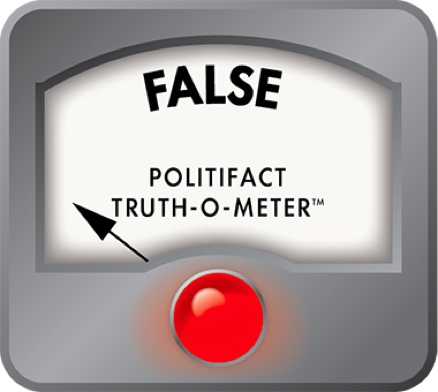
stated on October 22, 2014 in an interview:
Suicide comes from federal government largesse "saying you are not worth anything but you are going to get something for nothing."

In mid October, long-serving Rep. Don Young, R-Alaska, provoked a firestorm with a series of comments about suicide. It’s a significant issue in his home state: In recent years, Alaska has experienced suicide at roughly twice the national rate.
The controversy began when Young spoke to more than 100 students and staff at Wasilla High School on Oct. 21, 2014, just days after a student at the school had committed suicide.
Young, according to news reports, told an audience that suicide shows a lack of support from friends and family — a claim that inspired an immediate negative response from some in the audience.
“A friend of the victim shouted to Young that a disease, depression, was at the root of suicide,” the Alaska Dispatch News reported. “Young bristled at the interruption and responded to the student with profanity.”
Later that day, Young’s office released a statement saying the congressman should “have taken a much more sensitive approach.” But Young doubled down in an event the next day, appearing before 100 people at a senior center.
According a recording excerpted in the Dispatch News, Young told the group, “When people had to work and had to provide and had to keep warm by putting participation in cutting wood and catching the fish and killing the animals, we didn’t have the suicide problem.” Suicide, he added, comes from federal government largesse “saying you are not worth anything but you are going to get something for nothing.”
We wondered: Is there proof that suicide in Alaska has been linked to receiving government payments?
Before digging any deeper, we should note that Young’s office has since apologized for his comment.
In a statement to PolitiFact on Oct. 23, Young’s office said he “discussed what he believes are leading causes of youth suicide in our state, including the impact of drugs and alcohol, depression, a feeling of worthlessness, and a lack of support systems. Congressman Young did not mean to upset anyone with his well-intentioned message, and in light of the tragic events affecting the Wasilla High School community, he should have taken a much more sensitive approach. … Issues like suicide and domestic violence cannot be discussed in isolation or generalities. Each and every case is different, and should be addressed in that manner.”
Then, a day later, in a speech to the Alaska Federation of Natives Convention, Young “shared his sincere and honest apology” and said the suicide of a nephew “may have caused me to mangle some of my statements.”
Still, since suicide is a significant problem in Alaska, we thought the substance of his original comment was worth a closer look.
Explaining suicide in Alaska
According to the state Department of Health and Social Services, the age-adjusted rate for suicide in Alaska between 2003 and 2010 was almost twice the national average. In 2010, suicide ranked as the sixth-leading cause of death in Alaska and the leading cause of death among persons aged 15–24 years.
The main reason for Alaska’s high rate is the unusually high frequency of suicide among Alaska Natives — that is, indigenous Alaskans. The suicide rate for rural Alaska Natives is three to four times higher than it is for Anglos, said Matthew D. Berman, an economist at the University of Alaska-Anchorage who has studied the issue.
In a paper published earlier this year, Berman reported suicide data for Alaska Natives going back to 1950 (see chart below). The rate was basically flat from 1950 to the mid 1960s, then rose rapidly from the mid 1960s to the mid 1970s before falling again. The rate peaked in the late 1980s and has fallen slowly but consistently since then.
Alaska Dispatch News, "Young rattles Wasilla High students with 'hurtful' remark about suicide," Oct. 21, 2014 Alaska Dispatch News, "Young stands behind Wasilla High School comments, adds government to suicide blame list," Oct. 22, 2014 Alaska Dispatch News, "Cultural ties may help prevent suicide, experts say," Aug. 20, 2014 Office of Rep. Don Young, statement to PolitiFact, Oct. 23, 2014 Office of Rep. Don Young, "Congressman Young Expresses Sincere Apology for Pain Caused by Statements on Suicide," Oct. 24, 2014 Matthew Berman, "Suicide Among Young Alaska Native Men: Community Risk Factors and Alcohol Control" (American Journal of Public Health), June 2014 Alaska Department of Health and Social Services, "Risk Factors for Suicide at the Community Level—Alaska, 2003–2011," Nov. 5, 2013 Alaska Permanent Fund Corp., annual dividend payments, accessed Oct. 27, 2014 Email interview with Matthew D. Berman, economist at the University of Alaska-Anchorage, Oct. 23, 2014
Our Sources