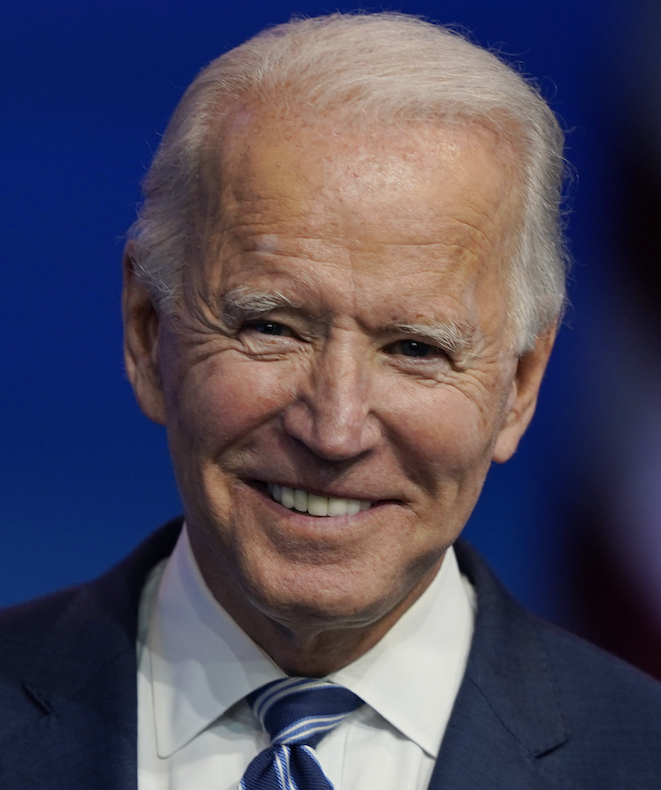
"Rebuild critical stockpiles, ensure adequate surge manufacturing capacity in times of crisis, and regularly review supply chain vulnerabilities."
President Joe Biden took steps to bolster government stockpiles of health supplies and increase domestic production of vital medical supplies, after the COVID-19 pandemic exposed weaknesses in the country's emergency preparedness.
Biden assumed office as COVID-19 was killing more than 20,000 Americans a week, and controlling the pandemic was high on his campaign promise list. He promised to rebuild the U.S. medical stockpiles that had been depleted during the pandemic and improve domestic manufacturing to prepare the country for future medical crises.
The Strategic National Stockpile, a program under the Administration for Strategic Preparedness and Response that holds medical supplies for emergencies, had challenges meeting the demand during the COVID-19 pandemic, partly because it relied on just-in-time supply chains from foreign countries, government oversight reports said.
Biden signed federal budgets that included funding increases for the Strategic National Stockpile. The stockpile's funding grew from $705 million in 2020 to $908 million in 2023, the Congressional Research Service said.
During the COVID-19 pandemic, the Strategic National stockpile sent out 90% of its total personal protective equipment. Since then, the stockpile has added hundreds of millions of gloves, masks, and gowns to refill that inventory, according to the Administration for Strategic Preparedness and Response.
The stockpile's exact contents are kept secret for security, but in some cases, it holds more supplies than it did before the pandemic. The stockpile has 43 times more N95 masks than it did before the pandemic, 10 times more ventilators and 266 times more medical gloves, the administration told PolitiFact.
Biden's administration has also worked to boost U.S. medical supply manufacturing.
The 2021 Bipartisan Infrastructure Law included a division called the Make PPE in America Act that directed federal agencies to fund domestic medical equipment manufacturing. In March, the White House published a forecast of the federal demand for that equipment.
Under authority Biden granted through the Defense Production Act, the Administration for Strategic Preparedness Response has awarded more than $75 million to U.S. companies to produce medicine ingredients in 2024.
In October, the Biden administration awarded $367 million in contracts to U.S. companies to produce supplies for the Strategic National Stockpile. In May, the Biden administration increased tariffs on imports of medical supplies like syringes and personal protective equipment from China in an effort to spur domestic manufacturing of the products.
The Administration for Strategic Preparedness and Response has worked with domestic manufacturers to increase manufacturing capacity of the basic materials used in testing supplies and pharmaceuticals, the administration said in a statement to PolitiFact.
Biden's administration replenished several key materials for the country's medical stockpiles and boosted local manufacturing of important medical supplies and pharmaceutical components. We rate this Promise Kept.
Following the COVID-19 pandemic and a monkeypox outbreak, the Biden administration has worked to boost U.S. medical supplies.
During his 2020 campaign, Biden promised to develop domestic manufacturing of medical equipment and rebuild the Strategic National Stockpile, which contains emergency medical supplies including vaccines and antibiotics.
The finalized 2024 Department of Health and Human Services budget included $4.27 billion more funding for the Administration for Strategic Preparedness and Response, which focuses on addressing U.S. public health emergencies by distributing resources and educating health officials on current challenges.
The funding included:
$995 million to the Strategic National Stockpile, which will help secure supplies to deliver emergency medical equipment quickly.
A new long-term $400 million investment for pandemic preparedness and biodefense, specifically for "securing the domestic supply chain and developing countermeasures to counter high priority biological threats."
The Biden campaign also promised to increase U.S. medical equipment manufacturing and to address supply chain vulnerabilities.
Tinglong Dai, Bernard T. Ferrari Professor of Business at Johns Hopkins University, was skeptical about how much the stockpile funding will help medical preparedness.
"You can't get out of a pandemic by stockpiling a lot of stuff — you have to make new stuff," Dai said. "To do that, we need to expand our domestic manufacturing capacity, or at least not lose our existing manufacturing capacity, which is unfortunately what is happening."
In 2023, the U.S. imported $640 million of Chinese personal protective equipment, such as gloves and masks. This year, to decrease reliance on global supply, the Biden administration levied new tariffs on Chinese personal protective equipment in May. Tariffs on syringes and needles will increase from 0% to 50%, and PPE including masks from 0%-7.5% to 25%.
Dai said the tariffs are "overdue, but helpful," and can help the struggling domestic producers.
However, because domestic medical device manufacturing has waned, the effect of these tariffs is unclear. American companies have less reason to produce with decreased demand after the pandemic.
Dai believes the Biden administration should invest in "cutting-edge medical device research" and incentivize domestic production by "guaranteeing federal purchases at fair prices."
Biden announced a new initiative in March for agencies outlined in the Make PPE in America Act, which was part of the 2021 Bipartisan Infrastructure Bill.
The departments of Homeland Security, Veterans Affairs and Health and Human Services will hold workshops with domestic industry leaders to discuss demand and help them collaborate in production and innovation.
This is an attempt to alleviate supply chain shortages and production coordination concerns from recent years. It is not yet clear whether this initiative will help American medical device manufacturing.
"We've seen some incentives, but we just don't see concrete results," Dai said. "This lack of results will haunt us when we desperately need medical supplies when the next public health crisis hits."
The Biden administration has invested heavily in stockpiles and has moved to bolster American manufacturing. But there is still work to be done for experts to feel prepared to face another pandemic. Therefore, we still rate this promise In the Works.
RELATED: Biden Promise Tracker
When the COVID-19 pandemic hit the United States in March 2020, it exposed the shortcomings of the nation's stockpile of emergency medical supplies.
The secretly located Strategic National Stockpile had supplies, but not enough to handle this particular pandemic. For example, there weren't sufficient N95 masks because they were used during the 2009 H1N1 outbreak.
While campaigning in 2020, Joe Biden promised to prepare the country for future pandemics by rebuilding critical health stockpiles, being able to boost manufacturing as needed and reviewing supply chain vulnerabilities. Biden has taken steps toward rebuilding the stockpile, but Congress has not provided long-term funding for it.
The Strategic National Stockpile was created in 1999 to prepare for chemical, radiological, biological or nuclear attacks. It's expanded to include tools to respond to terrorism attacks, hurricanes, the H1N1 flu and ebola. The stockpile contains supplies like N95 masks, medicines and devices that can be used when local and state supplies run out.
Annual appropriations for the stockpile have risen in recent years, from about $705 million in fiscal year 2021 to $845 million in 2022 and $965 million in 2023. But Congress has largely ignored Biden's requests for $88 billion over five years to prepare for biological threats and other pandemics.
In December, the White House said it had added more at-home COVID-19 tests to the stockpile. Federal officials said that they have "hundreds of millions of N95 masks, billions of gloves, tens of millions of gowns, and over 100,000 ventilators" ready to ship out to states.
But Biden's promise is not exclusively related to COVID-19. New pandemics or threats can emerge, such as monkeypox. Politico reported that before the 2022 monkeypox outbreak that officials knew for years they didn't have enough smallpox vaccine to combat monkeypox.
Ellen Carlin, a Georgetown University assistant research professor, said, "There's been movement and effort in the right direction, but it won't be enough if we were hit with another pandemic tomorrow, or even in the next couple of years."
The U.S. is already years behind where it needs to be for a stockpile that is comprehensively prepared for unknown threats, Carlin said.
"I'm not seeing a marked pivot toward really building a no-holds-barred modern stockpile (whether physical or virtual) that can ready the nation for a quick and successful response to the next unknown virus domestically, nor one that is oriented toward helping to stop outbreaks in other nations from becoming pandemics to begin with," Carlin said.
The COVID-19 pandemic exposed weaknesses in the nation's supply chain, including its reliance on foreign manufacturing.
Biden vowed to be able to increase U.S. manufacturing during crisis, and to regularly review supply chain vulnerabilities.
Biden in 2021 issued an executive order directing officials to identify supply chain risks and solutions for multiple industries, including health care.
The Biden administration has developed a National Strategy for a Resilient Public Health Supply Chain and elevated an office to a stand-alone agency to help handle emergencies including pandemics.
But two supply chain experts told us that the Biden administration hasn't taken enough steps to increase domestic manufacturing. The U.S. needs a domestic manufacturing ecosystem that includes everything from new product innovation to job training to manufacturing to distribution, said Tinglong Dai, professor of operations management and business analytics at Johns Hopkins University's Carey Business School.
A small number of U.S.-based personal protective equipment manufacturers emerged during the pandemic's first year, but they're facing "a survival crisis if they have not gone bankrupt," Dai said.
The federal government's supply chain response to monkeypox "contradicts any assumptions of progress made during the COVID-19 pandemic," in terms of our ability to respond to a surge in demand, Dai said. "I don't think the U.S. is any better off now than before in terms of being able to quickly make more supplies if we need to."
The Biden administration's solutions "are predominantly government-driven, and less about industry-driven solutions," said George Ball, an expert on supply chains and associate professor in Indiana University's Kelley School of Business. Making U.S. tax policy more attractive than overseas options will bring back manufacturing, Ball said.
"Manufacturers respond moderately to government spending, but sustainable profitability is more likely when tax policies change," Ball said.
Where does this leave Biden's promise to rebuild health stockpiles and be ready for crises? His administration has requested more funding for the Strategic National Stockpile, added supplies to combat COVID-19, and is trying to improve U.S. supply chains. But experts say more work is needed.
We will continue to monitor progress on this promise. For now, we rate it In the Works.
RELATED: Joe Biden and manufacturing jobs: A closer look
RELATED: Is COVID-19 'under control' in the U.S.? Experts say yes
RELATED: All of the promises we are tracking on our Biden Promise Tracker