“You either have XX or XY chromosomes. Those are the options.”

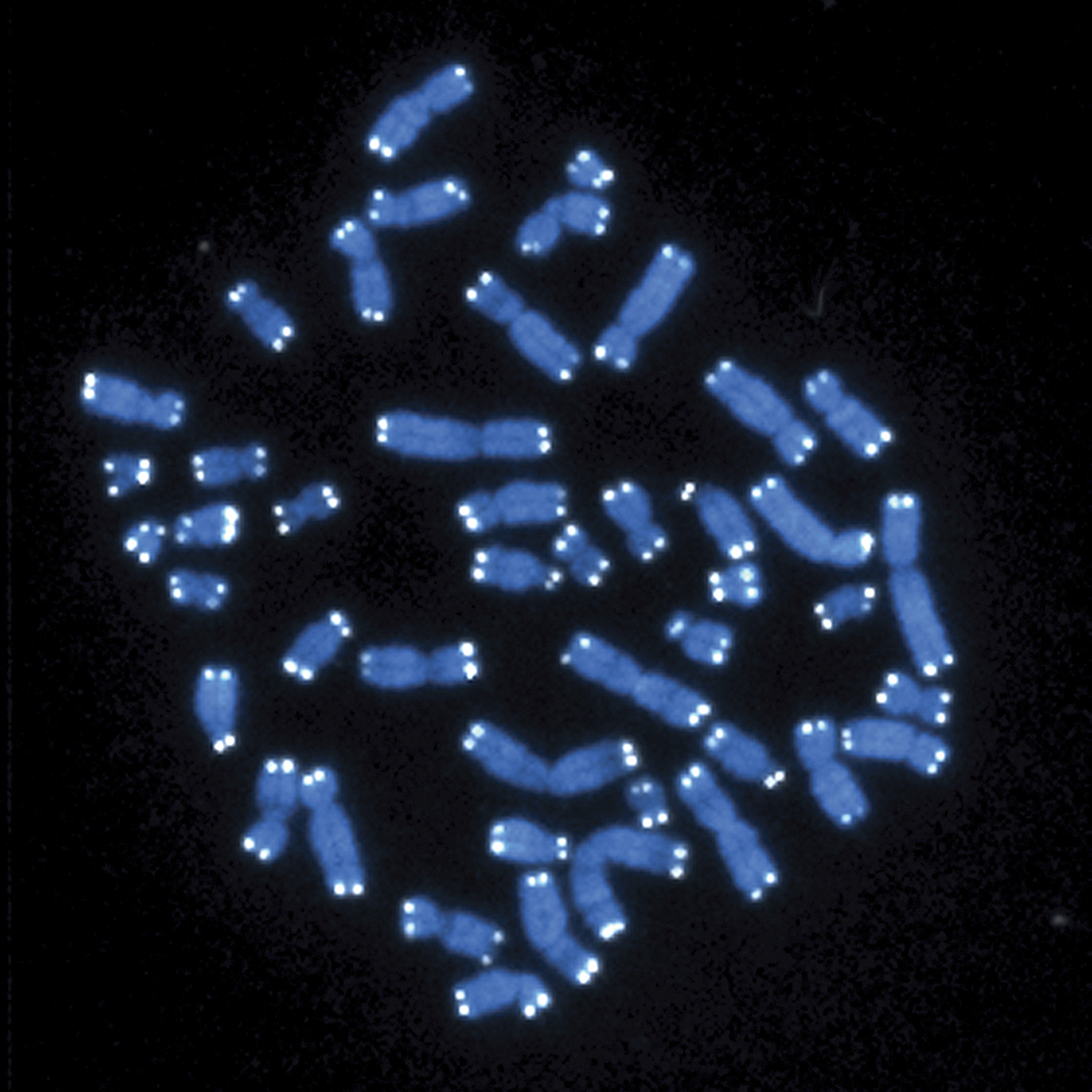

Rep. Nancy Mace is wrong. Not all people are born with either XX or XY chromosomes.
If your time is short
-
People who have one of several well-documented medical conditions do not have only XX or XY chromosomes, which typically correspond with female and male sexes, respectively.
-
Those conditions include Klinefelter Syndrome (XXY), Turner Syndrome (missing or partial X), Triple X Syndrome (XXX) and Jacob’s Syndrome (XYY).
-
Research estimates that about 1.7% of the worldwide population has intersex conditions or differences in sex development, cases in which someone’s anatomy does not neatly fit into male or female.
We often hear the expression that there are two kinds of people in this world.
But that doesn’t always apply when it comes to categorizing people by their sex chromosomes.
“You either have XX or XY chromosomes,” Rep. Nancy Mace, R-S.C., wrote Feb. 20 on X. “Those are the options.”
Most commonly, a person is born with two X chromosomes (female) or an X and a Y (male). But this is not always the case.
Mace’s claim ignores the existence of several medical conditions, some first observed by scientists as far back as the 1930s. Genetic testing in the 1950s enabled scientists to link these conditions to various chromosomal abnormalities in which people’s sex chromosomes are neither XX nor XY.
Mace’s office did not respond to a request for comment before publication. After publication, her office wrote in a Feb. 21 email, “Barring chromosomal abnormalities, a person with a typical number of chromosomes — known as a euploid — has either XX or XY which determines biological sex.”
About 1.7% of the worldwide population has intersex conditions or differences in sex development — cases in which someone’s anatomy does not fit into male or female — according to a commonly cited review of medical literature published in 2000 by Brown University biologist Anne Fausto-Sterling.
The conditions include:
-
Klinefelter Syndrome (XXY): People with this condition, first identified in 1942, have an extra X chromosome. People with this syndrome are typically assigned male at birth; the condition can result in infertility, low testosterone and undescended testicles. It occurs in about 1 in 600 males.
-
Turner Syndrome (missing or partial X): First identified in 1938, this syndrome occurs when a female is missing part of the X chromosome pair. This can cause short stature, delayed puberty, low sex hormones and possible infertility.
-
Triple X Syndrome (XXX): The symptoms of this syndrome, also called trisomy X, can vary from mild — tall height — to more severe, including developmental delays. The condition, present in about 1 in 1,000 females, was first identified in 1959.
-
Jacob’s Syndrome (XYY): A relatively rare condition with mild symptoms, males with this syndrome are born with an extra Y chromosome. It occurs in about 1 in 1000 males and was identified in the 1960s.
According to a factsheet released by the American Society for Reproductive Medicine, chromosomal variations “occur in an estimated 1 in 1,500 to 1 in 2,000 live births, which amounts to approximately 200,000 to 330,000 Americans based on the current population.”
There are also intersex conditions that do not involve chromosomes because a person’s “sex,” according to scientists, is not easily measured by one factor. Chromosomes, gonads, hormones and genitalia can all contribute to a person’s sex categorization.
People born with de la Chapelle syndrome have XX chromosomes but can develop a penis, because a gene typically found on the Y chromosome gets moved to a new position on the X chromosome.
People with androgen insensitivity syndrome have male chromosomes, but don’t respond to their body’s naturally produced male hormones, ranging from mild to complete insensitivity. In cases of complete insensitivity, genetically male fetuses (XY), with internal testes and normal testosterone production could develop vaginas and be assigned female at birth. Partial and mild insensitivity can result in more ambiguous sex characteristics.
Other conditions also result in ambiguous genitalia that do not fall neatly into a male or female sex category.
“A lot of other variations might be noticeable at birth if they cause other types of genital differences,” Sylvan Fraser Anthony, legal and policy director at Interact, a nonprofit advocating for intersex youth, told PolitiFact. “Others will be discovered, you know, not until later.”
Our ruling
Mace wrote on X, “You either have XX or XY chromosomes. Those are the options.”
Although most people are born with either XX or XY chromosomes, science dating back decades shows some people are born with other chromosomal variations.
We rate this claim False.
UPDATE, Feb. 21, 2025: This fact-check has been updated to include a post-publication comment from Mace’s office.
Our Sources
X post, Feb.20, 2025
The United Nations, "Estimated 1.7 percent of new-born babies are intersex," Nov. 12, 2016
Cleveland Clinic, "Klinefelter Syndrome: What It Is, Symptoms & Treatment," Oct. 9, 2023
National Institutes of Health, "About Klinefelter Syndrome (KS)," Jan. 9, 2024
Cleveland Clinic, "Turner Syndrome: What It Is, Causes, Symptoms & Treatment," Oct. 10, 2023
StatPearls, "Turner Syndrome," Aug. 8, 2023
Mayo Clinic, "Triple X syndrome - Symptoms & causes," Jan. 15, 2025
European Journal of Human Genetics, "Triple X syndrome," Jul. 2009
Cleveland Clinic, "47,XYY Syndrome (Jacobs Syndrome): What It Is & Symptoms," Dec. 5, 2024
StatPearls, "Jacobs Syndrome," Sept. 10, 2024
The Washington Post, "Trump says there are ‘two sexes.’ Experts and science say it’s not binary," Feb. 19, 2025
American Society for Reproductive Medicine, "Just the Facts: Biological Sex," accessed Feb. 20, 2025
American Psychiatric Association, "Definitions of Gender, Sex, and Sexual Orientation and Pronoun Usage," Nov. 2017
Planned Parenthood, "Sex and Gender Identity," accessed Feb. 20, 2025
Nature, "US proposal for defining gender has no basis in science," Oct. 30, 2018
Canadian Institutes of Health Research, "What is gender? What is sex?," May 8, 2023
Cureus, "A Case of de la Chapelle Syndrome," Nov. 2, 2023,
Cleveland Clinic, "Androgen Insensitivity Syndrome: Complete & Partial," Dec. 14, 2021
Cleveland Clinic, "Disorders of Sexual Development (DSDs)," Jan. 22, 2024
PolitiFact, "No, we’re not all female under Trump’s executive order," Jan. 29, 2025
Biochemistry Research International, "Evolution of Genetic Techniques: Past, Present, and Beyond," March, 22, 2015
The Sciences, "The Five Sexes, Revisited," 2000